When trauma gets stuck in the body, words often fail. You can explain what happened, but the fear, the numbness, the rage-those don’t fit neatly into sentences. That’s where creative arts therapies step in. Not as a substitute for talk therapy, but as a different language-one that speaks directly to the parts of the brain trauma locks away.
Why Words Aren’t Enough for Trauma
Trauma doesn’t just live in your memories. It lives in your muscles, your breath, your heartbeat. Studies from the Trauma Center at Justice Resource Institute show that people with complex PTSD often struggle to access verbal memory networks. Their brains shift into survival mode during recall, shutting down the prefrontal cortex-the part that organizes thoughts and finds words. This isn’t weakness. It’s biology. That’s why traditional talk therapy sometimes hits a wall. You sit there, trying to say it all, but your throat closes. Your hands shake. You feel like you’re drowning in silence. Creative arts therapies bypass that block. They let you express what you can’t name.How Art Therapy Works
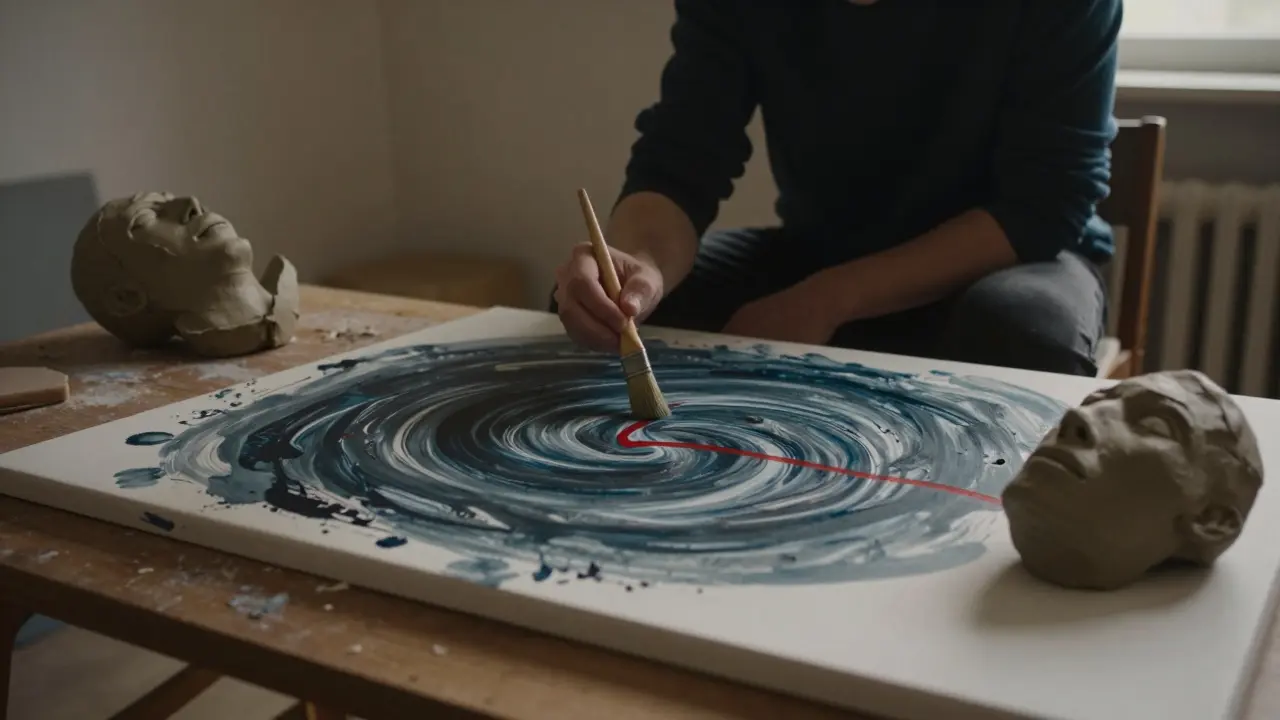
Art therapy isn’t about being good at drawing. It’s about making marks that carry meaning. A person who survived abuse might paint a dark storm with a single red line cutting through it. Another might sculpt a broken figure and slowly rebuild it over weeks. Each piece becomes a safe container for feelings too heavy to hold inside. In a 2023 study published in the Journal of Traumatic Stress, participants in an 8-week art therapy program showed a 40% reduction in PTSD symptoms. Not because they learned to paint-but because they found a way to externalize pain without speaking. The therapist doesn’t interpret the art. They sit with you while you look at it. They ask: What do you notice? That simple question starts the healing.Music Therapy: Rhythm as a Lifeline
Music bypasses the thinking brain. A drumbeat can sync with your heartbeat. A melody can mirror your grief. In music therapy, you don’t need to play an instrument. You might just tap a drum with your fingers, or hum a tune that comes out when you’re alone at night. One woman in Melbourne, who survived a car crash that killed her partner, couldn’t listen to songs from their shared playlist. She felt like she was being pulled back into the crash every time. Her music therapist gave her a small handpan-a gentle, resonant instrument. At first, she just tapped it. Then she played one note over and over. After three weeks, she played a short sequence. It wasn’t a song. But it was hers. She started sleeping again. Research from the American Music Therapy Association shows that rhythmic entrainment-matching your body’s rhythm to an external beat-can lower cortisol levels and regulate the nervous system. For trauma survivors, that’s not a bonus. It’s life-changing.Movement and Dance Therapy: Reclaiming Your Body
Trauma often leaves people disconnected from their bodies. You learn to avoid feeling anything-because feeling means risking the pain again. Dance/movement therapy helps you come back, slowly. Sessions might start with just breathing in sync with your hands. Then, you move your arms like wings. Then, you let your feet find the floor. No choreography. No judgment. Just presence. A 2024 meta-analysis in Frontiers in Psychology found that dance/movement therapy significantly improved emotional regulation and body awareness in trauma survivors. One participant described it like this: "I didn’t know I still had a body until I started moving again. It wasn’t about dancing. It was about remembering I was still here."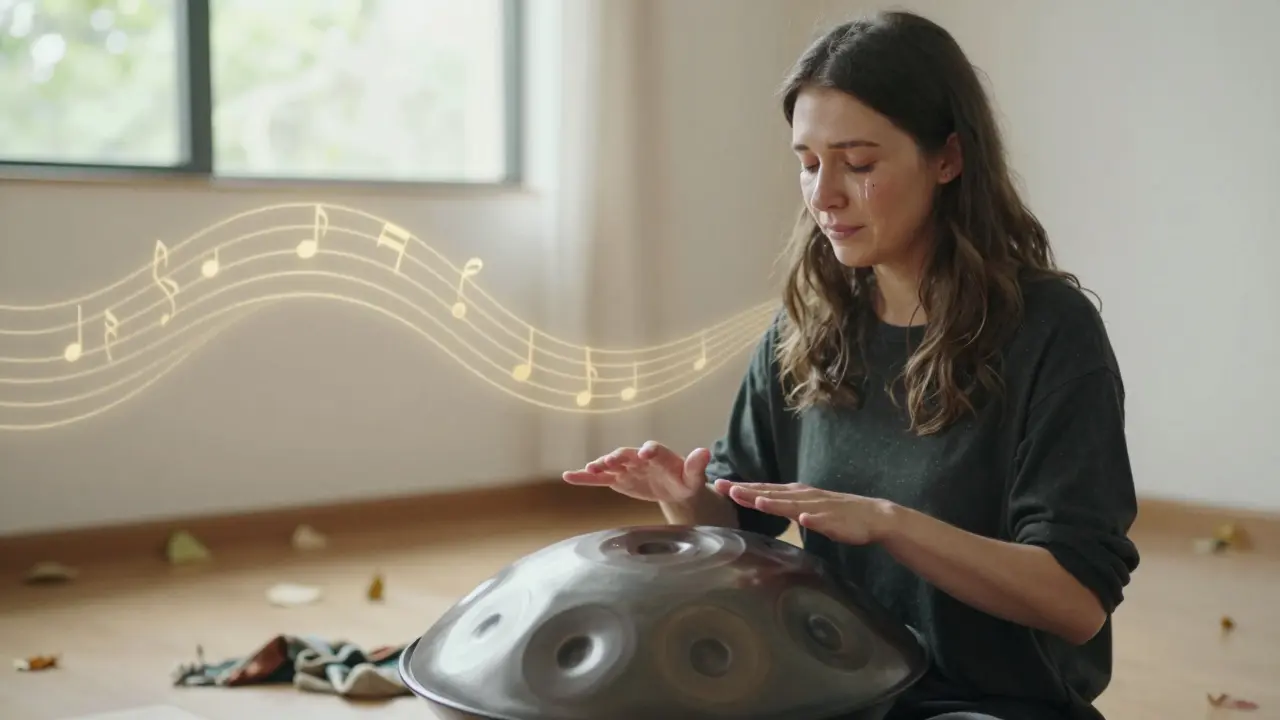
What About Writing and Drama?
Creative arts therapies include more than painting, music, and dance. Writing therapy-poetry, journaling, storytelling-lets trauma survivors reframe their story without reliving it. Instead of writing "I was attacked," they might write "The room had a blue door. I stood there. I didn’t move. I survived." Drama therapy uses role-play to explore feelings safely. You might become a tree that survived a storm. Or a bird that learned to fly again. These metaphors give distance from the pain, which makes it easier to process.Who Can Benefit?
This isn’t just for veterans or abuse survivors. Trauma shows up in many forms: childhood neglect, medical trauma, loss, migration, even prolonged stress from work or caregiving. Creative arts therapies work for children, teens, adults, and older adults. A 10-year-old who witnessed domestic violence might draw monsters with human faces. A refugee teenager might write songs in two languages. A retired nurse dealing with burnout might sculpt clay figures of hands-ones that held patients, ones that couldn’t hold back tears. You don’t need experience. You don’t need talent. You just need to be willing to try something new.How to Get Started
Finding a qualified creative arts therapist matters. Look for someone certified by a recognized body like the American Art Therapy Association, the British Association of Art Therapists, or the Australian Music Therapy Association. They’ve trained in both therapy and the art form. You can start small:- Keep a sketchbook. Draw without thinking. Don’t judge what comes out.
- Play a song that makes you feel something-even if it’s sadness. Let yourself feel it.
- Stand in front of a mirror. Move your arms slowly. Notice how your body wants to move.
- Write one sentence about a memory, then tear it up. No one needs to read it.
What to Expect in a Session
A typical session lasts 45 to 60 minutes. You’ll meet one-on-one with a therapist in a quiet, safe space. They’ll offer materials-paint, clay, instruments, scarves, paper. You choose what to use. They won’t push you. They’ll wait. Sometimes you’ll talk about what you made. Sometimes you won’t. That’s okay. Healing doesn’t always need words.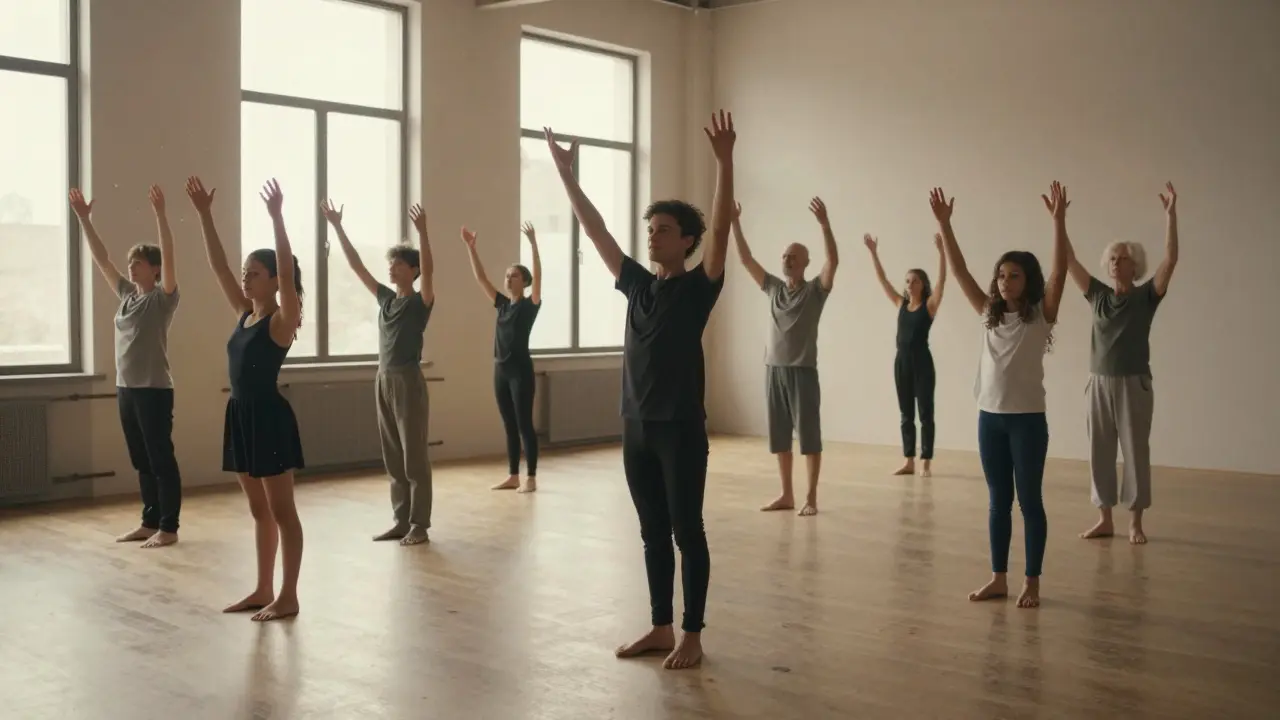
Common Misconceptions
Some people think creative arts therapies are "just for kids" or "a nice distraction." They’re not. They’re evidence-based, clinically validated treatments. They’re used in hospitals, veterans’ centers, refugee camps, and private practices. Others worry they’re "not artistic enough." That’s the biggest myth. You don’t need to be Picasso. You need to be you.Real Change, Not Just Relief
Healing from trauma isn’t about forgetting. It’s about integrating the past so it doesn’t control your present. Creative arts therapies help you do that by giving your nervous system a new story. One where you’re not just a victim. You’re a creator. A man who spent 15 years in isolation after a violent assault started making collages from old magazines. At first, they were chaotic. Then, he began cutting out faces and placing them in circles. He called them "The Circle of Us." After two years, he gave a talk at a community center. He didn’t mention the assault. He showed the collages. People cried. He didn’t cry. He smiled. That’s the quiet power of these therapies. They don’t fix you. They help you remember you were never broken to begin with.Where to Find Support
In Australia, you can contact the Australian Creative Arts Therapies Association for referrals. Many public hospitals and community health centers now offer subsidized sessions. Online platforms like BetterHelp and MyHealthFirst also connect you with licensed arts therapists. If you’re unsure where to start, try a free community workshop. Libraries, community centers, and art galleries often host low-cost or no-cost sessions. You don’t need a diagnosis. You just need to show up.Final Thought
Trauma steals your voice. Creative arts therapies give it back-not in words, but in color, rhythm, movement, and texture. You don’t have to be brave. You just have to be willing to make a mark. One stroke. One note. One step. That’s where healing begins.Can creative arts therapies replace talk therapy?
No, they don’t replace talk therapy-they complement it. Many people use both. Talk therapy helps you understand your thoughts. Creative arts therapies help you feel and release what’s stuck in your body. Together, they offer a fuller path to healing.
Do I need to be artistic to try creative arts therapies?
No. You don’t need any experience or skill. Art therapy isn’t about creating masterpieces. It’s about using the process to express what words can’t. A scribble, a hum, a shaky step-they all count. Your creativity is already there. You just need to let it move.
How long does it take to see results?
There’s no set timeline. Some people feel a shift after one session. Others need weeks or months. Healing from trauma isn’t linear. What matters is consistency, not speed. Even small moments of expression-like painting for ten minutes-can begin to rewire your nervous system over time.
Are creative arts therapies covered by insurance?
In Australia, some private health funds cover arts therapies under extras policies, especially if provided by a registered psychologist or accredited therapist. Medicare doesn’t currently cover them directly, but you may qualify for a Mental Health Treatment Plan through your GP that includes allied health services. Always check with your provider.
Can children benefit from creative arts therapies?
Yes, children often respond even more strongly than adults. They haven’t learned to shut down their creativity yet. Art, play, music, and movement are natural ways for them to process fear, confusion, or loss. Many schools and child mental health services now include creative arts therapies as part of early intervention programs.