The Core Truth About Expressive Healing
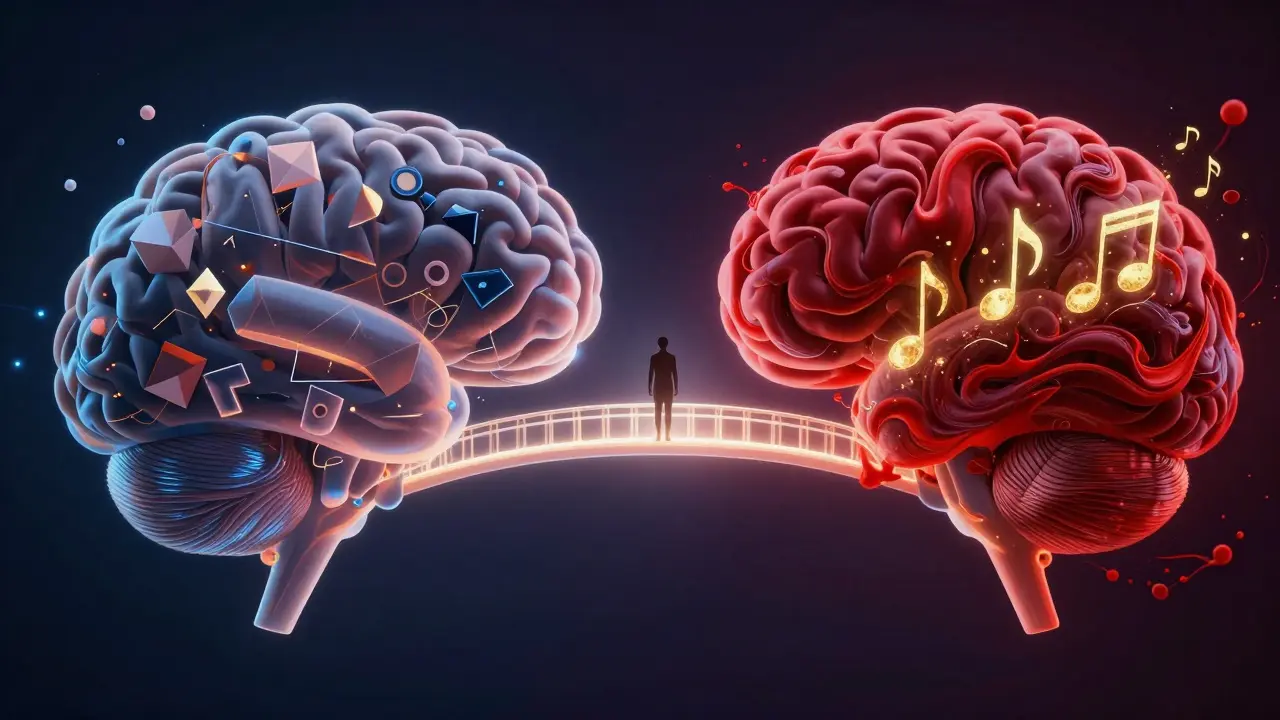
Why does painting a picture or drumming to a beat work when talking sometimes fails? It comes down to how our brains process trauma. When you experience something overwhelming, the brain often stores that memory in the right hemisphere-the part responsible for images, sounds, and emotions-rather than the left hemisphere, which handles language. This is why you can have a vivid "feeling" of panic without a clear "story" of why you're panicking. By engaging in creative arts therapies, you create a bridge between these two sides of the brain. When you choose a specific shade of deep red to represent anger, or a jagged line to represent a broken relationship, you are essentially "translating" an abstract emotion into a physical form. This allows you to look at your pain from a distance. Instead of *being* the anger, you are now the person *observing* the red paint on the canvas. This shift is called externalization, and it's a powerhouse tool for emotional recovery.Breaking Down the Different Modalities
Depending on what you're dealing with-whether it's chronic grief, anxiety, or PTSD-different mediums might serve you better. Some people find the silence of painting peaceful, while others need the rhythmic movement of dance to release tension.| Therapy Type | Primary Mechanism | Best For... |
|---|---|---|
| Art Therapy | Visual representation and symbolism | Trauma, depression, identity struggles |
| Music Therapy | Rhythm, melody, and auditory processing | Autism, dementia, mood regulation |
| Dance/Movement Therapy | Somatic release and physical awareness | Eating disorders, social anxiety, PTSD |
| Drama Therapy | Role-playing and narrative exploration | Interpersonal conflict, social skills, grief |
Finding Your Way Through Art Therapy
Art Therapy is a mental health profession that uses the visual arts process to help people resolve conflicts and emotional challenges. It's not about whether you can draw a realistic tree. In a clinical setting, a therapist might ask you to draw your "safe place" or map out your anxiety as if it were a monster. This takes the internal chaos and gives it a boundary.
Imagine a person struggling with a messy divorce. They might not be able to tell their therapist exactly how they feel about their ex-partner, but they might spend an hour aggressively scratching charcoal into a piece of heavy paper. The act of scratching-the physical effort and the sound of the charcoal breaking-is the therapy. The resulting image is simply a record of that emotional release. This process helps the brain move from a state of "fight or flight" back into a state of regulation.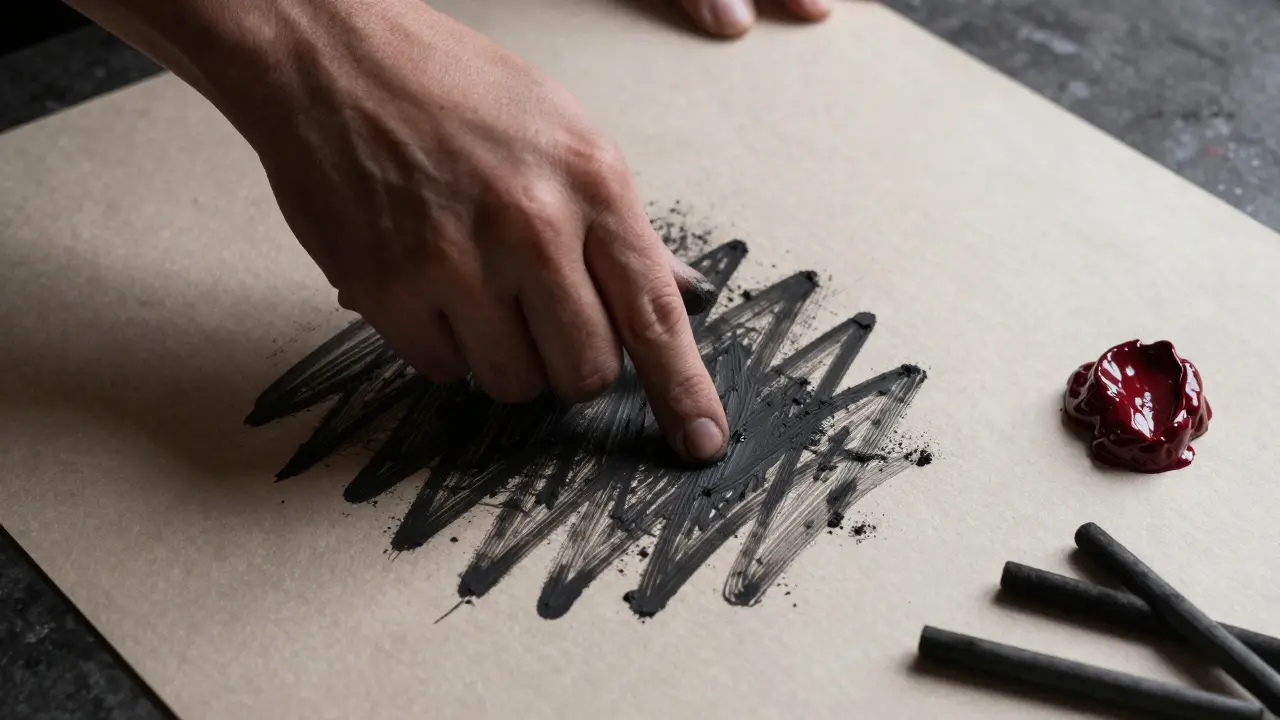
The Power of Sound and Music Therapy
Music Therapy is the clinical use of music interventions to accomplish individualized goals. Music has a direct line to the limbic system, the part of the brain that governs emotion. This is why a certain song can make you burst into tears before you've even processed the lyrics.
In a therapeutic setting, this can happen in two ways: receptive and active. Receptive therapy involves listening to curated music to evoke certain feelings or reach a state of relaxation. Active therapy involves creating music. For someone with severe depression, the simple act of hitting a drum in time with a therapist can provide a sense of connection and agency that they've lost. It's a way of saying "I am here" and "I have a beat" without needing to form a single sentence.Moving the Trauma Out: Dance and Movement
Dance/Movement Therapy (DMT) is the psychotherapeutic use of movement to promote the emotional, social, cognitive, and physical integration of the person. Many of us store stress in our bodies-tight shoulders, a clenched jaw, or a shallow breath. Talking about these things doesn't always make them go away; sometimes you have to literally shake them off.
Consider someone who has experienced a sudden loss. Grief isn't just a thought; it's a physical ache. A DMT practitioner might guide the client to move their body in ways that mirror that ache, slowly transitioning from rigid, constricted movements to more open, flowing ones. This somatic approach proves that the body remembers what the mind tries to forget, and by moving the body, you can begin to clear the emotional debris.Stepping into Another Life: Drama Therapy
Drama Therapy is a form of therapy that uses role-play and theatrical techniques to help clients explore their lives and emotions. It's essentially a way to "practice" life in a safe environment. By pretending to be someone else, or by playing out a difficult conversation with a chair representing a parent, you gain a new perspective on your own story.
This is incredibly useful for people dealing with social anxiety. By role-playing a stressful scenario-like a job interview or a confrontation-the client can test different responses and see how they feel. It turns a terrifying unknown into a rehearsed scene, reducing the fear response and building genuine confidence.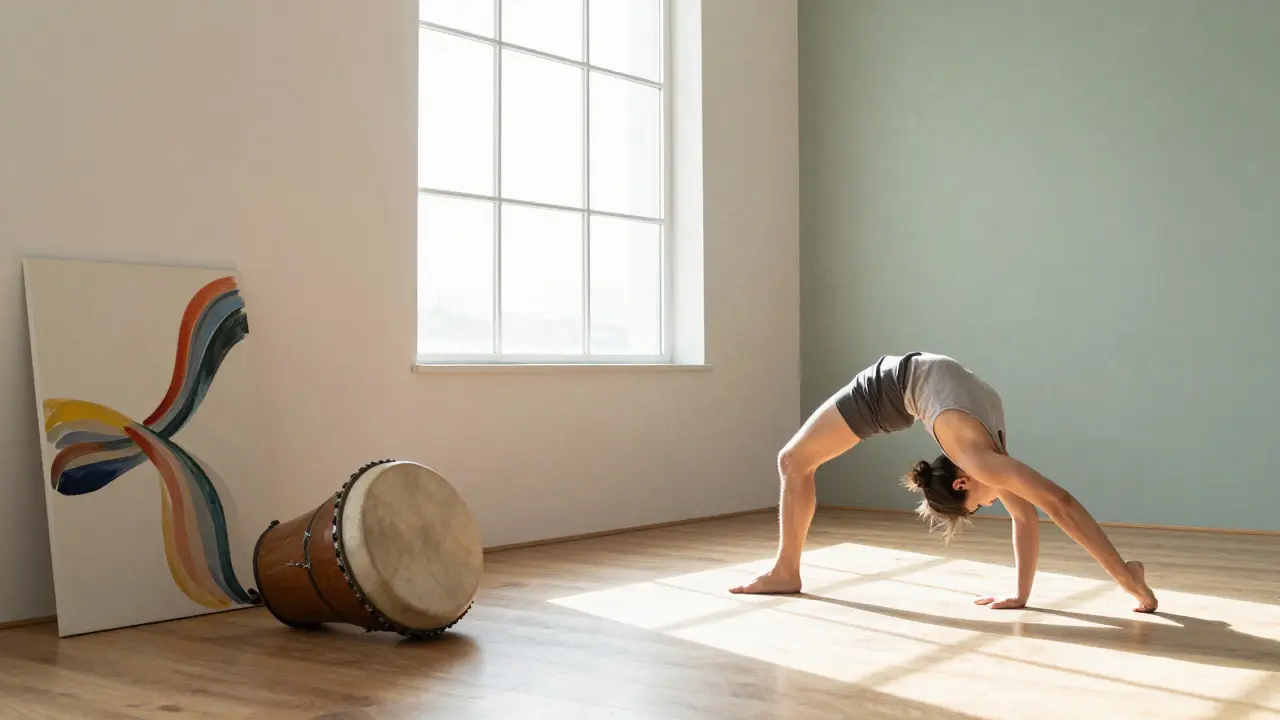
How to Get Started with Creative Healing
If you're feeling stuck, you don't have to jump straight into a clinical setting, though that is the most effective route for deep trauma. You can start by experimenting with "low-stakes" creative expression to see what resonates with you.- The Mood Palette: Pick three colors that represent your current state. Don't think about what they "should" mean. Just pick. Fill a page with those colors using whatever tool you have (markers, crayons, digital paint).
- Somatic Shaking: Put on a song with a heavy beat. For five minutes, shake your arms, legs, and shoulders. Notice where the tension lives in your body and imagine the movement is loosening those knots.
- Narrative Lettering: Write a letter to a version of yourself from five years ago. Then, instead of reading it, tear it up or paint over it. Focus on the physical sensation of letting the words go.
The Pitfalls of "DIY" Therapy
While creative expression is great for stress relief, there is a big difference between a hobby and therapy. A professional therapist is trained to handle the "emotional flood" that can happen when a suppressed memory surfaces during an art project. If you're dealing with severe PTSD or clinical depression, doing this alone can sometimes trigger a panic attack without the tools to ground yourself. Working with a certified therapist ensures that you aren't just stirring up the mud, but actually cleaning it out. They provide the container-the emotional and physical safety-that allows you to explore your darkest corners without feeling like you're drowning in them.Do I need to be talented at art or music to do this?
Absolutely not. In creative arts therapies, the focus is on the process, not the product. The goal is expression, not aesthetics. Your therapist isn't looking for a painting that belongs in a gallery; they're looking for a painting that tells a truth about your internal world.
How long does it take to see results?
Healing isn't linear, but many people feel an immediate sense of relief after a single session because of the somatic release. Long-term emotional restructuring usually takes several months of consistent work, depending on the complexity of the trauma.
Can I combine different types of arts therapies?
Yes, and often it's beneficial. This is sometimes called an integrative approach. You might use music to calm your nervous system before engaging in art therapy to process a specific memory, or use movement to release tension before a drama therapy session.
Is this a replacement for traditional talk therapy?
It can be, but it often works best as a complement. While talk therapy is excellent for cognitive processing and problem-solving, arts therapies reach the emotional and somatic layers that words can't always touch. Many people find that combining both accelerates their healing.
Where can I find a certified creative arts therapist?
Look for practitioners with credentials from recognized boards, such as the American Art Therapy Federation or the American Music Therapy Association. Ensure they have specific training in the modality you're seeking and ask about their experience with your specific emotional concerns.