When you think of mental health treatment, you probably imagine a couch, a therapist, and lots of talking. But what if healing didn’t start with words at all? What if it started with a brushstroke, a drumbeat, or the way your body moved to a song you couldn’t name?
Creative arts therapies aren’t just hobbies. They’re evidence-based treatments that help people process trauma, manage anxiety, and rebuild their sense of self-without saying a single word. In Ottawa, hospitals, community centers, and even schools are starting to use these approaches more than ever. And the results? They’re changing lives.
What Exactly Are Creative Arts Therapies?
Creative arts therapies are clinical interventions that use artistic expression to support emotional, cognitive, and physical healing. They’re led by trained professionals-certified art therapists, music therapists, dance/movement therapists-who combine psychology with the creative process.
It’s not about making a masterpiece. It’s about what happens while you’re making it. The brush in your hand, the rhythm you tap out, the way your feet shift on the floor-these aren’t random. They reflect what’s inside. And when you’re too overwhelmed to talk, your art speaks for you.
There are five main types:
- Art therapy: Using drawing, painting, sculpture, or collage to explore emotions.
- Music therapy: Playing instruments, singing, or even just listening to music to regulate mood and reduce stress.
- Dance/movement therapy: Using body movement to express feelings and reconnect with yourself.
- Drumming therapy: Group rhythm sessions that build connection and release tension.
- Expressive writing: Not journaling for fun-structured, guided writing to process trauma or grief.
Each one is backed by research. A 2024 study from the University of Toronto found that participants in weekly art therapy sessions showed a 42% reduction in symptoms of depression over 12 weeks-comparable to cognitive behavioral therapy, but with higher retention rates.
Why Words Often Fail
Talk therapy works great-if you can talk. But trauma doesn’t live in sentences. It lives in the body. In the clenched jaw. In the way you freeze when someone raises their voice. In the nightmares that don’t fade.
For people with PTSD, autism, dementia, or severe anxiety, putting feelings into words can feel impossible. Or dangerous. That’s where creative arts therapies step in. They bypass the brain’s verbal filters and go straight to the emotional core.
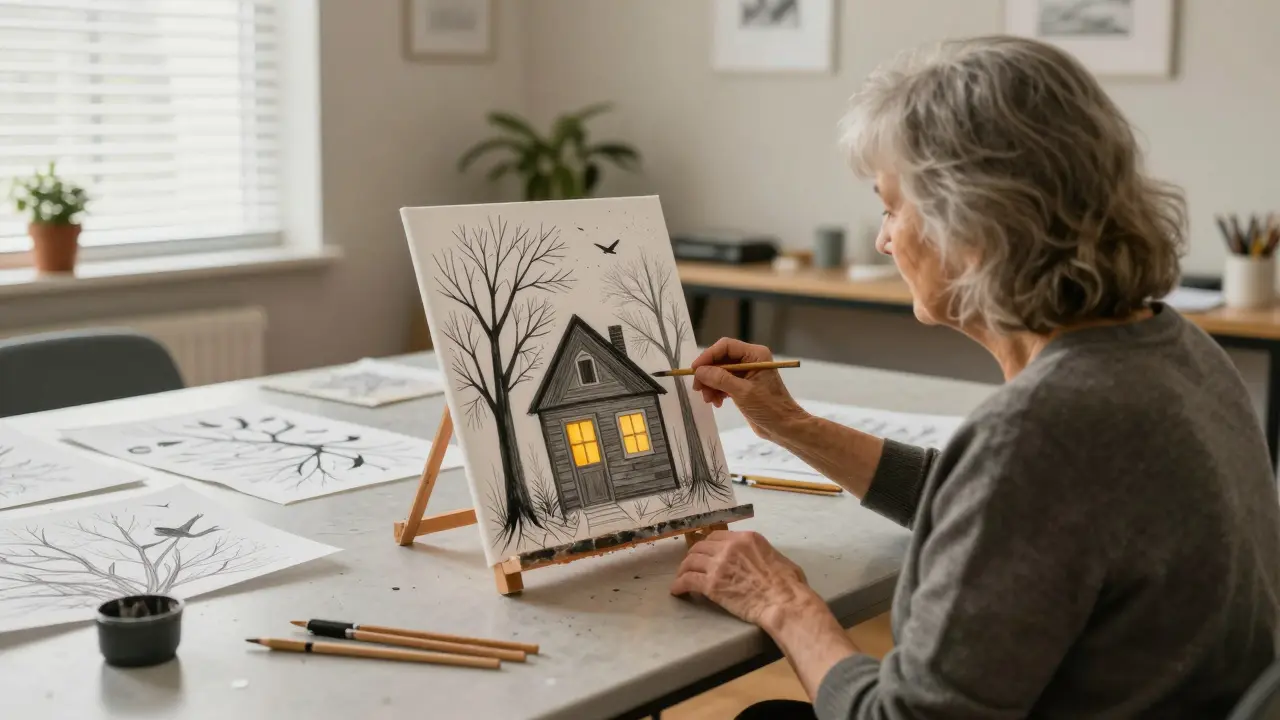
Take Maria, a 68-year-old widow from Gatineau. After her husband passed, she stopped speaking for months. Her family worried she was slipping into depression. Then she joined a community art therapy group. At first, she just scribbled black lines on paper. Week after week, the lines turned into trees. Then birds. Then a house with a light on in the window. She never said a word about her grief. But the art? It told the whole story.
How Music Therapy Changes the Brain
Music doesn’t just move your feet-it moves your nervous system. Slow, rhythmic music can lower cortisol levels. Upbeat rhythms can boost dopamine. And when you play an instrument, even badly, you activate areas of the brain tied to memory, emotion, and motor control.
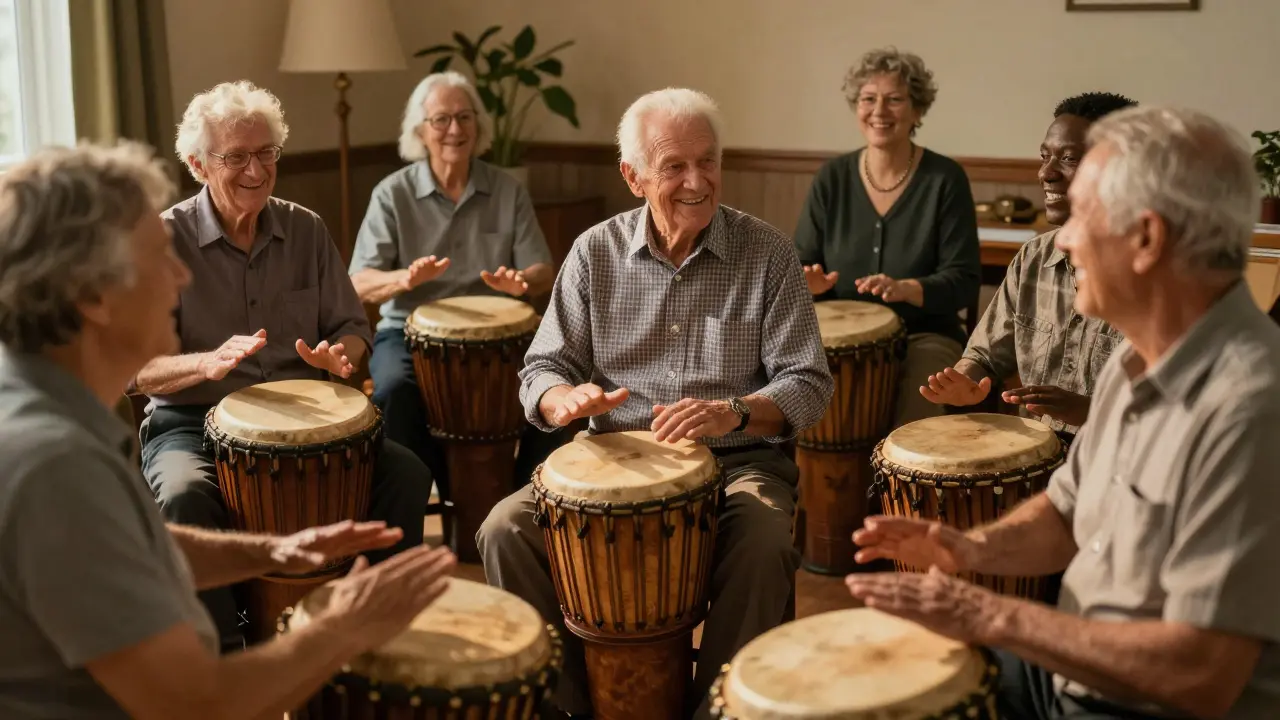
In long-term care homes, music therapy has been shown to reduce agitation in dementia patients by up to 60%. A 2025 clinical trial in Montreal tracked 120 seniors with moderate to severe dementia. Those who participated in biweekly drumming circles showed improved recall, fewer episodes of wandering, and more eye contact with caregivers.
It’s not magic. It’s neuroscience. When you tap a rhythm with others, your brain synchronizes with theirs. That’s called entrainment. It’s the same reason you tap your foot at a concert. But in therapy, it’s used to rebuild social connection-something many people with mental health struggles lose over time.
Dance Therapy: Moving Through Pain
Most people think dance therapy is for dancers. It’s not. It’s for anyone who’s ever felt disconnected from their own body.
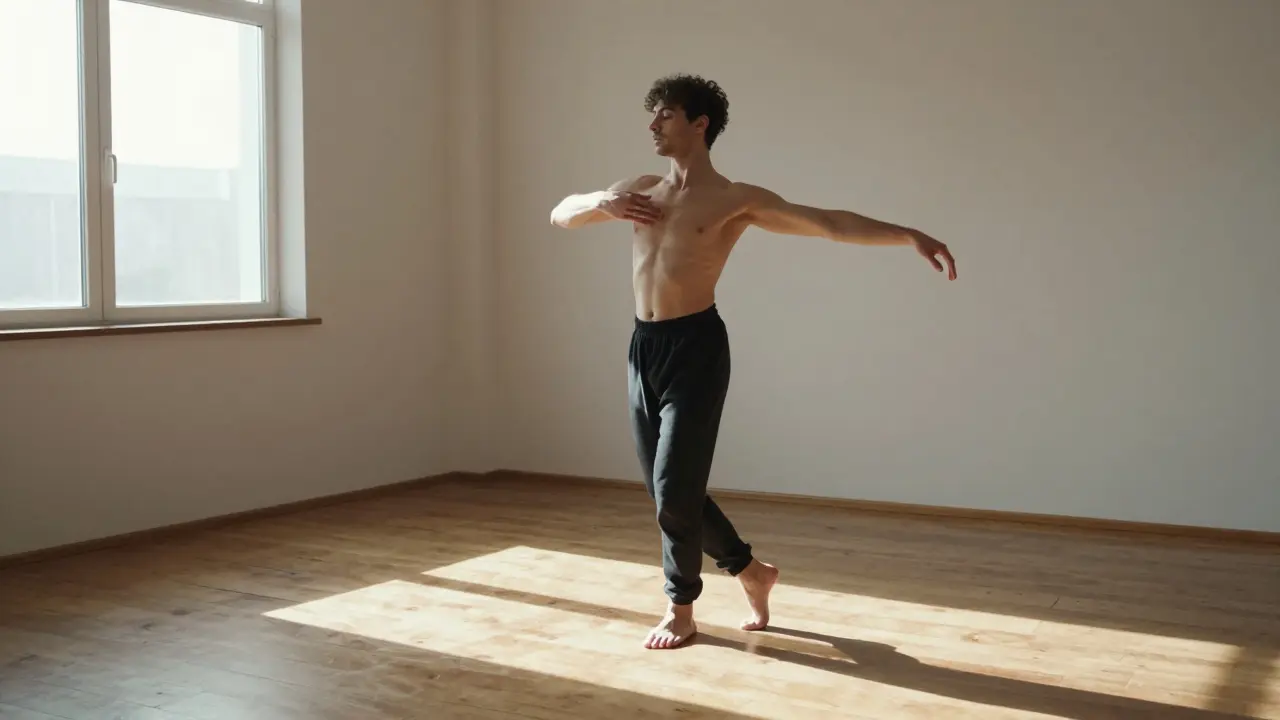
After a car accident, 29-year-old Jamal lost his sense of safety in his own skin. He couldn’t sit still. He flinched at sudden sounds. He avoided mirrors. His therapist suggested dance/movement therapy. At first, he just rocked back and forth in a chair. Then he stood. Then he moved his arms. After six weeks, he was dancing alone in his living room-no music, no audience, just him and his body.
Research from the American Dance Therapy Association shows that dance therapy helps people with PTSD, eating disorders, and depression reconnect with physical sensations. It reduces dissociation. It rebuilds trust in the body.
And it’s not about technique. It’s about permission. Permission to move. To be awkward. To feel. To be seen.
Why This Isn’t Just ‘Alternative’
Some still call creative arts therapies ‘alternative.’ That’s outdated. In Canada, they’re now covered by some provincial health plans. Ontario’s OHIP+ program includes art therapy for youth under 25 with anxiety and depression. British Columbia funds music therapy in pediatric oncology units. And in Ottawa, the Royal Ottawa Mental Health Centre now offers weekly drumming circles as part of their trauma recovery program.
These aren’t fringe programs. They’re integrated into mainstream care because they work. They’re cheaper than long-term medication. They have fewer side effects. And they stick.
One 2023 meta-analysis of 47 studies found that patients who received creative arts therapy were 38% more likely to continue treatment than those who only received talk therapy. Why? Because they weren’t just listening-they were doing. They were creating. And that changes everything.
Who Can Benefit?
You don’t need to be ‘artistic’ or ‘musical’ to benefit. You just need to be human.
These therapies help:
- Children with autism learn to express emotions
- Veterans process combat trauma without reliving it
- People with chronic illness find joy despite pain
- Teens struggling with identity build self-worth
- Seniors with dementia reconnect with memories
- Survivors of abuse reclaim their bodies
It’s not a cure. But it’s a doorway. A way to step back into yourself when everything else feels broken.
Getting Started
If you’re curious, here’s how to begin:
- Look for certified therapists. In Canada, check the Canadian Art Therapy Association or Canadian Association for Music Therapy for accredited practitioners.
- Start with group sessions. Many community centers offer low-cost or sliding-scale options. Ottawa’s Centre for Creative Arts Therapy runs monthly drop-in art circles for $15.
- Try it before you commit. Most therapists offer a free 15-minute consultation.
- Don’t judge the outcome. The value isn’t in the final product-it’s in what you felt while making it.
And if you’re skeptical? Try this: Grab a crayon. Close your eyes. Draw for five minutes. Don’t think. Just move. Then look at what you made. What does it say about how you’re feeling right now? You might be surprised.
Are creative arts therapies backed by science?
Yes. Over 1,200 peer-reviewed studies have examined creative arts therapies since 2000. Research from Johns Hopkins, the University of Melbourne, and the Canadian Mental Health Association consistently shows measurable improvements in anxiety, depression, PTSD symptoms, and social functioning. Brain imaging studies even show changes in neural pathways after just 8-12 sessions.
Do I need any artistic skills to participate?
No. Creative arts therapies are not about talent. They’re about expression. A therapist isn’t grading your painting or judging your rhythm. They’re watching how you engage-with the materials, with your body, with silence. The process is the therapy, not the product.
Can these therapies replace medication or talk therapy?
They don’t replace them-they complement them. Many people use creative arts therapies alongside medication or talk therapy. In fact, combining them often leads to better outcomes. For example, someone in talk therapy might struggle to describe their emotions. In art therapy, they might draw a storm. That drawing becomes a bridge to deeper conversation.
Are these therapies covered by insurance in Canada?
Coverage varies. Ontario covers art therapy for youth under 25 through OHIP+. Some private insurers include music or art therapy under extended health benefits. Workplace plans sometimes cover them too. Always ask your provider. Community programs often offer low-cost or free options if insurance doesn’t cover it.
How long does it take to see results?
Some people feel a shift after one session. For lasting change, most therapists recommend 8-12 weekly sessions. Like physical therapy, emotional healing takes time. The goal isn’t to ‘fix’ you-it’s to help you reconnect with yourself, slowly and safely.