Emotional Balance: How to Find Calm in a Chaotic World
When you hear emotional balance, the ability to manage your feelings without being overwhelmed by them. Also known as mental equilibrium, it's not about being calm all the time—it's about bouncing back when things fall apart. Most people think emotional balance means avoiding anger, sadness, or anxiety. But real balance isn’t suppression. It’s recognition. It’s knowing when to breathe, when to move, when to create, and when to rest.
That’s where tools like mindfulness, a practice of paying attention to the present moment without judgment come in. It’s not magic. Just five minutes a day of noticing your breath can rewire how your brain reacts to stress. Then there’s biofeedback, a technique that uses real-time data from your body—like heart rate or muscle tension—to help you learn how to calm yourself. No pills. No guesswork. You see your stress on a screen, and slowly, you learn to turn it down. And when words aren’t enough? creative arts therapies, using painting, music, or movement to express what you can’t say out loud become lifelines. People with trauma, burnout, or depression find relief not by talking more, but by making something—color, sound, motion—that carries what they feel.
Emotional balance doesn’t come from one big fix. It’s built in small moments: a deep breath before a meeting, doodling while on the phone, listening to a song that matches your mood, or using a simple device to track your heartbeat. These aren’t luxury habits. They’re survival skills in a world that never stops asking for more.
What you’ll find below isn’t a list of quick fixes. It’s a collection of real, science-backed ways people are rebuilding their inner calm—day by day, breath by breath, brushstroke by brushstroke. Some are quiet. Some are loud. All of them work.
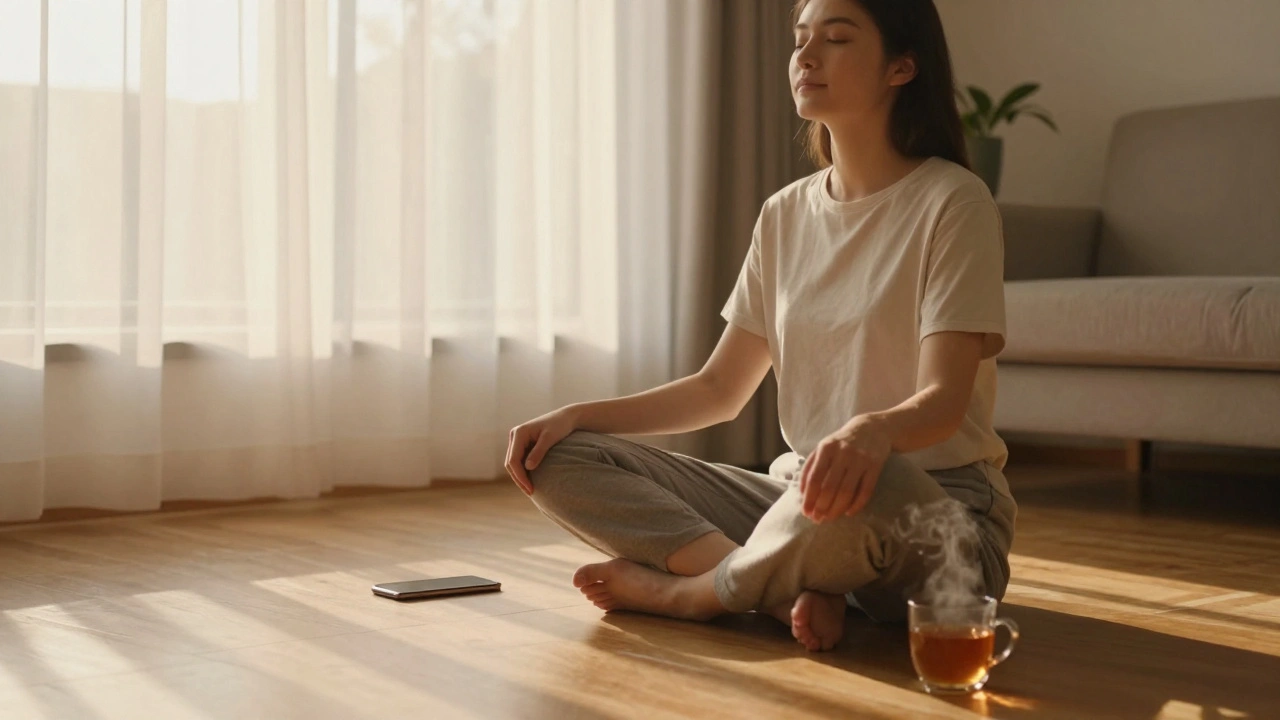
Discover the Power of Calmness and Its Impact on Your Well-being
- Jason Blackwood
- Dec, 4 2025
Calmness isn't just relaxation-it's a powerful tool that lowers stress hormones, improves focus, and strengthens relationships. Learn how small daily practices can transform your mental and physical well-being.
Learn More