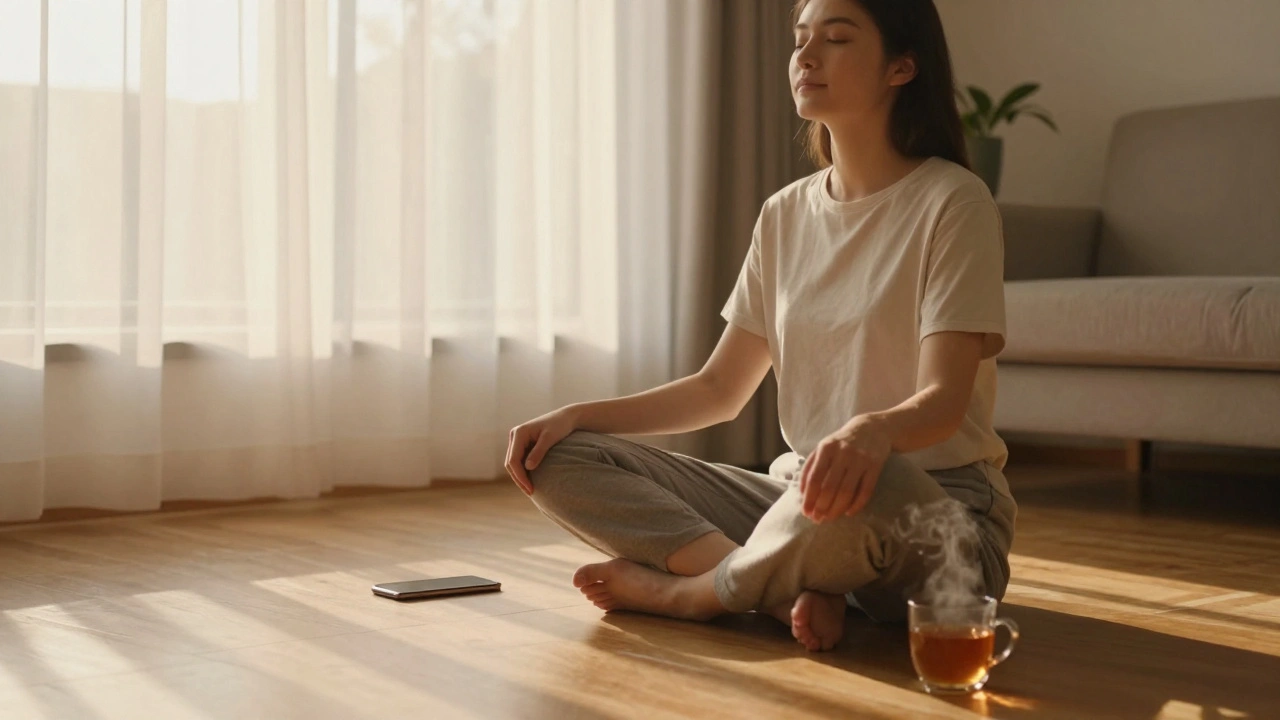
Most people think calmness is just the absence of stress. That’s not true. Calmness is an active state - a skill you build, not something that happens to you. It’s what lets you breathe through a traffic jam, stay focused during a work crisis, or sit with your thoughts without needing to fix them. And it’s not about being emotionless. It’s about having space between what happens and how you respond.
What Calmness Really Does to Your Body
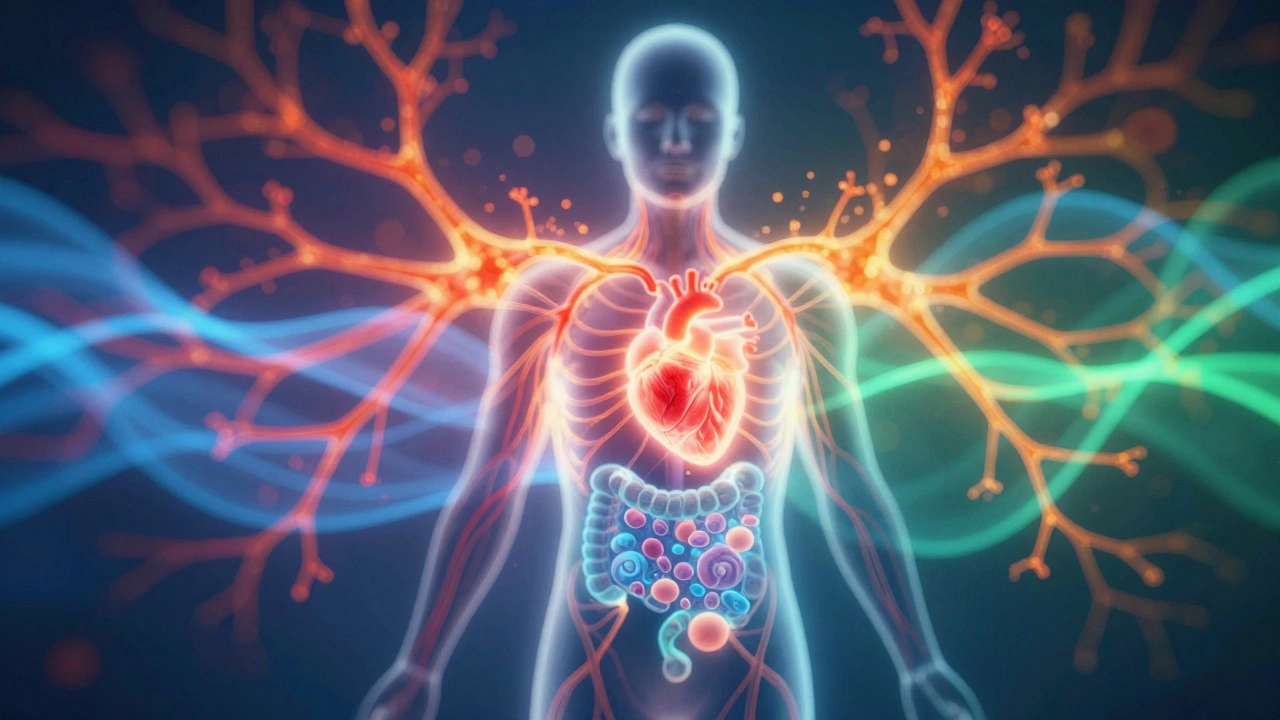
When you’re calm, your nervous system shifts from fight-or-flight to rest-and-digest. Your heart rate slows. Cortisol - the stress hormone - drops. Blood pressure follows. A 2023 study from the University of Melbourne tracked 500 adults over six months and found that those who practiced daily calmness techniques had 27% lower cortisol levels on average than those who didn’t. That’s not a small change. It’s the difference between chronic inflammation and real recovery.
Your gut microbiome even responds. Stress disrupts the balance of good bacteria. Calmness helps restore it. That’s why people who learn to stay centered often notice fewer digestive issues, clearer skin, and more energy - not because they changed their diet, but because their nervous system stopped screaming.
How Calmness Changes Your Thinking
Stress narrows your vision. You see threats. You react. Calmness opens it up. You start noticing options. A 2024 neuroimaging study from Monash University showed that people who trained in calmness for just eight weeks had stronger connections between their prefrontal cortex and amygdala. That’s the brain’s emergency alarm and its decision-making center. When they connect better, you don’t panic. You pause. You choose.
This isn’t theoretical. Think about a time you snapped at someone during a bad day. Now think about a time you stayed quiet, took a breath, and responded differently. That’s calmness in action. It doesn’t erase problems. It gives you room to solve them without making them worse.
The Myth of the Always-Calm Person
You don’t need to be zen to benefit from calmness. You don’t need to meditate for an hour a day or quit your job to live on a mountain. Most people who seem calm are just better at recovering. They get angry. They feel anxious. But they don’t stay stuck there.
One woman I know, a nurse in a busy Melbourne ER, told me she uses a simple trick: before entering a patient’s room, she counts three breaths. Not to clear her mind. Just to slow her body down. She doesn’t feel calm. But she doesn’t carry the chaos with her. That’s the real goal - not to be untouched by life, but to not let it hijack you.

Simple Ways to Build Calmness Daily
You don’t need apps, retreats, or expensive courses. You need consistency. Here’s what actually works for most people:
- Start with one minute of breathing before you check your phone in the morning. Just sit. Feel your feet on the floor. Breathe in for four counts, out for six. Repeat.
- Walk without headphones once a day. Listen to the wind, the birds, your own footsteps. No podcast. No music. Just sound.
- When you feel tension rising, say out loud: “I’m not in danger.” It sounds silly. But your body doesn’t know the difference between a tiger and a looming deadline. Saying it out loud tells your nervous system: pause.
- Write down one thing that went well today - no matter how small. Calmness grows when you train your brain to notice safety, not just stress.
These aren’t hacks. They’re rewiring tools. Do them for 21 days. Not because you’ll feel perfect. But because you’ll start noticing you’re less reactive.
Calmness Isn’t Passive - It’s Powerful
People think calmness means giving up. That you’re letting things slide. That’s wrong. Calmness gives you clarity. And clarity gives you power. When you’re not spinning in anxiety, you can see what needs to change. You can say no without guilt. You can ask for help without shame. You can make decisions from strength, not fear.
Think of it like a muscle. You don’t build strength by lifting weights once a year. You build it by showing up, day after day, even when you’re tired. Calmness is the same. It’s not about being still. It’s about being steady.
What Happens When You Lose Calmness
When calmness fades, it doesn’t just make you feel bad. It changes how you treat people. You become impatient. You interrupt. You snap. You withdraw. Your relationships fray. Your sleep suffers. Your immune system weakens.
One man I spoke with, a small business owner, told me he didn’t realize how much his stress was affecting his team until his assistant quit. She said, “I don’t feel safe here anymore.” He thought he was just “being intense.” He wasn’t. He was burning out - and dragging everyone else down with him.
Calmness isn’t a luxury. It’s a leadership skill. A parenting skill. A relationship skill. It’s the quiet foundation that holds everything else together.
When Calmness Feels Impossible
Some days, calmness feels like a foreign language. You’re overwhelmed. You’re exhausted. You’re angry. That’s okay. You don’t need to fix it all at once.
On those days, just do one tiny thing. Drink a glass of water slowly. Look out the window for 30 seconds. Put your hand on your chest and breathe. That’s enough. You’re not failing. You’re resetting.
Calmness isn’t about perfection. It’s about return. Every time you come back to stillness - even after a meltdown - you’re strengthening it.
Final Thought: Calmness Is Your Birthright
You were born with the ability to be calm. It’s buried under noise, pressure, and old habits. But it’s still there. You don’t need to become someone new. You just need to remember who you were before the world told you to be louder, faster, always on.
Start small. Be patient. Trust the process. The world needs more people who can stay steady. Not because they have all the answers - but because they know how to breathe through the questions.
Can calmness really improve physical health?
Yes. Research shows that consistent calmness lowers cortisol, reduces blood pressure, improves digestion, and boosts immune function. A 2023 study found participants who practiced daily calmness techniques had 27% lower cortisol levels over six months - a measurable biological shift.
Do I need to meditate to be calm?
No. Meditation helps some people, but calmness is built through small, repeated actions - like breathing before checking your phone, walking without headphones, or pausing to say, “I’m not in danger.” These are practical, everyday tools anyone can use.
Is calmness the same as being passive?
No. Calmness is not about giving up or avoiding conflict. It’s about responding from clarity, not reactivity. People who are calm often make harder decisions - because they’re not driven by fear or anger.
How long does it take to see results from practicing calmness?
Most people notice small shifts in 7-10 days - like fewer snap reactions or better sleep. Deeper changes, like lower stress hormones or improved emotional resilience, typically show up after 3-4 weeks of consistent practice.
What if I feel silly trying to be calm?
Feeling silly is normal - especially at first. Your brain is used to reacting quickly. Slowing down feels unnatural. But that’s exactly why it works. The discomfort means you’re rewiring old patterns. Keep going. The silliness fades as the results show up.