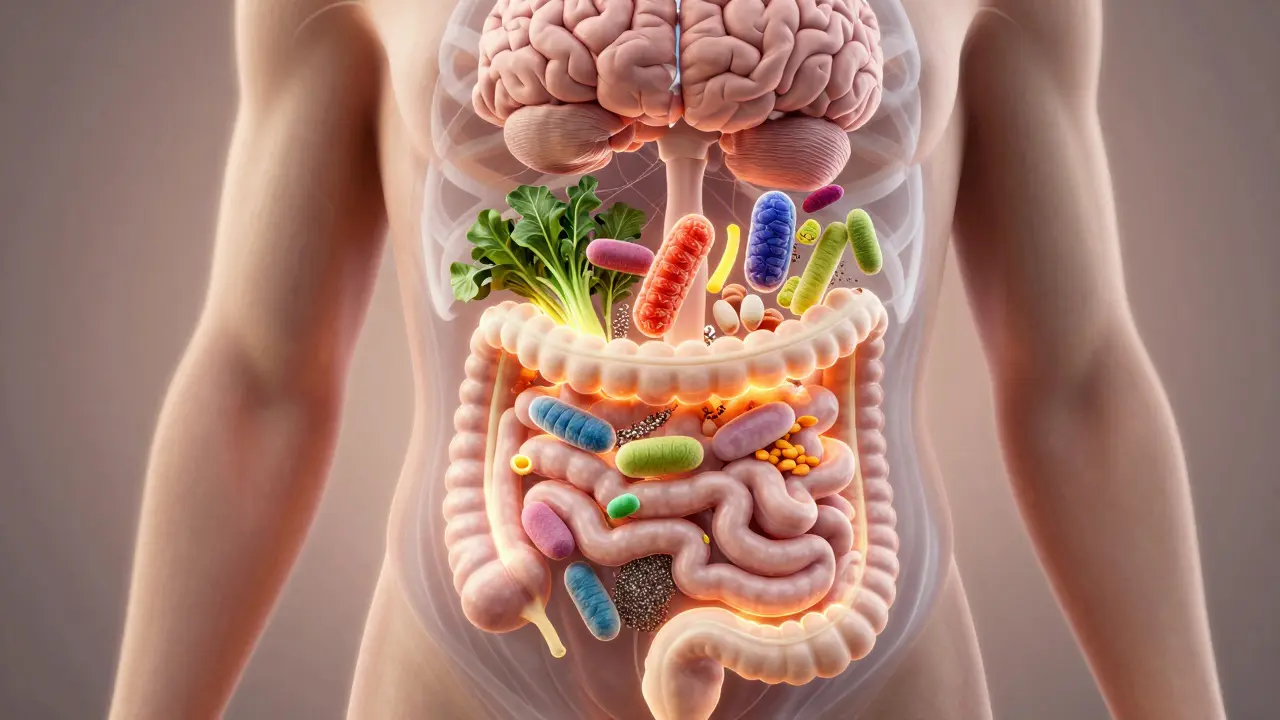
Your gut isn’t just a place where food disappears. It’s a living, breathing ecosystem that shapes how you feel, think, and even sleep. If you’ve ever felt bloated after a meal, struggled with brain fog, or noticed your mood dip after eating junk food, your gut is trying to tell you something. Most people treat gut health like a background process-something that just works until it doesn’t. But the truth? Good gut health isn’t a luxury. It’s the foundation of everything from immunity to mental clarity.
What Exactly Is Gut Health?
Gut health means more than not having stomach pain. It’s about the balance of trillions of microbes living in your intestines-the bacteria, fungi, and viruses that make up your gut microbiome a complex community of microorganisms that live in the digestive tracts of humans and other animals. These microbes don’t just digest food. They produce vitamins, train your immune system, and even send signals to your brain.
When your gut microbiome is in balance, you feel it. You have regular bowel movements. You sleep better. You don’t get sick as often. You feel calm, focused, and energized. But when it’s out of whack? That’s when bloating, fatigue, anxiety, and even skin issues show up.
The Gut-Brain Connection Is Real
You’ve heard of the fight-or-flight response. But did you know your gut has its own nervous system-the enteric nervous system a network of neurons embedded in the walls of the gastrointestinal tract, often called the "second brain"? It communicates directly with your brain through the vagus nerve. That’s why stress can give you stomach cramps, and why a bad gut can make you feel anxious or depressed.
A 2023 study from the University of California found that people with chronic digestive issues were 2.5 times more likely to report moderate to severe anxiety. Not because they were "thinking too much," but because their gut bacteria weren’t producing enough serotonin-the neurotransmitter responsible for mood regulation. About 90% of your body’s serotonin is made in the gut. If your gut’s not working right, your brain doesn’t get what it needs.
Signs Your Gut Needs Help
You don’t need a lab test to know your gut’s off. Look for these everyday clues:
- Constant bloating or gas after meals
- Unexplained fatigue, even after sleeping
- Frequent sugar cravings
- Skin problems like acne or eczema
- Mood swings or feeling "off" without reason
- Getting sick often
- Difficulty concentrating or brain fog
These aren’t "normal." They’re signals. Your body isn’t broken-it’s trying to rebalance.
What’s Killing Your Gut?
Modern life is designed to disrupt your gut. Here’s what’s doing the damage:
- Processed foods - High in sugar, unhealthy fats, and artificial additives that feed bad bacteria.
- Antibiotics - Even one course can wipe out good bacteria for months.
- Chronic stress - Cortisol shuts down digestion and reduces microbial diversity.
- Lack of fiber - Most people eat less than 15 grams a day. Experts recommend 30+.
- Overuse of hand sanitizers and antibacterial cleaners - They reduce exposure to beneficial microbes that help train your immune system.
It’s not about being perfect. It’s about removing the biggest offenders one at a time.
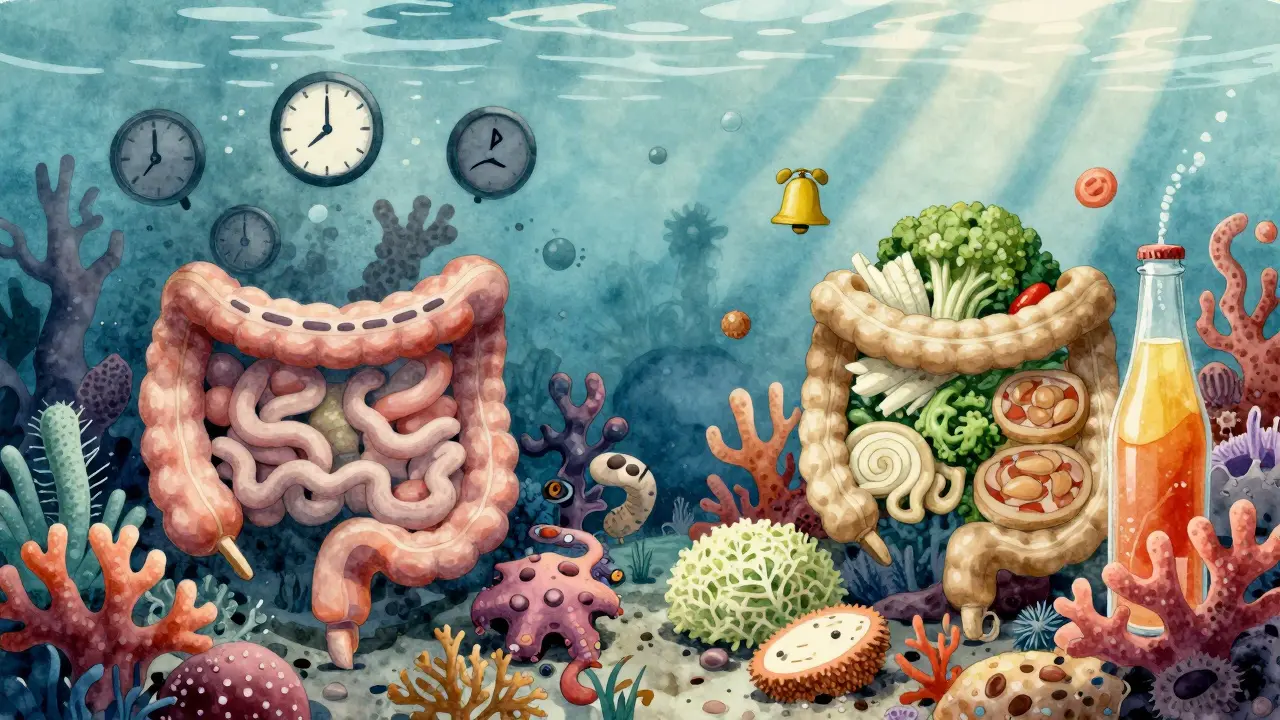
How to Rediscover Your Gut Health
Rebuilding your gut isn’t about expensive supplements or extreme diets. It’s about simple, consistent habits.
1. Eat More Fiber-The Right Kind
Fiber isn’t just for regularity. It’s food for your good bacteria. Aim for 30+ grams daily. That means:
- 2 cups of leafy greens (spinach, kale)
- 1 cup of lentils or chickpeas
- 1 medium apple with skin
- 1/4 cup of chia or flax seeds
Not all fiber is the same. Soluble fiber (oats, beans) feeds bacteria. Insoluble fiber (whole grains, veggies) keeps things moving. You need both.
2. Add Fermented Foods Daily
These are natural sources of probiotics live microorganisms that, when consumed in adequate amounts, confer a health benefit on the host:
- Unpasteurized sauerkraut (check the label-no vinegar or sugar)
- Kombucha (low-sugar varieties)
- Plain, unsweetened yogurt with live cultures
- Miso soup
- Kimchi
Start with a tablespoon a day. Your gut will thank you. No need to go overboard-consistency beats quantity.
3. Give Your Gut a Break
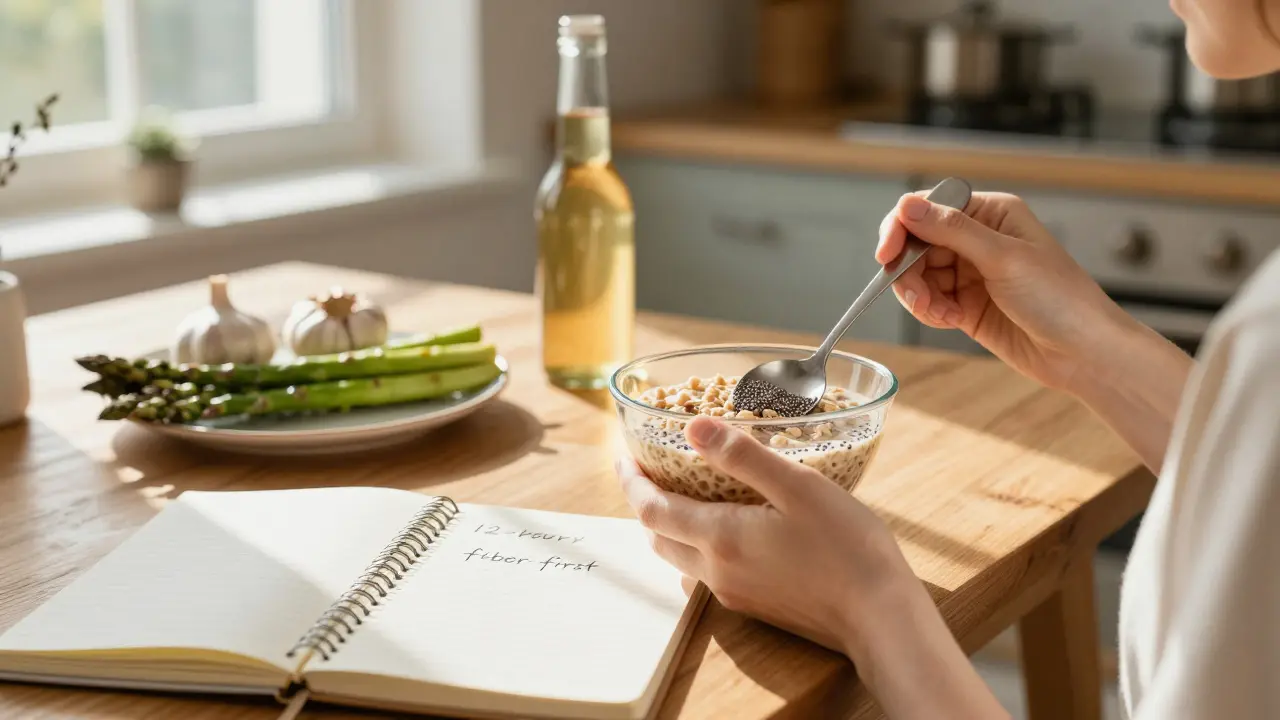
Continuous snacking keeps your digestive system running nonstop. Try this: leave at least 12 hours between dinner and breakfast. That’s a 12-hour overnight fast. It gives your gut time to repair, clean out debris, and reset its microbial balance. You don’t need to starve. Just stop eating at 8 p.m. and have your next meal at 8 a.m.
4. Manage Stress Like Your Gut Depends On It-Because It Does
Stress isn’t just "in your head." It directly slows digestion, reduces microbial diversity, and increases gut permeability (leaky gut). Try:
- 5 minutes of deep breathing before meals
- Walking after dinner (even 10 minutes)
- Journaling for 5 minutes before bed
These aren’t "self-care" buzzwords. They’re biological necessities.
Probiotics: Do You Need Them?
Probiotic supplements can help-but they’re not magic pills. A 2024 meta-analysis in Nature Medicine found that probiotics were most effective for people who had recently taken antibiotics or suffered from antibiotic-associated diarrhea. For general gut health, food sources are better. Why? Because supplements contain only a few strains. Your gut needs hundreds.
If you do take a supplement, look for:
- At least 10 billion CFUs (colony-forming units)
- Multiple strains (Lactobacillus, Bifidobacterium)
- Refrigerated storage (live cultures die at room temperature)
And remember: probiotics don’t stay forever. You need to keep feeding them with fiber.
What About Prebiotics?
Prebiotics are the food for probiotics. Think of them as fertilizer for your good bacteria. Foods rich in prebiotics include:
- Garlic
- Onions
- Asparagus
- Jerusalem artichokes
- Green bananas
- Whole grains like oats and barley
These aren’t fancy superfoods. They’re common pantry items. Add one to your meals daily.
How Long Does It Take?
Most people notice changes in 2-4 weeks. Bloating improves. Energy lifts. Sleep gets deeper. But full gut restoration? That takes 3-6 months. It’s not a sprint. It’s a slow rebuild. Don’t quit because you don’t feel better instantly. Your gut doesn’t heal overnight.
What’s Holding You Back?
Many people think they need to overhaul their entire diet. You don’t. Start with one change:
- Swap your morning sugary cereal for oats with chia seeds.
- Add a spoonful of sauerkraut to your lunch.
- Stop eating 2 hours before bed.
One small change, done daily, is more powerful than a perfect plan abandoned after a week.
Your Gut Is Your First Line of Defense
70% of your immune system lives in your gut. When your microbiome is balanced, your body fights off infections better. When it’s not, you catch every cold that goes around. Good gut health isn’t about feeling good today. It’s about staying healthy tomorrow.
You don’t need a doctor’s prescription to fix it. You just need to stop ignoring it.