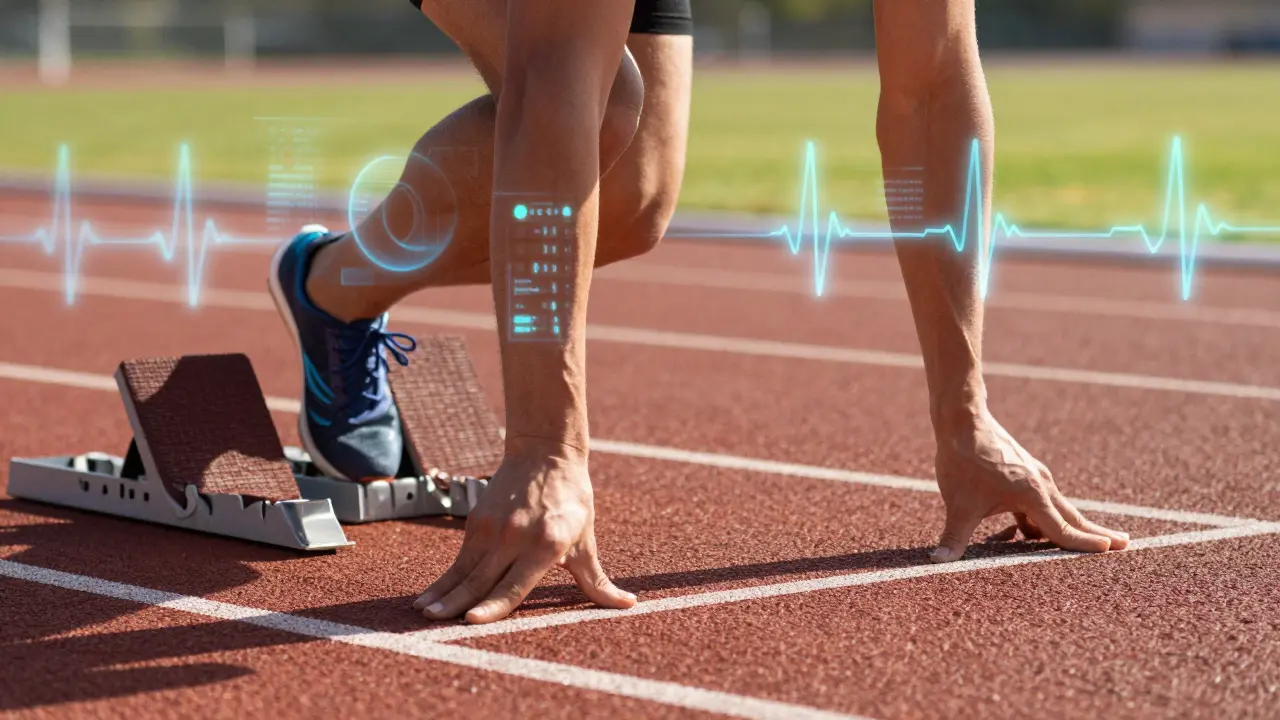
Key Takeaways:
- Biofeedback turns invisible bodily functions into visible data.
- Athletes use it to master the "flow state" and reduce pre-game anxiety.
- Heart Rate Variability (HRV) is the gold standard for measuring recovery.
- Neurofeedback helps focus the mind by training brainwave patterns.
- It transforms subjective "feeling" into objective, actionable data.
What is Actually Happening During Biofeedback?
Most of us have no idea what our internal organs are doing until something goes wrong. You don't know your blood pressure is high until a doctor tells you, and you don't know your muscles are tense until you wake up with a sore neck. Biofeedback is a mind-body technique that uses electronic monitoring of a subtle bodily function to provide feedback in the form of sounds or visual signals. By seeing these signals in real-time, you can learn to consciously control functions that were once thought to be automatic.
Think of it like a mirror for your insides. If you're a tennis player and you see a graph on a screen showing your muscle tension spiking right before a serve, you can consciously relax those shoulders. Over time, your brain creates a shortcut. You no longer need the screen; you recognize the physical sensation of tension and kill it before it affects your swing. It's essentially a way of hacking the Autonomic Nervous System, which controls everything from your heart rate to your digestion.
The Secret Weapon: Heart Rate Variability (HRV)
If you hang around a modern training facility, you'll hear athletes talking about "HRV." It's not just another acronym. Heart Rate Variability (HRV) is the measure of the variation in time between each heartbeat. It sounds counterintuitive, but a healthy heart doesn't beat like a metronome. It varies. A high HRV means your body is resilient and ready to handle stress; a low HRV means you're overworked or burnt out.
Athletes use HRV biofeedback to determine exactly when to push and when to pivot to recovery. If a marathoner wakes up and their HRV is significantly lower than their baseline, they know that a high-intensity interval session would be counterproductive. Instead of guessing, they use the data to adjust their load. This prevents Overtraining Syndrome, a condition where the body simply stops responding to exercise due to chronic fatigue.
| Type | What it Measures | Athletic Application | Goal |
|---|---|---|---|
| Electromyography (EMG) | Muscle electrical activity | Correcting form and tension | Efficiency of movement |
| Thermal Biofeedback | Skin temperature | Managing stress response | Calming the nervous system |
| Neurofeedback (EEG) | Brainwave patterns | Mental focus and "the zone" | Cognitive control |
| Respiratory Biofeedback | Breathing rate/depth | Oxygenation and anxiety | Rhythmic stability |

Training the Brain with Neurofeedback
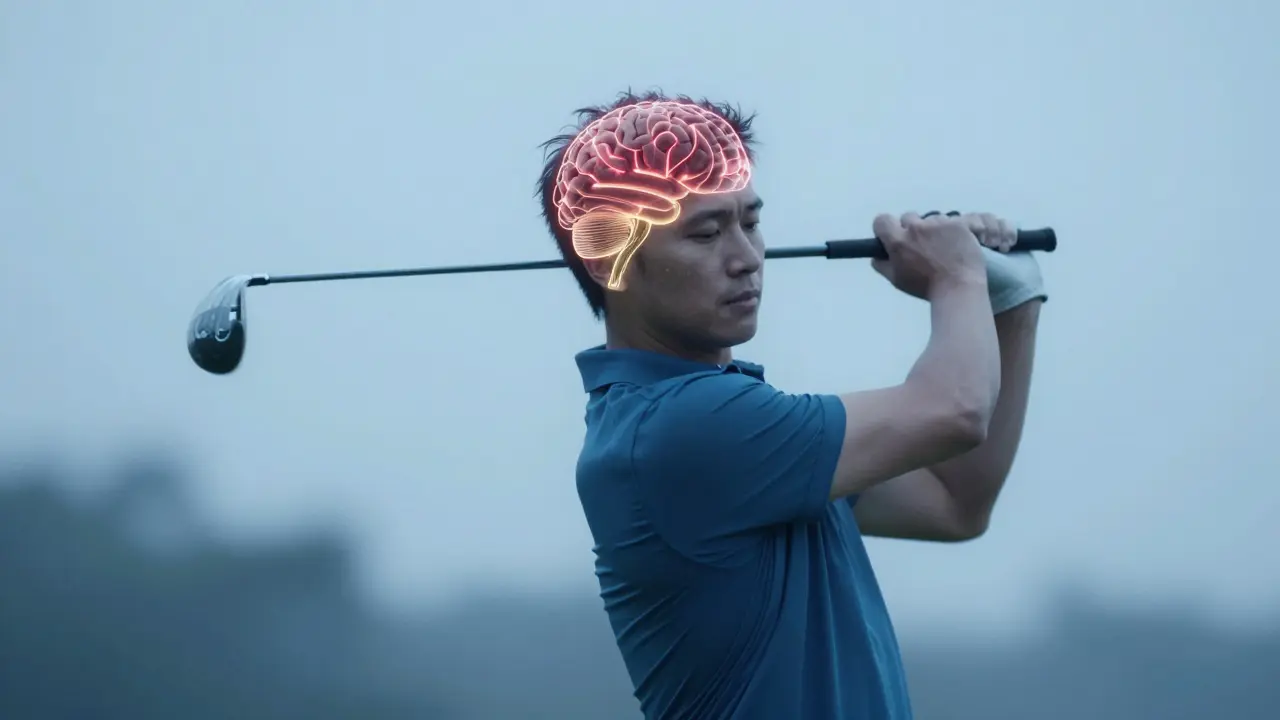
Physical skill is only half the battle. The other half is played between the ears. Neurofeedback is a specialized form of biofeedback that monitors brainwave activity using electrodes placed on the scalp. It's like a video game for your brain. If the athlete produces the "correct" brainwave pattern (like alpha waves for relaxed focus), they might see a car move forward on a screen. If their mind wanders, the car stops.
Professional golfers use this to master the "quiet eye" period-that split second of total stillness and focus right before hitting the ball. By training their brains to enter this state on command, they aren't relying on luck to find their focus; they're using a learned skill. It's the difference between hoping you'll be in the zone and knowing how to drive yourself there.
Breaking the Cycle of Performance Anxiety
Every athlete has faced the "yip"-that sudden, inexplicable loss of skill under pressure. This usually happens because the Amygdala, the brain's fear center, hijacks the prefrontal cortex. Your body goes into fight-or-flight mode, your muscles stiffen, and your breathing becomes shallow. You've essentially shut down the part of your brain that knows how to play the game.
Biofeedback helps athletes recognize the very first signs of this hijack. By monitoring skin conductance (how much you sweat) or respiratory patterns, a basketball player can feel the anxiety rising and use a specific breathing technique to trigger the Parasympathetic Nervous System, which acts as the body's braking system. Instead of panicking about the panic, they see the data and apply the fix in real-time.
From the Lab to the Field: Practical Application
You don't need a PhD and a million-dollar lab to use these principles. The technology has shrunk. We now have wearable sensors that track everything from sweat composition to muscle activation. But the real magic happens when the data is used for Psychological Skills Training (PST).
A typical workflow for a pro athlete looks like this:
- Baseline Mapping: Recording how the body reacts during a normal practice session.
- Stress Induction: Simulating game-day pressure (loud noises, timers, stakes).
- Observation: Watching how the heart rate and muscle tension spike.
- Regulation: Using breathing or visualization to bring those numbers back down.
- Integration: Applying those same mental cues during a real competition without the sensors.
This systematic approach removes the mystery from performance. It stops being about "feeling confident" and starts being about "managing physiological arousal." When you can control your heart rate, you control the game.
Does biofeedback replace traditional sports psychology?
Not at all. It's a tool that enhances it. While a sports psychologist helps you work through the mental blocks and goals, biofeedback provides the objective evidence of whether your mental strategies are actually working on a physical level. It's the "proof" that a breathing exercise is actually lowering your cortisol.
Is biofeedback safe for all athletes?
Yes, it is non-invasive. Most biofeedback methods only involve sensors that sit on the skin or read signals from a distance. There are no chemicals or electrical shocks involved; it's simply a monitoring system that teaches you how to use your own body's existing capabilities.
How long does it take to see results?
Some athletes feel the benefit immediately through better breathing, but true mastery-the ability to control your nervous system without a machine-usually takes 6 to 12 weeks of consistent training. It's a skill, much like learning a new sport, and requires repetition.
Can amateurs use biofeedback or is it only for pros?
Anyone can use it. While pros use high-end EEG and EMG, amateurs can start with simple HRV apps or wearable heart rate monitors. The principle of learning to regulate your stress response is universal, whether you're playing in the World Cup or a local weekend league.
What is the most effective biofeedback tool for beginners?
Heart Rate Variability (HRV) tracking is the best entry point. It's accessible through many smartwatches and rings and provides immediate insight into your recovery and stress levels, making it a practical starting point for any athlete.
Next Steps for Implementing Biofeedback
If you're looking to integrate these methods, don't try to track everything at once. Start with one metric-usually HRV-to understand your recovery patterns. Once you can read your body's signals, move toward active regulation. Use a simple app to guide your breathing and watch how your heart rate responds. The goal isn't to become a data scientist; it's to develop a deeper conversation between your conscious mind and your unconscious body. Once that link is established, the performance gains usually follow naturally.