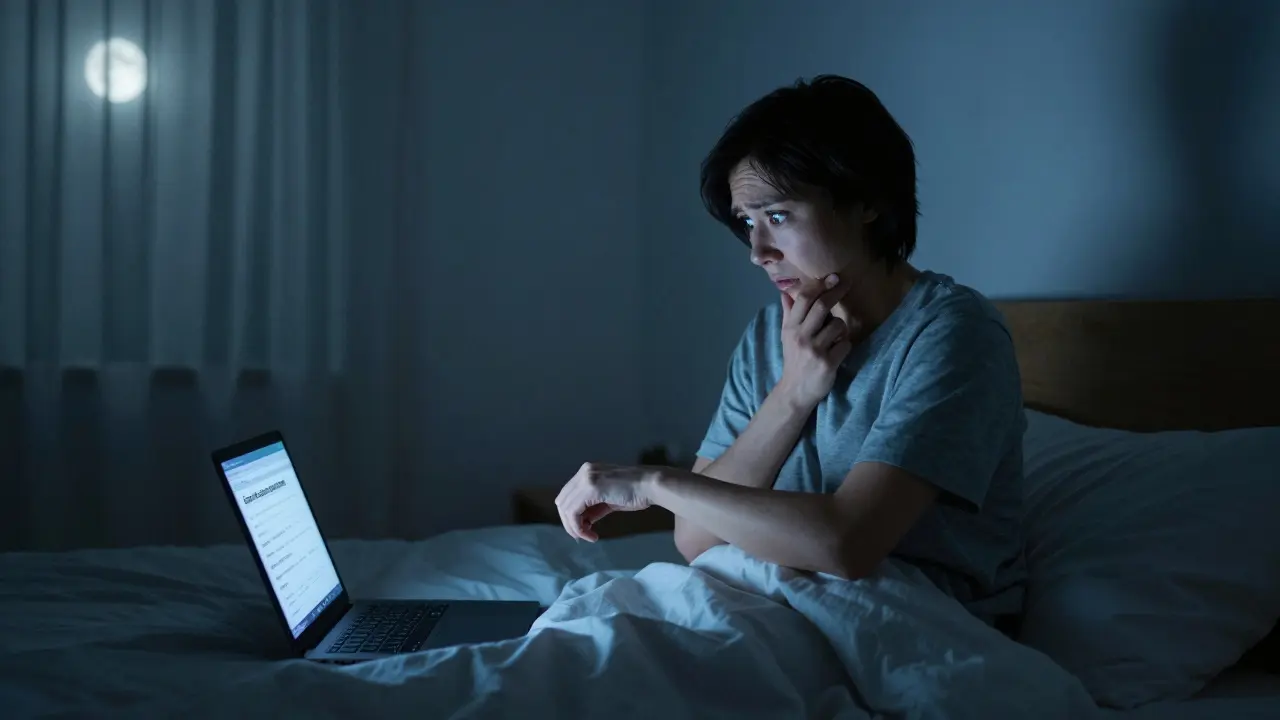
You check your pulse five times a day. You Google every twinge in your chest, every strange headache, every weird sensation in your gut. You’ve read every article, watched every video, and still, you can’t shake the feeling that something is terribly wrong. You’re not alone. Around 4% of adults in Australia experience health anxiety - a condition where the fear of having a serious illness becomes so overwhelming it disrupts work, relationships, and sleep. It’s not about being paranoid. It’s your brain stuck in a loop, mistaking normal bodily sensations for signs of disaster.
What Health Anxiety Really Feels Like
Health anxiety isn’t just worrying about getting sick. It’s the constant need to confirm you’re not dying. You might spend hours researching symptoms online, only to feel worse after reading about rare diseases. You avoid doctors because you’re afraid they’ll miss something - or worse, confirm your worst fear. You might cancel plans because you feel a slight fatigue, or spend nights lying awake, convinced your heart is failing.
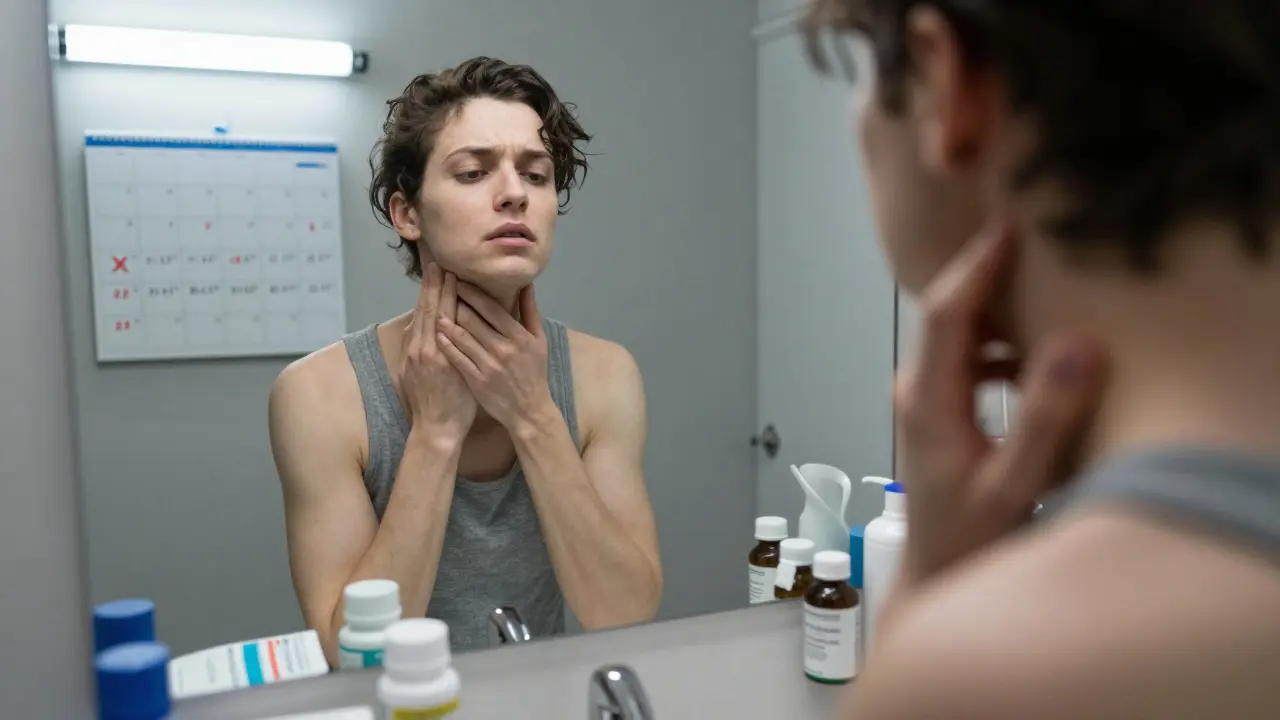
People with health anxiety often describe it as living with a silent alarm that never turns off. A normal muscle twitch becomes a sign of ALS. A headache isn’t stress - it’s a brain tumor. A sore throat? Cancer. The body’s natural signals - a racing heart after climbing stairs, a dry mouth from caffeine, a stomach flutter from nerves - get twisted into red flags. Your brain isn’t broken. It’s just overly alert, like a smoke detector that goes off every time you toast bread.
How It Takes Over Your Life
Health anxiety doesn’t just live in your head - it rewires your days. You might:
- Visit your GP every few weeks with new symptoms, even if tests keep coming back normal
- Cancel vacations because you’re afraid you’ll get sick far from help
- Stop exercising because you’re scared it’ll trigger a heart attack
- Avoid hospitals or clinics because the environment feels dangerous
- Relentlessly check your body - feeling your lymph nodes, staring at your skin for changes, counting your breaths
- Need constant reassurance from friends or family - but even that only lasts minutes
One woman I spoke to in Melbourne stopped going to her daughter’s school plays because she was terrified of catching something in a crowd. Another man quit his job after misreading a blood test result - he spent six months convinced he had liver disease, even though his doctor showed him the numbers were fine. The fear doesn’t fade with proof. It grows louder.
The Science Behind the Fear
Health anxiety isn’t random. It’s linked to how your brain processes threat. The amygdala - your brain’s alarm system - becomes hypersensitive. It flags harmless signals as life-threatening. At the same time, the prefrontal cortex, which normally says, “Calm down, this is normal,” gets quieter. You’re stuck in fight-or-flight mode, even when there’s no real danger.
Studies show people with health anxiety pay more attention to bodily sensations than others. In one experiment, participants were told to focus on their heartbeat. Those with health anxiety noticed tiny changes others missed - and interpreted them as dangerous. It’s not that their bodies are different. It’s that their brains are wired to see danger where none exists.
Genetics play a role. So does upbringing. If you grew up with a parent who was constantly ill or terrified of doctors, you’re more likely to adopt that mindset. Trauma, chronic stress, or even a past illness can trigger it. And social media? It makes it worse. Scroll through health forums or YouTube videos, and you’ll find endless stories of people who were misdiagnosed - or worse, ignored until it was too late. Your brain latches onto those stories. They feel like warnings. They’re not. They’re outliers.
How It Feels to Be Misunderstood
One of the hardest parts of health anxiety is being told you’re “just anxious.” It sounds dismissive - and it hurts. When you say, “I think I have cancer,” and someone replies, “You’re fine, it’s just stress,” it doesn’t help. It makes you feel crazy. But here’s the truth: you’re not crazy. You’re suffering from a real mental health condition - Illness Anxiety Disorder, as it’s officially called in the DSM-5.
Doctors sometimes miss it. They see a patient who keeps coming back with the same concerns and assume they’re being difficult. But this isn’t attention-seeking. It’s fear-driven. You’re not asking for sympathy. You’re begging for safety.
And when you finally get a clean bill of health, the relief is short-lived. Because the next symptom comes. And the cycle starts again.
Breaking the Cycle
Medication alone won’t fix this. Neither will more tests. The only proven way out is cognitive behavioral therapy - specifically, a version called CBT for health anxiety. It teaches you to:
- Recognize when your brain is catastrophizing
- Delay checking symptoms or Googling for 24 hours
- Reduce body-checking rituals
- Accept uncertainty - not as a weakness, but as part of being human
One man in Sydney started with a daily ritual of checking his blood pressure three times a day. His therapist asked him to reduce it to once. Then once a week. Then only if he felt chest pain that lasted more than five minutes. Within three months, his anxiety dropped by 70%. He didn’t need a new diagnosis. He needed to stop feeding the fear.
Exposure therapy works too. Slowly, safely, you’re guided to sit with the discomfort - without seeking reassurance. You learn that the panic fades. The chest tightness passes. The dizziness doesn’t mean you’re dying. It just means you’re anxious.

What You Can Do Today
You don’t have to wait for therapy to start feeling better. Here’s what helps right now:
- Keep a journal. Write down your worry, then write down the evidence for and against it. Often, the evidence against wins - but you’ll only see that if you write it out.
- Set a “worry time.” Give yourself 10 minutes a day to think about health fears. When the thoughts pop up outside that window, say, “I’ll think about this at 5 p.m.”
- Limit screen time. Use an app blocker to restrict health-related searches to once a day. Google is not a doctor.
- Practice grounding. When anxiety spikes, name five things you can see, four you can touch, three you can hear, two you can smell, one you can taste. It pulls you out of your head and into your body.
- Find a therapist who specializes in anxiety. Look for CBT practitioners. Don’t settle for someone who just listens - you need someone who teaches you how to change your thinking.
It’s not about becoming fearless. It’s about learning to live alongside the fear without letting it run your life.
Reclaiming Your Life
Health anxiety doesn’t disappear overnight. But it can shrink. People who stick with treatment often say the same thing: “I didn’t realize how much space it was taking up.” Once the fear loses its power, you notice other things - the smell of rain, the sound of your child laughing, the warmth of sunlight on your skin. You remember what it’s like to be present.
You don’t have to be healthy to be well. You just have to stop treating every sensation like a warning sign. Your body isn’t your enemy. Your fear is. And fear, no matter how loud, can be quieted.
Is health anxiety the same as hypochondria?
Yes, health anxiety is the modern term for what was once called hypochondria. The name changed to reduce stigma and reflect better understanding. Both describe excessive worry about having a serious illness despite medical reassurance. The DSM-5 now classifies it as Illness Anxiety Disorder, which covers both those who have physical symptoms and those who don’t.
Can health anxiety cause real physical symptoms?
Yes - but not because you have a hidden disease. Anxiety triggers real physical reactions: muscle tension, rapid heartbeat, dizziness, stomach upset, tingling in hands and feet. These are caused by stress hormones like cortisol and adrenaline. Your body reacts as if you’re in danger - even when you’re not. So while the symptoms are real, their source is anxiety, not cancer, MS, or heart disease.
How do I know if I have health anxiety or if I’m just being careful?
Being careful means getting a lump checked out. Health anxiety means checking it daily, Googling every possible cause, and still not believing the doctor. If your worry dominates your thoughts, disrupts your daily life, and continues despite normal test results, it’s likely health anxiety. If you’re unsure, ask yourself: Would I still feel this way if I never looked up symptoms again?
Will therapy really help, or is it just talking?
Therapy for health anxiety isn’t just talking - it’s rewiring. Cognitive behavioral therapy (CBT) uses structured techniques to break the cycle of fear and reassurance-seeking. Studies show 70-80% of people improve significantly after 12-16 sessions. It’s not magic. It’s practice. You learn to respond differently to your thoughts - and over time, the fear loses its grip.
Should I stop seeing my doctor if I have health anxiety?
No. But you should work with your doctor to create a plan. Many doctors now use a “one-test-per-year” rule for people with health anxiety - meaning you get one physical check-up annually unless a new, persistent symptom appears. This prevents unnecessary testing while still keeping you safe. Talk to your GP about setting boundaries. You’re not being difficult - you’re trying to heal.
What Comes Next
If you’ve recognized yourself in this, you’re already on the path to change. The first step isn’t fixing your body - it’s understanding your mind. You’re not broken. You’re not weak. You’re someone who’s been trapped in a fear loop, and now you know how to step out of it.
Start small. One less Google search. One less body check. One day where you let uncertainty live alongside you. Slowly, you’ll find your life - the one you had before the fear took over - waiting for you.