
Ever notice how after a good laugh, your shoulders drop, your chest feels lighter, and the tightness in your head just melts away? It’s not just in your head-laughter is one of the most powerful, free, and underused tools for improving your health. You don’t need a gym membership, a prescription, or a fancy app. Just a silly video, a friend who tells terrible jokes, or even a memory that makes you snort. Science shows that laughter doesn’t just feel good-it actively heals.
Laughter Reduces Stress Hormones
When you laugh, your body doesn’t just release endorphins. It also slashes cortisol and adrenaline, the two main stress hormones that keep your heart racing and your muscles tight. A 2023 study from the University of Maryland found that people who watched a 20-minute comedy clip had cortisol levels drop by 39% compared to those who sat quietly. That’s more than what many people get from a 30-minute walk. Chronic stress doesn’t just make you feel anxious-it weakens your immune system, raises blood pressure, and speeds up aging. Laughter interrupts that cycle. It tells your nervous system: “We’re safe. You can relax.”It Boosts Your Immune System
Your immune system doesn’t just respond to vaccines and vitamins. It reacts to your mood. When you laugh, your body increases production of infection-fighting antibodies and activates T-cells-the soldiers that hunt down viruses and cancer cells. Researchers at Loma Linda University tracked participants who watched humorous videos daily for a week. Those who laughed regularly saw a 27% increase in natural killer cell activity. That’s the same level of boost you’d get from moderate exercise. And unlike a pill, laughter has zero side effects. It doesn’t mess with your sleep, your digestion, or your mood. It just makes your defenses stronger.Laughter Protects Your Heart
Think of your heart like a muscle. It needs to stretch and relax to stay healthy. Laughter does exactly that. When you laugh, your blood vessels expand, increasing blood flow by up to 22%. That’s similar to the effect of aerobic exercise. A 15-year study from the University of Maryland followed over 1,000 adults and found that those who laughed frequently had a 40% lower risk of heart disease. Why? Because laughter reduces inflammation in the arteries, lowers blood pressure, and improves circulation. It’s not magic-it’s physics. When your vessels dilate, your heart doesn’t have to work as hard. And when your heart works less hard, it lasts longer.
It Relieves Physical Pain
Ever laughed so hard you forgot about that backache or headache? That’s not coincidence. Laughter triggers the release of endorphins-your body’s natural painkillers. These are the same chemicals activated by exercise, acupuncture, or even a strong dose of morphine (but without the addiction risk). A small clinical trial at the University of Oxford showed that participants who watched comedy for 15 minutes could tolerate cold water immersion 10% longer afterward. That’s a measurable increase in pain tolerance. For people dealing with chronic pain-arthritis, migraines, fibromyalgia-laughter isn’t a replacement for treatment, but it’s a powerful, safe complement. No side effects. No cost. Just a daily dose of giggles.Improves Breathing and Lung Function
Laughter is like a mini workout for your lungs. It forces you to take deep, full breaths, then expel air rapidly. That clears out stale air, increases oxygen intake, and helps loosen mucus. People with COPD or asthma often report feeling less tight in the chest after laughing. In laughter yoga classes-where people simulate laughter without jokes-participants show improved lung capacity and reduced shortness of breath. Even a forced laugh can trigger the same physiological response as a real one. Your body doesn’t care if the joke was funny. It just needs you to open your mouth and let it out.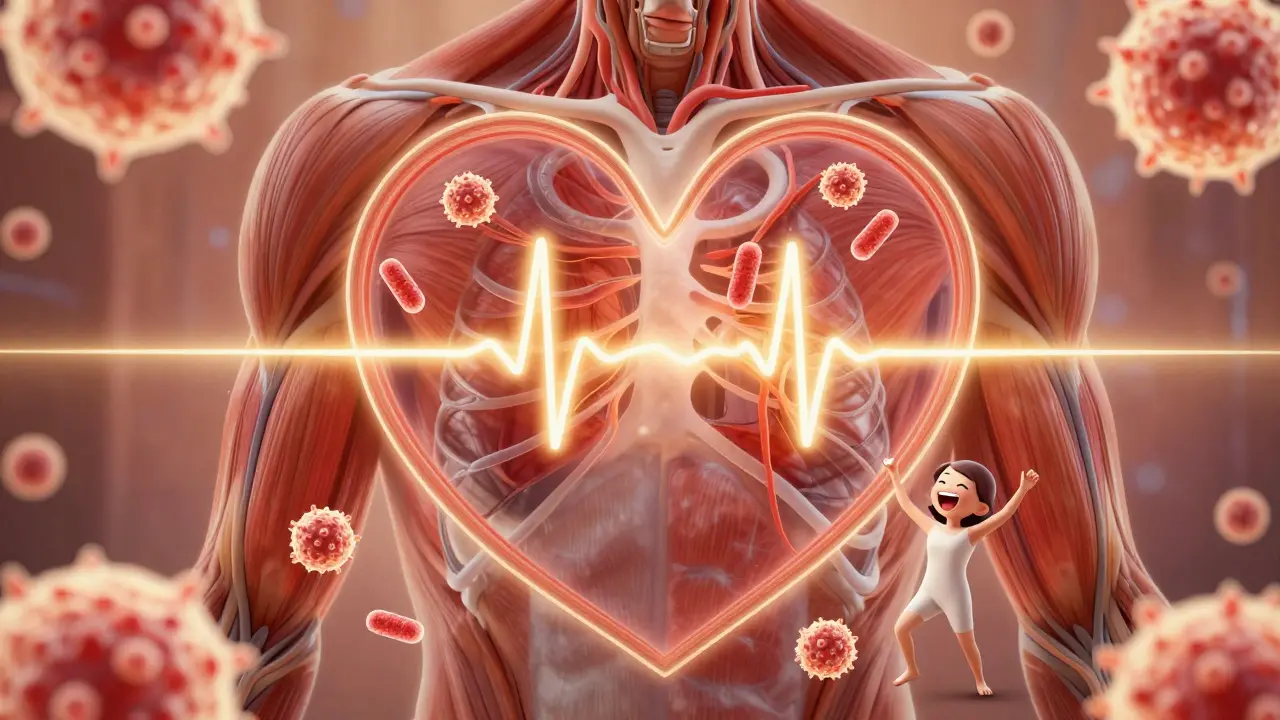
Strengthens Social Bonds (Which Also Helps Your Health)
Laughter isn’t just a solo act. It’s a social glue. When you laugh with someone, your brains sync up. Neuroscientists call it neural coupling. That’s why shared laughter builds trust faster than conversation. People who laugh together feel more connected, less alone, and more supported. Loneliness is as deadly as smoking 15 cigarettes a day. Laughter fights that. Whether it’s a family dinner with goofy stories, a coworker who cracks up at your terrible puns, or a group of seniors in a laughter circle-these moments create emotional safety. And emotional safety lowers stress, improves sleep, and gives you a reason to keep showing up.How to Get More Laughter in Your Life
You don’t need to be a stand-up comic. You just need to make space for it.- Watch one funny video a day-YouTube, TikTok, or a classic sitcom rerun. Set a reminder if you have to.
- Keep a “laugh log.” Write down three things that made you chuckle this week. It trains your brain to notice humor.
- Call someone who makes you laugh. Not to vent. Just to share a silly memory.
- Try laughter yoga. Free classes are offered in parks and community centers in Melbourne, Sydney, and Brisbane. No yoga experience needed.
- Play with kids or pets. They’re natural comedians. Their joy is contagious.
Why This Works-Even When You Fake It
You don’t have to be in the mood. The body doesn’t know the difference between real and fake laughter. In fact, studies show that simulated laughter (like in laughter yoga) produces the same biological benefits. Your diaphragm still contracts. Your endorphins still flood your system. Your stress hormones still drop. So if you’re feeling down, don’t wait for something funny to happen. Start laughing anyway. Even if it feels awkward at first. The more you do it, the easier it gets. And the more your body believes you’re safe, the more it starts to heal.Laughter isn’t a cure-all. But it’s one of the few things that improves your heart, your lungs, your immune system, your pain tolerance, and your relationships-all at the same time. And it costs nothing. You don’t need a prescription. You don’t need to wait for an appointment. You just need to open your mouth and let go.
Can laughing really help with anxiety?
Yes. Laughter interrupts the cycle of anxious thoughts by shifting your focus to the present moment and triggering the relaxation response in your nervous system. Studies show that regular laughter reduces symptoms of generalized anxiety, especially when combined with social connection. It doesn’t replace therapy, but it’s a powerful daily tool.
How much laughter do I need each day?
There’s no official dose, but research suggests 15-20 minutes of laughter a day-spread out-is enough to see measurable benefits. That’s about the length of one funny video or a short chat with someone who makes you chuckle. Consistency matters more than intensity.
Is laughter yoga real, or just a gimmick?
It’s real. Laughter yoga was developed in India in the 1990s and is now practiced in over 100 countries. Participants simulate laughter through playful exercises, and the body responds as if it’s real. Clinical trials have shown improved mood, reduced stress, and better lung function in participants. It’s not about the joke-it’s about the movement and breath.
Can laughter help with depression?
Laughter alone won’t cure clinical depression, but it can be a valuable part of recovery. It boosts serotonin and dopamine, reduces isolation, and creates small moments of joy that build over time. People in therapy for depression often report that daily laughter-even forced-helps them reconnect with pleasure and motivation.
Why do I feel tired after laughing really hard?
Because laughter is physical. It engages your diaphragm, abdominal muscles, and even your face and arms. After a long laugh, your body has used energy and released tension. That fatigue isn’t bad-it’s the sign of a system reset. You’re not worn out-you’re reset.
If you’ve been feeling run down, stressed, or just emotionally flat, try this: set a timer for five minutes tomorrow. Play a clip of your favorite funny scene. Sit back. Let it roll. Don’t think. Just laugh. See what happens the next day. Your body might thank you before your mind even realizes why.