
You’ve done it again. It’s early June, and you’re staring at a list of resolutions that look like they were written by someone who thinks willpower is a renewable resource. You wanted to run a marathon, eat only kale, and meditate for an hour every morning. Instead, you ran twice, ate a salad once, and stared at the ceiling while your phone buzzed. Sound familiar? The problem isn’t your dedication. It’s your strategy.
Most people fail at setting health goals because they treat them like distant destinations rather than daily habits. They aim for the mountain peak without packing water or checking the weather. This guide strips away the fluff. We’re going to build a system that works with human psychology, not against it. If you want results that last beyond New Year’s Day, you need to stop guessing and start engineering your success.
The Anatomy of a Goal That Fails
Before we build something that works, let’s look at why most attempts collapse. Think about your last failed goal. Was it vague? Did it rely entirely on motivation? Did it ignore your actual life?
- Vagueness: “Get healthier” is not a plan. It’s a wish. Your brain doesn’t know what action to take when the instruction is this broad.
- Motivation Dependency: Motivation is a spark, not fuel. It burns out in days. Habits are the engine that keeps you moving when you feel tired or bored.
- All-or-Nothing Thinking: Missing one day feels like failure, so you quit entirely. This perfectionist trap kills progress faster than laziness ever could.
Research from behavioral science shows that specific, actionable steps trigger the basal ganglia-the part of your brain responsible for automatic behaviors-much more effectively than abstract ideals. When you say “I will walk for 10 minutes after lunch,” your brain creates a neural pathway. When you say “I will exercise more,” nothing happens. Let’s fix this.
Mastering the SMART Framework for Health
The SMART framework is a method for setting objectives that are Specific, Measurable, Achievable, Relevant, and Time-bound. It’s been around since the 1980s, but it remains the gold standard because it forces clarity. Here’s how to apply it specifically to health, where emotions and biology often cloud judgment.
| Component | Weak Goal (Vague) | Strong Goal (SMART) |
|---|---|---|
| Specific | “Eat better.” | “Add one serving of vegetables to dinner every night.” |
| Measurable | “Lose weight.” | “Lose 5 pounds in the next 8 weeks.” |
| Achievable | “Run a marathon next month.” | “Walk briskly for 20 minutes, three times a week.” |
| Relevant | “Do yoga because my friend does.” | “Practice 10 minutes of stretching to reduce lower back pain from sitting.” |
| Time-bound | “Quit smoking someday.” | “Stop smoking by July 1st, using nicotine patches until then.” |
Notice the shift? The strong goals leave no room for interpretation. You either did it, or you didn’t. This binary feedback loop is crucial for building self-trust. Every time you hit a small target, you prove to yourself that you can keep promises. That confidence compounds.
Habit Stacking: The Secret Sauce of Consistency
Setting the goal is step one. Doing it repeatedly is step two, and it’s where most people stumble. Enter Habit Stacking, a concept popularized by author James Clear in his book *Atomic Habits*. The idea is simple: anchor a new behavior to an existing one.
Your brain already has routines hardwired. Brushing your teeth, drinking coffee, commuting to work-these are automatic. By attaching a new health goal to these anchors, you borrow their momentum.
- Identify the Anchor: What do you do every single day without thinking? Maybe it’s pouring your morning coffee.
- Define the New Habit: What is the tiny health action you want to add? Perhaps taking your multivitamin.
- Create the Formula: “After I [anchor], I will [new habit].” So, “After I pour my coffee, I will take my multivitamin.”
This removes decision fatigue. You don’t have to ask, “Should I take my vitamins now?” The cue is automatic. Start small. If you want to read more, stack it onto your evening shower routine: “After I get out of the shower, I will read one page of my book.” One page is impossible to fail at. But once you start, you’ll likely read more. The barrier to entry is low, which means the likelihood of starting is high.

Designing Your Environment for Success
Willpower is overrated. Environment design is underrated. If you want to eat less junk food, don’t rely on resisting the cookie jar on the counter. Throw the cookies away. Or better yet, don’t buy them. If you want to drink more water, place a full glass on your desk before you sit down to work.
Behavioral economists call this “choice architecture.” We make decisions based on the easiest path available. Make the healthy choice the easy choice, and the unhealthy choice the difficult one.
- Visibility: Put your running shoes by the door. Hide the remote control.
- Friction: Unplug the TV after every use so you have to plug it back in to watch. Charge your phone in another room so you don’t scroll in bed.
- Preparation: Chop your vegetables on Sunday. Pack your gym bag the night before. Remove the steps between intention and action.
When you wake up tired, you won’t think clearly. You’ll follow the path of least resistance. Design your home so that the path of least resistance leads to health.
Tracking Progress Without Obsession
Data drives improvement, but too much data causes anxiety. You need to track enough to see trends, but not so much that you become obsessed with daily fluctuations.
For physical activity, a simple calendar checkmark works wonders. The visual chain of successes motivates you to keep it going. For nutrition, consider photo journals instead of calorie counting. Taking a picture of your meals helps you recognize patterns without the stress of weighing every gram of food. For mental health, rate your mood on a scale of 1-10 each evening. Over time, you’ll see correlations between sleep, diet, and emotional state.
Avoid the trap of comparing your day-to-day numbers. Weight fluctuates due to hydration, salt intake, and hormonal cycles. Look at weekly averages. Trends matter; outliers do not.
Navigating Setbacks: The Art of the Reset
You will miss a day. You might even miss a week. This is not failure; it is data. The biggest mistake beginners make is the “what the hell” effect. You skip one workout, feel guilty, and then decide, “Well, I’ve ruined my streak, might as well eat pizza and binge Netflix.”
Break the cycle with the “Never Miss Twice” rule. If you miss one day, forgive yourself immediately. Analyze why it happened (were you tired? busy? unmotivated?), adjust your plan if necessary, and get back on track the very next day. Two missed days in a row is a slip. Three is a slide. Four is a new habit. Catch it early.
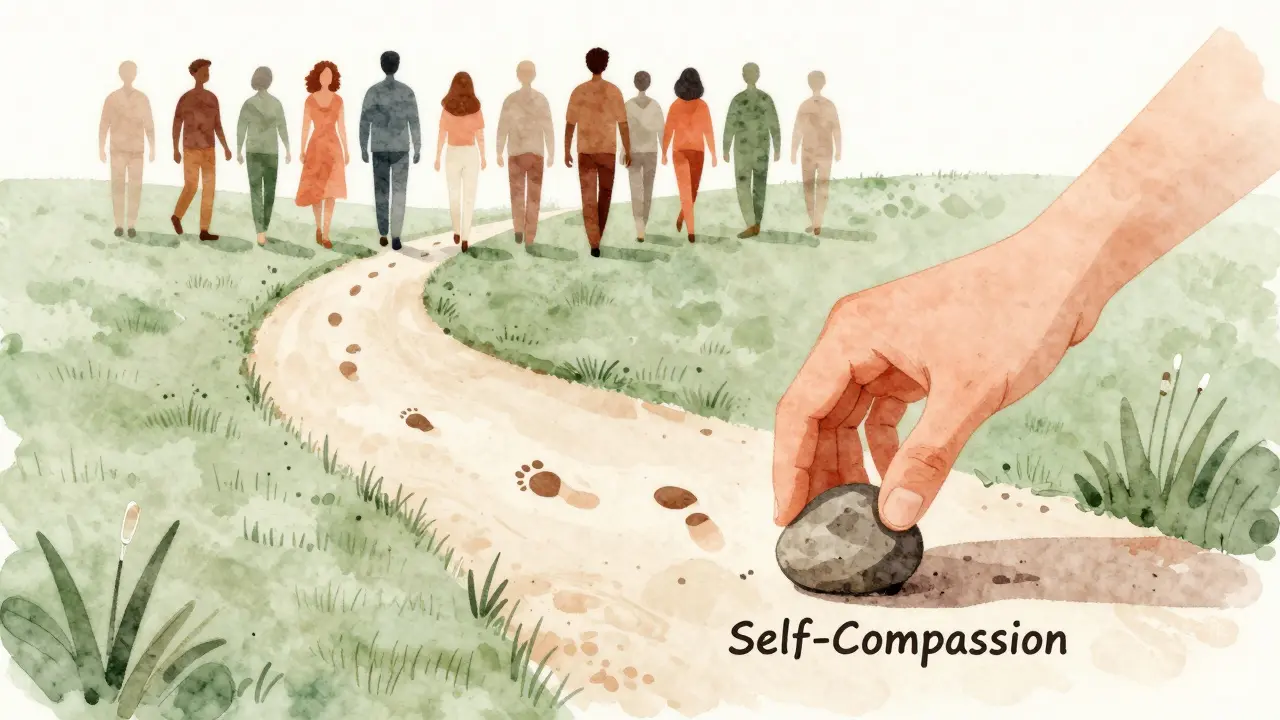
Self-compassion is not weakness. Studies show that people who practice self-compassion after failing to meet a goal are more likely to persist than those who criticize themselves. Be kind to yourself, but be firm with your standards.
Building a Support System
Humans are social creatures. We mirror the behaviors of those around us. If your friends spend their weekends hiking, you’re more likely to hike. If they spend it drinking beer on the couch, you’re more likely to do the same.
Find an accountability partner. This doesn’t have to be a best friend. It can be a coworker, a family member, or even an online community. Share your specific goals with them. Ask them to check in on you weekly. Public commitment increases the psychological cost of quitting. You don’t want to look unreliable to someone you respect.
If you can’t find a person, join a group. Running clubs, cooking classes, or meditation apps with community features provide structure and social reinforcement. The shared experience makes the effort feel lighter.
Review and Refine Quarterly
Goals are not set in stone. Life changes. Your body changes. Your priorities change. Schedule a quarterly review of your health goals. Ask yourself:
- Is this goal still relevant to who I am today?
- Am I enjoying the process, or just enduring it?
- What obstacles did I encounter, and how can I remove them?
- Did I achieve my target? If yes, what’s the next level? If no, was the goal unrealistic?
Adjust accordingly. Maybe you started with walking 10 minutes a day, and now you’re ready for 30. Maybe you realized that cardio drains your energy, and strength training boosts it. Pivot. Flexibility is key to long-term adherence. Rigidity leads to burnout.
Final Thoughts on Sustainable Change
Setting health goals is not about achieving perfection. It’s about direction. A slightly imperfect action taken consistently beats a perfect action taken once. Focus on systems, not outcomes. Build habits that fit into your real life, not the idealized version you imagine. Start small, stack wisely, design your environment, and forgive yourself when you stumble. The compound effect of small, daily improvements is powerful. Trust the process, and trust yourself.
How many health goals should I set at once?
Start with one or two. Trying to change everything at once overwhelms your brain’s capacity for adaptation. Master one habit before adding another. Once the first becomes automatic, layer the second on top.
What is the best time of day to start a new health habit?
The best time is when you have the most energy and fewest distractions. For most people, this is the morning. However, consistency matters more than timing. Choose a time that fits your current schedule reliably.
How long does it take to form a habit?
Research suggests it takes anywhere from 18 to 254 days, with an average of 66 days, for a behavior to become automatic. Complex habits take longer. Simple habits take less time. Don’t expect overnight results.
Can I set health goals if I have a chronic condition?
Yes, but consult your healthcare provider first. Tailor your goals to your specific limitations and capabilities. Focus on functional improvements, like mobility or energy levels, rather than generic metrics like weight loss.
What should I do if I lose motivation?
Rely on discipline and environment design, not motivation. Revisit your “why.” Remind yourself of the benefits. Break the task down into smaller, easier steps. Sometimes, just doing two minutes of the activity is enough to restart the momentum.