Aromatherapy for Sleep: Natural Ways to Fall Asleep Faster
When you struggle to fall asleep, your mind races, your body tenses, and no matter how tired you are, rest feels out of reach. That’s where aromatherapy for sleep, the use of plant-derived essential oils to support relaxation and rest. Also known as essential oil therapy, it’s a simple, non-drug way to signal your brain it’s time to wind down. Unlike pills that make you drowsy, aromatherapy works with your body’s natural rhythms—calming your nervous system, lowering stress hormones, and creating a sensory cue that says, it’s safe to sleep now.
This isn’t just anecdotal. Studies show that certain essential oils, like lavender and chamomile, can slow your heart rate and reduce cortisol levels, helping you slip into sleep more easily. You don’t need fancy gadgets or expensive apps—just a few drops of oil, a diffuser, or even a cotton ball tucked under your pillow. essential oils for sleep, concentrated plant extracts used to promote physical and emotional well-being like lavender, cedarwood, and bergamot appear again and again in research and real-life use because they work. They’re not magic, but they’re reliable when used consistently. And unlike sleep meds, they don’t leave you groggy the next morning.
What makes aromatherapy different is how it connects with your brain. Smell bypasses your thinking mind and goes straight to the limbic system—the part that controls emotion and memory. A whiff of lavender might remind you of a calm summer night, and that feeling alone can trigger relaxation. That’s why pairing scent with bedtime routines matters. Light a candle after dinner. Spritz your pillow with diluted lavender water. Rub a drop of chamomile oil on your wrists before bed. These small acts become signals your body learns to trust.
You’ll also find that sleep relaxation, techniques and practices designed to calm the mind and body before sleep works best when combined with aromatherapy. Deep breathing with lavender in the air? That’s a double hit on your nervous system. A warm bath with eucalyptus and a few drops of vetiver? You’re not just cleaning your skin—you’re resetting your sleep switch. And if you’ve tried meditation or journaling but still can’t quiet your thoughts, adding scent might be the missing piece.
It’s not about perfection. You don’t need to buy ten different oils or spend hours crafting blends. Start with one—lavender is the most tested and trusted. Keep it simple. Use it every night. Let your body build the association. Over time, that scent becomes your cue to let go.
Below, you’ll find real guides from people who’ve used these methods to fix their sleep—no prescriptions, no gimmicks. Some use diffusers. Others rub oil on their feet. A few swear by pillow sprays. You’ll see what works, what doesn’t, and how to avoid common mistakes like using low-quality oils or applying them wrong. This isn’t theory. It’s what people are actually doing to get better sleep, one breath at a time.
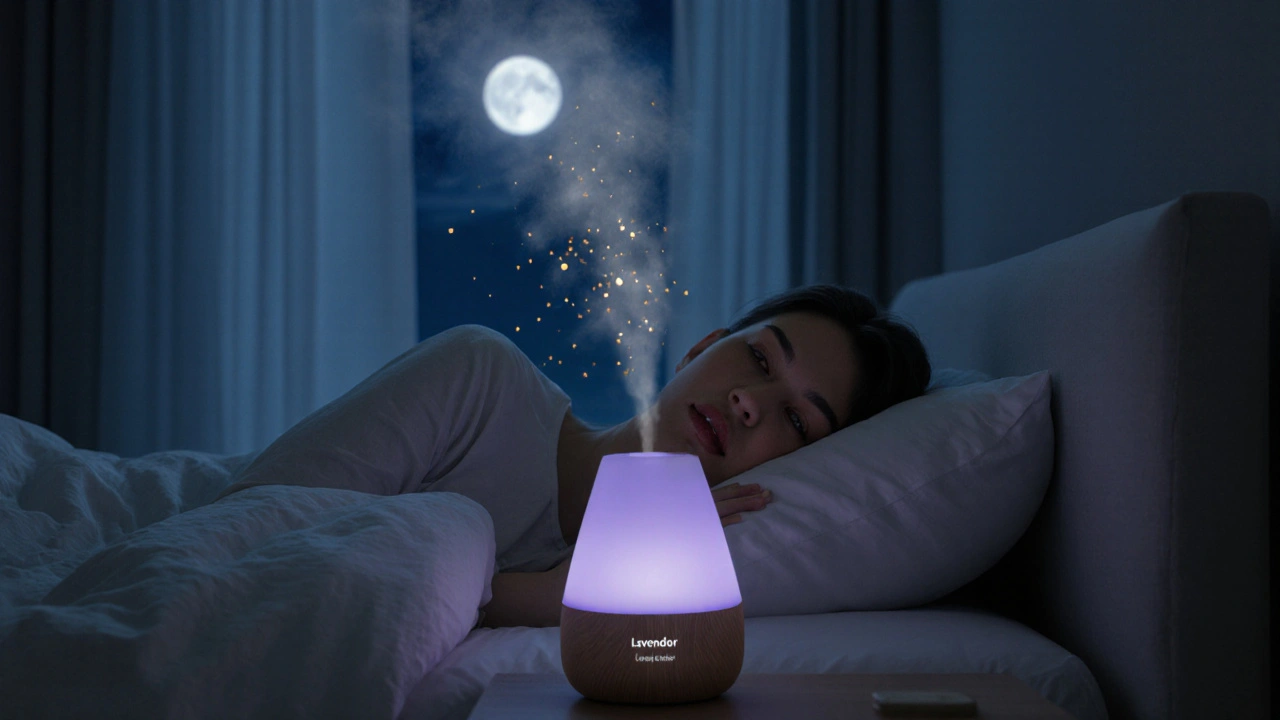
Aromatherapy for Better Sleep: Natural Essential Oils to Help You Fall Asleep Fast
- Arlo Sterling
- Nov, 3 2025
Discover how aromatherapy with lavender, chamomile, and cedarwood oils can help you fall asleep faster and sleep more deeply-naturally, without pills or side effects.
Learn More