
Have you ever tried meditating for an hour a day only to feel more anxious the next morning? You are not alone. For decades, we were told that stress is a mental problem requiring a mental solution. We were handed journals, breathing apps, and positive affirmations. But if your body feels like it’s stuck in fight-or-flight mode, thinking your way out of it is like trying to stop a car by turning off the radio.
The new approach to stress reduction isn’t about calming your thoughts. It’s about regulating your biology. This shift moves us from traditional mindfulness to what experts call 'somatic regulation.' It acknowledges that trauma and chronic stress live in the body’s nervous system, not just in your head. If you want real emotional wellness, you have to change how you interact with your physiology.
The Biology of Stress: Why Willpower Fails
To understand why old methods fail, we need to look at the hardware running your life: the autonomic nervous system. Think of this as your internal autopilot. It has three main gears, described by Polyvagal Theory, developed by Dr. Stephen Porges.
- Ventral Vagal (Safe and Social): This is your happy place. Your heart rate is steady, your digestion works, and you can connect with others. You feel curious and calm.
- Sympathetic (Fight or Flight): The alarm bell rings. Adrenaline spikes. You become hyper-focused, agitated, or angry. This is useful for escaping a tiger, but terrible for sitting in traffic.
- Dorsal Vagal (Shutdown): When the threat is too big to fight, you freeze. You feel numb, depressed, exhausted, or detached. This is the 'fawn' response where you disconnect to survive.
Most people think they are stressed because they are 'worried.' In reality, their nervous system is stuck in the Sympathetic or Dorsal states. No amount of cognitive reframing ('I shouldn't worry') will drop you back into Ventral Vagal safety if your biology screams danger. The new approach starts here: you must signal safety to your brain through your body.
Somatic Practices: Moving Beyond Meditation
If meditation feels impossible, try somatic practices. These are physical actions designed to interrupt the stress loop. They don't require silence or stillness; they require movement and sensation.
| Traditional Method | Somatic Alternative | Why It Works Better |
|---|---|---|
| Sitting Meditation | Orienting & Scanning | Movement engages the vestibular system, signaling safety through visual scanning of the environment. |
| Deep Breathing (Box Breath) | Physiological Sigh | Two short inhales followed by a long exhale mechanically offloads CO2 faster, slowing heart rate instantly. |
| Positive Affirmations | Trauma-Informed Touch | Self-hug or hand-on-heart stimulates oxytocin release via skin contact, bypassing skeptical thoughts. |
| Journaling Worries | Shaking/Tremoring | Animals shake after threats to discharge adrenaline. Humans suppress this; releasing it resets the system. |
The key difference is direction. Traditional methods ask you to observe your pain. Somatic methods ask you to complete the stress cycle physically. When you feel tension, don't analyze it. Shake it out. Stretch it. Hum it away. Sound vibration, specifically humming or chanting 'Om,' stimulates the vagus nerve directly because it runs near the vocal cords. This is bio-hacking your calm.
Co-Regulation: The Power of Connection
We often treat stress as a solo sport. We retreat to our rooms to 'find ourselves.' But human beings are wired for co-regulation. Your nervous system mirrors the people around you. This is called intersubjectivity.
If you are spiraling, being alone might keep you there. Finding a safe person-a friend, partner, or even a therapist-and simply sitting with them can lower your cortisol levels. You don't even need to talk. Their regulated state (steady breathing, relaxed posture) acts as an anchor for your chaotic state. This is why support groups work so well. It’s not just shared experience; it’s shared biology. When you see someone else safe, your brain updates its threat assessment.
Conversely, avoid 'toxic positivity' circles where everyone pretends everything is fine. That creates dissonance. True co-regulation allows for vulnerability. Saying 'I am struggling' to a safe listener releases the pressure valve. It transforms isolation into connection, which is the ultimate antidote to stress.
Nutrition and Gut Health: The Second Brain
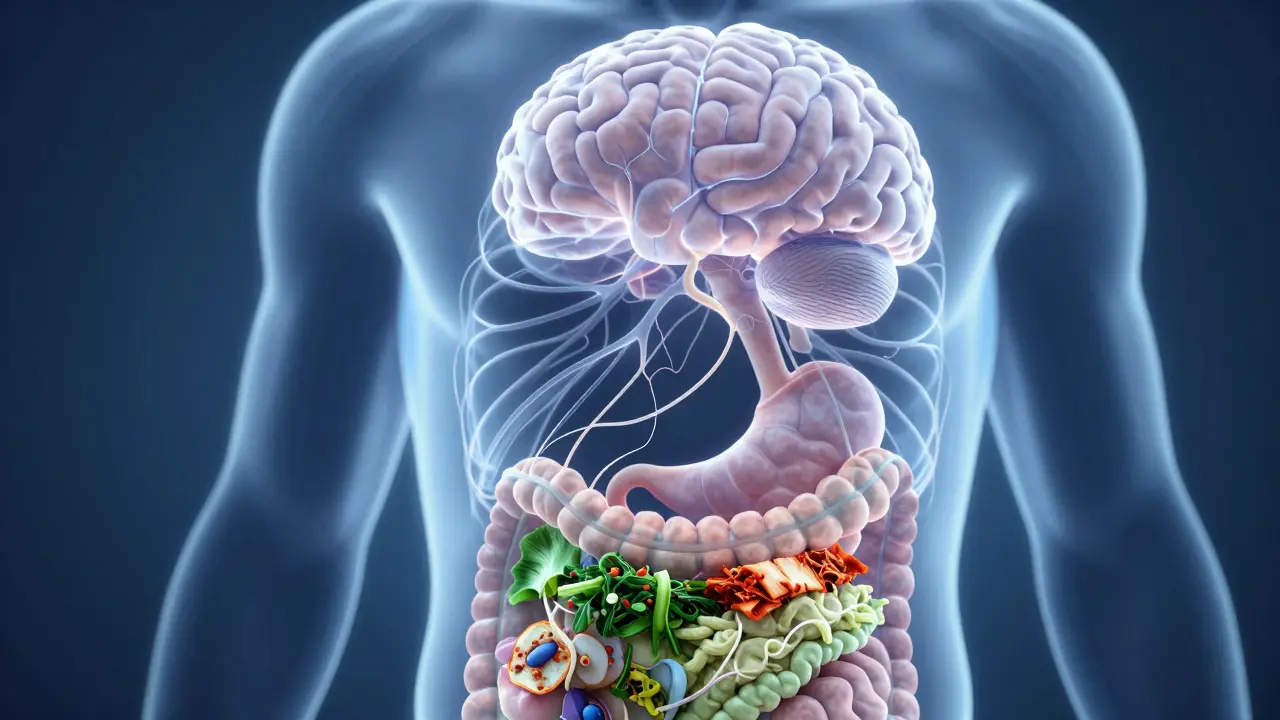
You cannot separate emotional wellness from gut health. The gut is often called the 'second brain' because it contains over 100 million neurons and produces 95% of your body's serotonin. Serotonin is the neurotransmitter responsible for mood stability.
When you are stressed, your gut lining becomes permeable (leaky gut), allowing toxins into the bloodstream, which triggers inflammation. Inflammation signals the brain to produce more stress hormones. It’s a vicious cycle. To break it, focus on prebiotic and probiotic foods.
- Fermented Foods: Kimchi, sauerkraut, and kefir introduce beneficial bacteria that communicate with the vagus nerve.
- Fiber-Rich Plants: Onions, garlic, and bananas feed these good bacteria.
- Reduce Sugar: High sugar intake spikes insulin, leading to energy crashes that mimic anxiety symptoms (shakiness, irritability).
In Perth, where access to fresh local produce is excellent, incorporating seasonal greens and native ingredients like finger lime can add variety. But the principle is universal: feed your gut, and your mind follows. Ignoring dietary impacts on mood is leaving half the battle unwon.

Sleep Hygiene as Nervous System Reset
Sleep is not passive rest; it is active repair. During deep sleep, the glymphatic system clears out metabolic waste products from the brain, including beta-amyloid proteins linked to cognitive decline. If you are chronically stressed, you likely suffer from poor sleep quality, even if you get eight hours.
The new approach treats sleep as a non-negotiable pillar of stress reduction. Here is how to optimize it biologically:
- Morning Light: View sunlight within 30 minutes of waking. This sets your circadian rhythm and ensures melatonin production drops at night.
- Cool Room: Your core body temperature needs to drop to initiate sleep. Keep your bedroom around 18-19°C (65-67°F).
- No Blue Light: Screens emit blue light that tricks your brain into thinking it’s daytime. Use blue-light-blocking glasses or read a physical book before bed.
If you wake up in the middle of the night anxious, do not check your phone. Get up, stretch, and engage in a low-stimulation activity until sleepy. Checking news or social media floods your system with dopamine and cortisol, making it harder to fall back asleep.
Building a Personalized Protocol
There is no one-size-fits-all cure. What works for one person might overwhelm another. The goal is to build a toolkit. Start small. Pick one somatic practice, one nutritional change, and one sleep habit. Track how you feel for two weeks.
Ask yourself: Did my resting heart rate drop? Did I snap less at my colleagues? Did I feel more present with my family? If yes, keep it. If no, adjust. Emotional wellness is not a destination; it’s a daily practice of checking in with your body and responding with care rather than criticism.
What is the fastest way to reduce acute stress?
The physiological sigh is currently considered one of the fastest methods. Take two short inhales through the nose (the second one shorter than the first to fully inflate the lungs) followed by one long, slow exhale through the mouth. Repeat this 3-5 times. This manually offloads carbon dioxide and slows your heart rate within seconds.
Can diet really affect anxiety levels?
Yes. The gut-brain axis connects your digestive system to your central nervous system. Since most serotonin is produced in the gut, poor gut health due to high sugar or low fiber intake can lead to increased inflammation and heightened anxiety responses. Eating fermented foods and reducing processed sugars can stabilize mood.
Why does meditation make me more anxious sometimes?
For people with high baseline stress or trauma, sitting silently can amplify bodily sensations of fear without providing a mechanism to release them. This is known as 'flooding.' Switching to active somatic practices like walking meditation, yoga, or orienting exercises allows the nervous system to process stress while staying engaged with the environment.
What is Polyvagal Theory in simple terms?
Polyvagal Theory explains that our nervous system has three states: safe/social (ventral vagal), fight/flight (sympathetic), and shutdown/freeze (dorsal vagal). Stress occurs when we get stuck in the latter two. The theory suggests that we can move back to safety by using specific bodily cues like voice tone, facial expression, and hearing, rather than just thought processes.
How does co-regulation help with stress?
Co-regulation is the process where one person's calm nervous system helps regulate another's distressed nervous system. Because humans are socially wired, being in the presence of a safe, calm individual can lower your cortisol levels and heart rate. It leverages our biological tendency to mirror the emotional states of those around us.