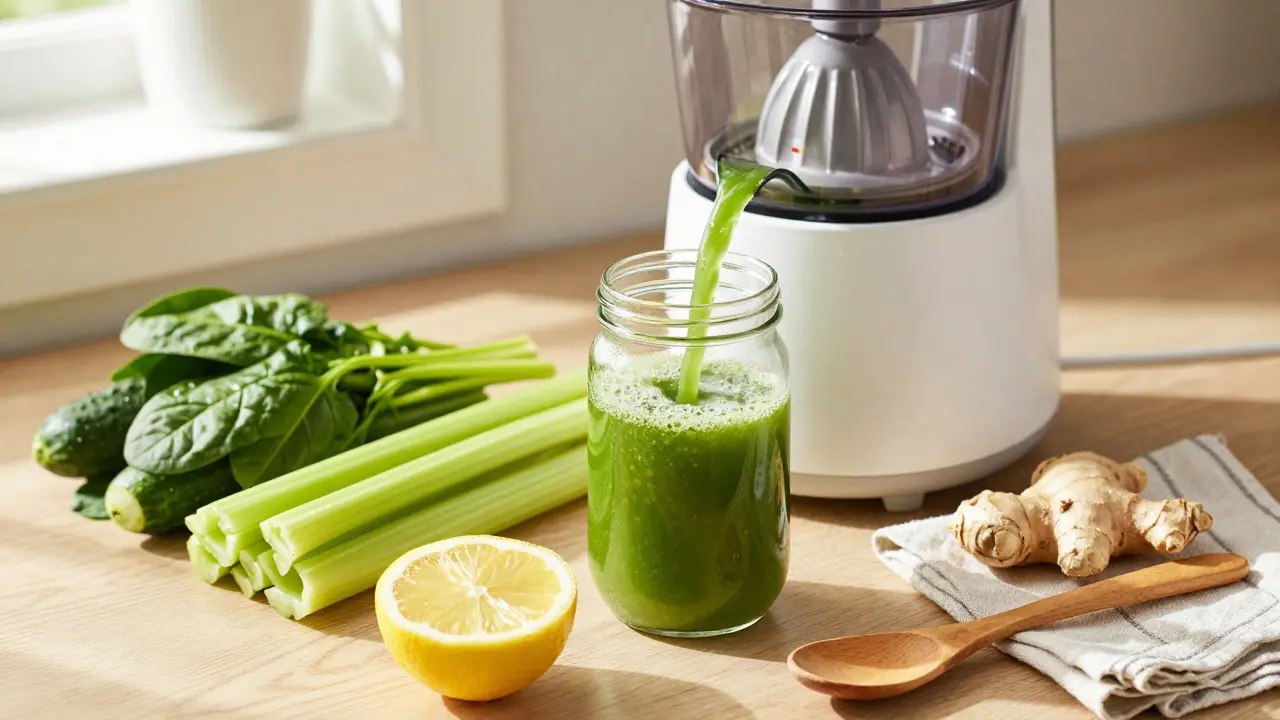
When you first hear about juicing, it might sound like another health fad - green sludge in a glass, expensive machines gathering dust, or influencers drinking celery juice at sunrise. But here’s the truth: juicing isn’t about trends. It’s about giving your body a concentrated dose of nutrients from fruits and vegetables in a form that’s easy to absorb. And for beginners, it’s simpler than you think.
What Juicing Actually Does
Juicing extracts the liquid from fruits and vegetables, leaving behind the fibrous pulp. That means you get vitamins, minerals, antioxidants, and enzymes without the bulk. Think of it like a nutrient boost - not a replacement for whole foods. Your body doesn’t have to work as hard to digest it, so nutrients enter your bloodstream faster. A 2023 study from the Australian Institute of Food Science found that people who drank daily vegetable juice for 30 days showed a 22% increase in blood antioxidant levels compared to those who ate the same amount of whole produce.
But here’s the catch: juicing doesn’t give you fiber. That’s important. Fiber slows sugar absorption, feeds good gut bacteria, and keeps you full. So juicing shouldn’t replace meals. It should complement them.
Why Beginners Should Start With Vegetables
Most people jump into juicing with apples, oranges, and carrots because they’re sweet. But that’s a mistake. A single glass of carrot-apple-orange juice can have over 30 grams of sugar - more than a can of soda. That spike in blood sugar isn’t helpful, especially if you’re trying to improve energy, reduce inflammation, or manage weight.
Start with greens instead. Spinach, kale, cucumber, celery, and parsley are low in sugar and packed with nutrients. Try this simple beginner recipe: 2 cups spinach, 1 cucumber, 1 celery stalk, half a lemon (peeled), and a small piece of ginger. That’s it. No sugar. No tricks. Just clean, green energy.
When you start with vegetables, your taste buds adjust. Within a week, you’ll find that sweet fruits like apples or pears become a flavor enhancer, not the main ingredient.
Equipment: You Don’t Need a $500 Machine
You’ve seen the ads - centrifugal juicers, cold-press machines, twin-gear extractors. You don’t need any of them to begin.
A basic centrifugal juicer under $100 works fine for starters. It’s fast, easy to clean, and gets the job done. Cold-press (masticating) juicers are better for leafy greens and last longer, but they’re slower and pricier. If you’re unsure, rent one from a local kitchen store or borrow one from a friend.
Or skip the machine entirely. Use a blender, strain the pulp through a cheesecloth or fine mesh sieve, and you’ve got homemade juice. It’s messy, but it works. And it costs nothing.
How Often Should You Juice?
There’s no magic number. Some people juice every morning. Others do a once-a-week cleanse. For beginners, start with 3-4 times a week. Make it part of your routine - right after breakfast or as an afternoon pick-me-up.
Avoid doing juice-only days unless you’ve done research or talked to a health professional. Your body needs protein, healthy fats, and fiber. A 2024 review from the Journal of Nutritional Health found that people who replaced meals with juice for more than 3 days straight reported fatigue, dizziness, and muscle loss.
Instead, use juice as a supplement. Have a glass after a heavy meal to help digestion. Drink one before a workout for natural energy. Use it to add more vegetables to your day if you’re struggling to eat them.
Common Mistakes Beginners Make
Here’s what goes wrong - and how to fix it:
- Using too much fruit → Stick to 10-20% fruit per juice. The rest should be veggies.
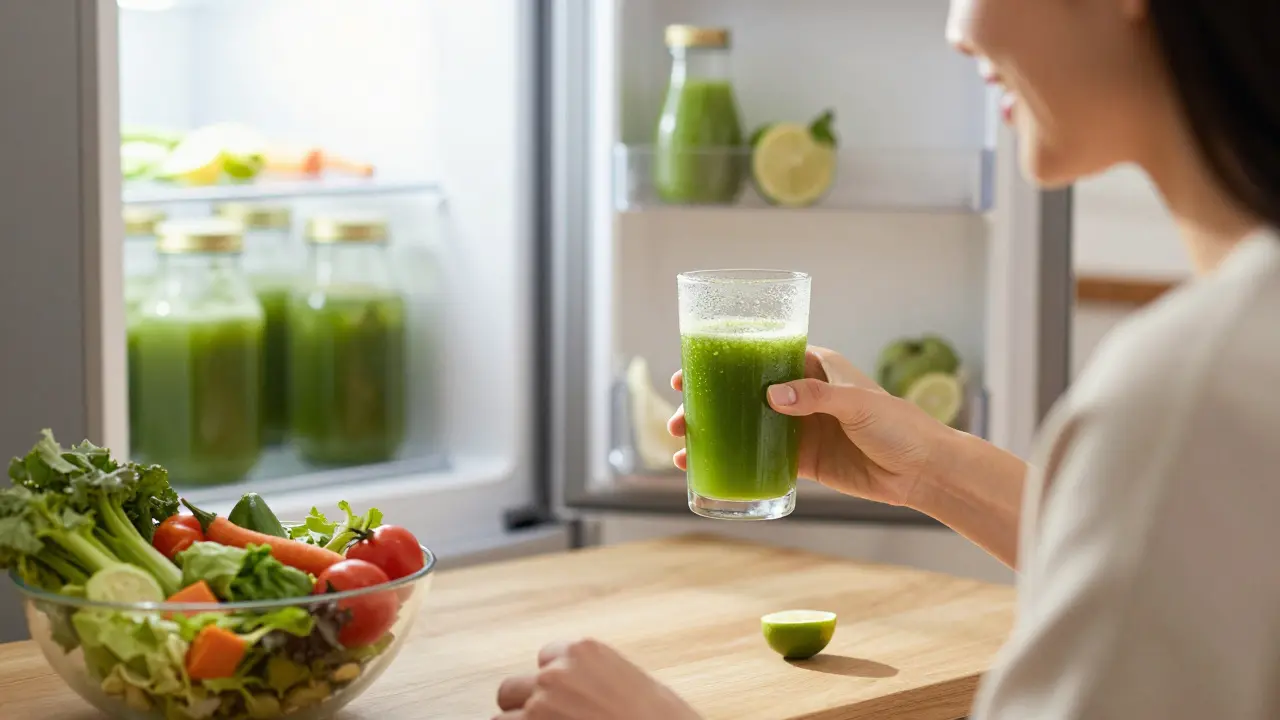
- Waiting too long to drink it → Nutrients start breaking down after 20 minutes. Drink it fresh. If you must store it, keep it in a sealed glass jar in the fridge for up to 24 hours.
- Not cleaning the machine → Residue builds up fast. Rinse parts immediately after use. A quick soak in warm water with vinegar helps.
- Expecting instant results → Juicing isn’t a miracle cure. It takes weeks to notice changes in skin, energy, or digestion.
- Ignoring your body → If you feel bloated, dizzy, or nauseous, stop. Maybe you’re detoxing too fast, or you’re sensitive to something like beetroot or kale.
What to Expect in the First 2 Weeks
Week 1: You might feel more thirsty, need to use the bathroom more often, or even get a mild headache. That’s normal. Your body is flushing out toxins and adjusting to less sugar.
Week 2: Energy levels usually stabilize. Your skin might look brighter. You may notice less bloating after meals. Your cravings for sweets often drop - not because you’re depriving yourself, but because your body is getting more nutrients.
Don’t expect weight loss. Juicing alone won’t make you slim. But if you replace sugary snacks with juice, and eat balanced meals otherwise, you’ll likely feel lighter and more focused.

What to Juice: Simple Recipes for Beginners
Try these three no-fail recipes. Make one a day, rotate them, and see what you like.
- Green Energy - 2 cups spinach, 1 cucumber, 1 celery stalk, half a green apple, 1 tsp lemon juice, small piece of ginger.
- Beet Boost - 1 small beet (peeled), 1 carrot, 1/2 apple, 1/4 lemon, 1/2 inch ginger. (This one stains - be careful with your clothes.)
- Citrus Cleanse - 2 oranges (peeled), 1 cup pineapple chunks, 1/2 cup cucumber, a handful of mint leaves.
Rotate your ingredients. Don’t stick to the same three veggies forever. Variety means more nutrients.
Who Should Avoid Juicing
Juicing isn’t for everyone. Skip it if you:
- Have type 1 or type 2 diabetes - unless under medical supervision. Juice can spike blood sugar fast.
- Take blood thinners like warfarin - kale and spinach are high in vitamin K, which interferes with the medication.
- Have kidney disease - some juices (like beet or spinach) are high in oxalates, which can worsen kidney stones.
- Are pregnant or breastfeeding - consult your doctor before making big changes to your diet.
If you’re unsure, talk to a registered dietitian. They can help you tailor juicing to your health needs.
Next Steps: Beyond the Juice
Once you’re comfortable with juicing, try adding more whole foods. Keep the juice, but also eat your vegetables. A salad with the same ingredients you juiced? Even better. You’ll get the benefits of the juice plus the fiber you lost.
Try a weekly juice + meal combo: juice in the morning, then have a balanced lunch with lean protein, healthy fats, and whole grains. That’s the real win.
And remember - juicing isn’t about perfection. It’s about consistency. Miss a day? No problem. Skip a week? Start again. The goal isn’t to drink 10 glasses a day. It’s to make your body feel better, one glass at a time.
Can juicing help with weight loss?
Juicing alone won’t make you lose weight. But replacing sugary drinks or snacks with low-sugar vegetable juice can reduce calorie intake. Weight loss happens when you create a consistent calorie deficit - not from juice alone. Pair juicing with balanced meals and movement for real results.
Is it better to juice or blend?
Blending keeps the fiber, so it’s better for digestion and fullness. Juicing gives you faster nutrient absorption and is easier on the gut if you have sensitive digestion. Neither is ‘better’ - they serve different purposes. Use blending for daily meals, juicing for nutrient boosts.
How long does fresh juice last?
Fresh juice starts losing nutrients after 20 minutes. If stored in a sealed glass jar in the fridge, it stays fresh for up to 24 hours. Beyond that, oxidation breaks down vitamins and enzymes. Always drink it as fresh as possible.
Can I juice frozen fruits and vegetables?
Yes, but with caveats. Frozen produce works in blenders, but most juicers struggle with ice or frozen chunks. Thaw them first. Also, frozen veggies are often blanched before freezing, which reduces some nutrients. Fresh is always better - but frozen is still better than nothing.
Do I need to buy organic for juicing?
Not always. The Environmental Working Group’s 2025 Shopper’s Guide shows that thick-skinned produce like avocados, pineapples, and onions have low pesticide levels. Focus on organic for thin-skinned items like spinach, kale, apples, and strawberries. Washing produce with vinegar and water removes most residue.