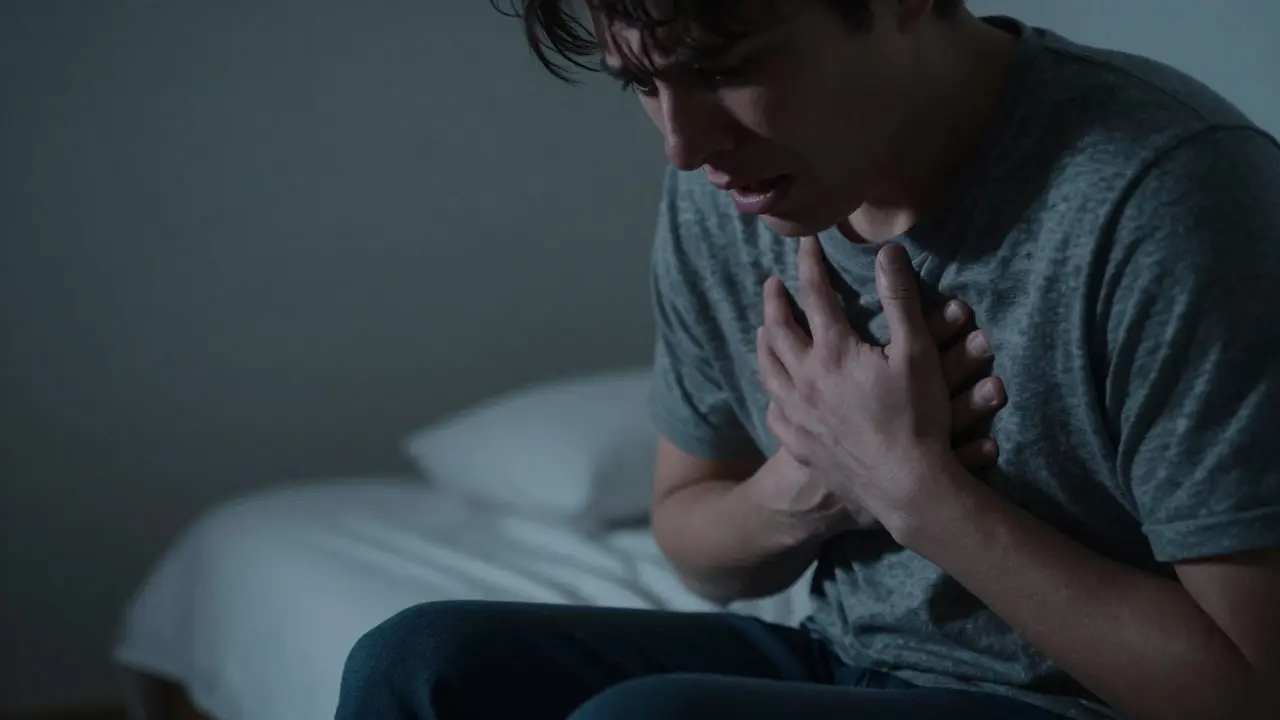
You check your pulse. It’s a little fast. You search "rapid heartbeat causes" and land on a forum thread from 2019 about a rare heart condition. Suddenly, your chest feels tight. Is it the anxiety? Or is it the heart attack you just read about? If this loop sounds familiar, you are not alone. Health anxiety, sometimes called illness anxiety disorder or hypochondria, traps millions of people in a cycle of fear, checking, and reassurance-seeking that never actually brings peace.
The problem isn’t that you care about your health. The problem is that your brain has mislabeled normal bodily sensations as threats. To break this cycle, you need more than just "try to relax." You need specific, actionable strategies to retrain how your mind interprets physical signals. Here is how you can take control back from the worry.
Understanding the Loop: Why Checking Makes It Worse
Before we look at solutions, we have to understand why standard advice fails. When you feel a weird sensation-maybe a twitch in your eye or a lump in your throat-your brain screams "danger!" To quiet that scream, you check your body or Google your symptoms. For a few minutes, you feel relieved. But that relief is temporary. Within hours or days, the doubt creeps back in, often stronger than before. This is called negative reinforcement. You checked, so you felt safe for a moment. Your brain learns: "Checking = Safety." So next time, you check faster and harder.
Health anxiety thrives on uncertainty. By constantly seeking reassurance, you prevent your brain from learning that it can tolerate ambiguity. The goal isn't to ignore your body; it's to stop treating every minor sensation as an emergency alert.
1. Set Strict Boundaries with Medical Information Online
We all know the drill: one symptom leads to three searches, which leads to a diagnosis of something fatal. This is known as cyberchondria. The internet is a vast database of information, but it is terrible at context. It cannot tell if your headache is from dehydration or a tumor. It only gives you worst-case scenarios because those are what get clicks.
- Create a "Search Window": Allow yourself only 5 minutes a week to look up health info, and do it only after discussing it with a doctor.
- Unsubscribe and Unfollow: Mute social media accounts that post medical news or wellness hacks. These triggers keep your nervous system on high alert.
- Use Reliable Sources Only: If you must search, stick to .gov or .edu sites (like the CDC or Mayo Clinic). Avoid forums, Reddit threads, and anecdotal blogs.
Think of it like a diet. If you eat junk food every day, you feel sick. If you feed your brain junk medical info every day, your mental health suffers. Starve the anxiety by cutting off its fuel source.
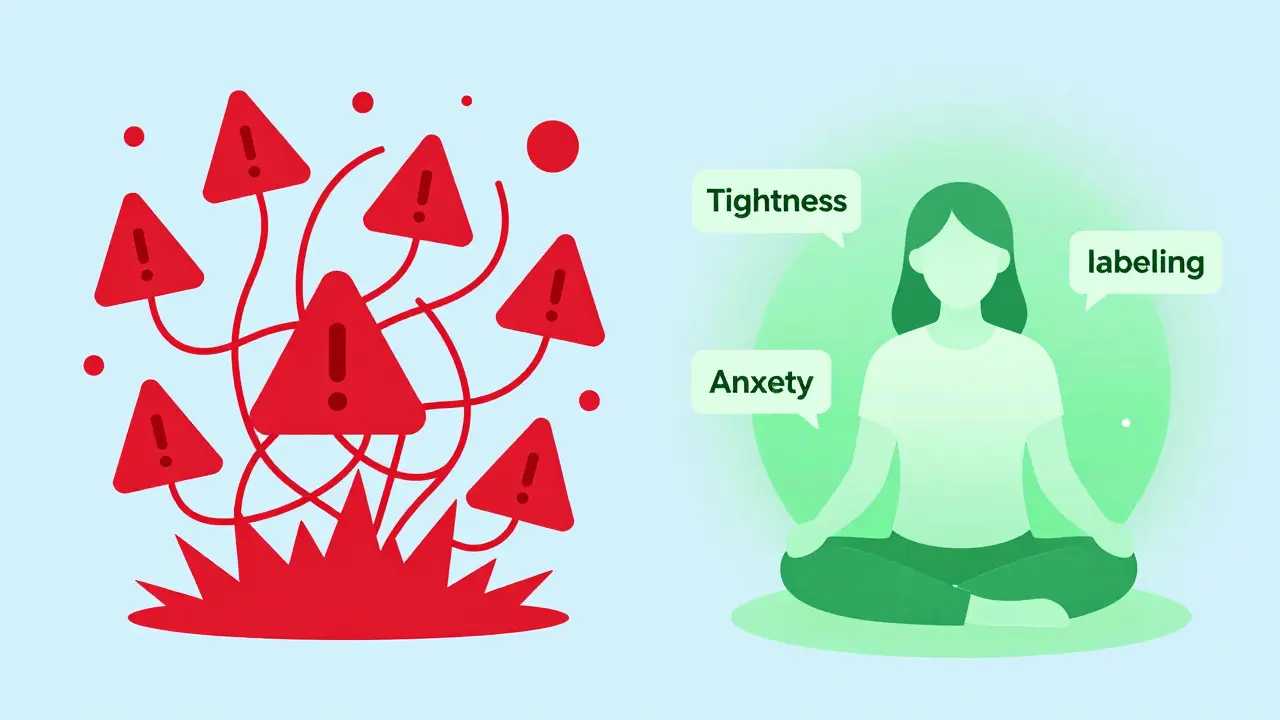
2. Practice "Labeling" Instead of "Scanning"
People with health anxiety often engage in "body scanning." They mentally run through their organs, looking for pain, lumps, or irregularities. This hyper-vigilance creates false positives. When you focus intensely on your breathing, it becomes shallow. When you focus on your stomach, it starts to gurgle. These are normal reactions to attention, not signs of disease.
Instead, try labeling. When you notice a sensation, name it neutrally. Say to yourself, "I am feeling a tightness in my chest," rather than, "My heart is failing." Then, add a second label: "This is likely anxiety." This simple shift moves activity from the amygdala (the fear center) to the prefrontal cortex (the logic center). You acknowledge the feeling without attaching a catastrophic story to it.
3. Schedule Worry Time
Anxiety doesn't disappear when you ignore it; it just waits. A powerful technique used in Cognitive Behavioral Therapy (CBT) is scheduling "worry time." Pick a specific 15-minute window each day, say 5:00 PM to 5:15 PM. During the rest of the day, when a health worry pops up, tell yourself, "I will worry about this at 5:00 PM." Write it down if you need to.
When 5:00 PM arrives, sit down and worry as hard as you can. Think about every bad outcome. Search the symptoms if you really want to. But when the timer goes off, stop. Go make dinner. Call a friend. Do anything else. Most people find that by the time worry time arrives, they’ve forgotten half the things they were anxious about. The ones they remember lose their emotional charge because they’re being dealt with in a controlled, boring environment.
4. Limit Body Checking Behaviors
Do you take your blood pressure every morning? Do you palpate your lymph nodes before bed? Do you count your steps obsessively? These are safety behaviors. They provide short-term relief but long-term damage. Every time you check, you reinforce the idea that your body is broken and needs constant monitoring.
Start small. If you check your pulse twice a day, cut it to once. If you check your skin for moles daily, switch to weekly. It will feel terrifying at first. Your anxiety will spike. That’s okay. Ride the wave. Notice that nothing bad happens. Over weeks, your brain learns that you don’t need to check to be safe. This process is called exposure and response prevention (ERP), and it is the gold standard for treating anxiety disorders.
| Anxious Behavior | Why It Hurts | Healthy Alternative |
|---|---|---|
| Googling symptoms immediately | Exposes you to worst-case scenarios; reinforces fear. | Wait 24 hours. If symptom persists, call doctor. |
| Asking friends/family for reassurance | Burns out loved ones; relief is temporary. | Use a journal to write down fears instead. |
| Frequent doctor visits for same issue | Doctors may miss subtle issues due to over-testing fatigue. | Schedule regular annual check-ups only. |
| Body scanning/checking pulses | Creates false sensations via hyper-focus. | Engage in distracting activities (reading, walking). |
5. Ground Yourself in the Present Moment
Anxiety lives in the future. It imagines disasters that haven’t happened. To counter this, you need to pull your brain back to the here and now. The 5-4-3-2-1 grounding technique is highly effective for acute spikes of panic.
- Name 5 things you can see right now.
- Name 4 things you can physically feel (the fabric of your chair, your feet on the floor).
- Name 3 things you can hear (traffic, birds, AC humming).
- Name 2 things you can smell.
- Name 1 thing you can taste.
This forces your brain to process sensory data from the present environment, interrupting the internal narrative of doom. It doesn’t cure the underlying anxiety, but it stops the spiral in its tracks.

6. Accept Uncertainty, Not Perfection
Here is the hard truth: no one can guarantee you won’t get sick. Doctors work with probabilities, not certainties. Health anxiety demands 100% certainty, which is impossible. The goal of treatment is not to eliminate all risk, but to increase your tolerance for uncertainty.
Practice saying phrases like, "It is possible I am healthy, and it is possible I am not. I can live with that possibility." This sounds scary, but it reduces the stakes. When you accept that life involves some unknown health risks, you stop fighting reality. You start living again. This concept is central to Acceptance and Commitment Therapy (ACT), which focuses on accepting thoughts rather than changing them.
7. Seek Professional Support Early
If these tips feel overwhelming, that’s a sign you need professional help. Health anxiety is a treatable mental health condition. Cognitive Behavioral Therapy (CBT) specifically tailored for health anxiety has shown high success rates. In some cases, medication like SSRIs can help lower the overall baseline of anxiety, making therapy more effective.
Don’t wait until you are paralyzed with fear to ask for help. A therapist can guide you through exposure exercises safely. They can also help you distinguish between genuine medical concerns and anxiety-driven fears. Remember, seeing a therapist for anxiety is not a sign of weakness; it’s a strategic move toward reclaiming your life.
Building a Sustainable Routine
Recovery from health anxiety isn’t linear. You will have good days and bad days. On bad days, remind yourself that discomfort is not danger. Keep a log of your progress. Note the times you resisted the urge to check or Google. Celebrate those small wins. Over time, the volume of the anxiety voice turns down. You’ll find yourself laughing at jokes again, enjoying meals without analyzing digestion, and sleeping without worrying about your heart rate. It takes work, but the freedom on the other side is worth it.
What is the difference between health anxiety and having a chronic illness?
If you have a diagnosed chronic condition, you still have valid reasons to monitor your health. Health anxiety is characterized by excessive worry disproportionate to the actual medical risk, or worry despite repeated medical reassurance that you are healthy. People with both conditions exist, but health anxiety focuses on the *fear* of illness rather than the management of a known disease.
How long does it take to overcome health anxiety?
There is no set timeline. With consistent CBT and practice, many people see significant improvement in 12 to 16 weeks. However, managing anxiety is a skill that requires ongoing maintenance. Some may experience relapses during stressful life events, but they learn to recover faster using the tools they’ve built.
Can meditation make health anxiety worse?
For some, mindfulness meditation can initially increase anxiety because it involves paying close attention to bodily sensations. If you find this happening, switch to active grounding techniques (like the 5-4-3-2-1 method) or guided meditations that focus on external objects or breath counting rather than body scans. Always consult a therapist before starting intense mindfulness practices if you have severe health anxiety.
Should I avoid going to the doctor entirely?
No. You should continue with recommended preventive care and address new, persistent symptoms. The key is to change *why* you go. Go for scheduled check-ups, not because you panicked online. Trust your doctor’s assessment. If you feel dismissed, seek a second opinion from a specialist, but avoid "doctor shopping" where you visit multiple providers hoping for a different answer.
Is health anxiety genetic?
Research suggests a genetic component to anxiety disorders. If your parents struggled with anxiety or obsessive-compulsive tendencies, you may be more predisposed. However, genetics are not destiny. Environmental factors, childhood experiences, and learned behaviors play a huge role. Understanding your predisposition can help you be more compassionate with yourself during recovery.