
You’re juggling work deadlines, family needs, bills, social obligations, and maybe even a side hustle. By the time you collapse into bed, your mind feels like a browser with 47 tabs open-and half of them are frozen. You tell yourself you’ll take care of yourself tomorrow. But tomorrow turns into next week, then next month. And suddenly, you’re not just tired. You’re empty.
Mental health isn’t a luxury you fit in when you have time. It’s the foundation everything else rests on. Without it, productivity crashes, relationships fray, and even simple tasks feel impossible. The good news? You don’t need hours of meditation or a month-long retreat to start rebuilding it. Small, consistent actions-done regularly-make the biggest difference.
Start with the bare minimum: protect your sleep
Sleep isn’t downtime. It’s repair mode for your brain. When you’re short on sleep, your amygdala-the part of your brain that handles fear and stress-goes into overdrive. Meanwhile, your prefrontal cortex, which helps you make calm decisions, shuts down. That’s why you snap at your partner over spilled coffee or feel overwhelmed by a single email.
You don’t need eight hours. You need consistent, restful sleep. Try this: pick one night this week to turn off screens 30 minutes earlier. No phone, no laptop, no TV. Just dim lights and something quiet-reading, stretching, or listening to a calm podcast. Do this for three nights in a row. Notice how you feel the next day. Most people report less irritability and clearer thinking after just a few nights of better sleep.
Build micro-moments of calm into your routine
You don’t have time for a 20-minute meditation. That’s fine. You have 60 seconds.
Try this: before you open your email in the morning, sit quietly for one minute. Breathe in through your nose for four counts. Hold for two. Exhale through your mouth for six. Do it again. That’s it. No apps. No fancy breathing techniques. Just breath.
Or, while you’re waiting for your coffee to brew, stand still. Feel your feet on the floor. Notice the temperature of the air on your skin. These aren’t distractions-they’re resets. They tell your nervous system: you’re safe right now. That’s powerful.
These moments add up. Studies show that even brief pauses in high-stress environments lower cortisol levels and improve focus. You’re not adding time to your day. You’re reclaiming it.
Stop glorifying busyness
How many times have you said, “I’m so busy,” and felt proud of it? Society rewards overwork. But that pride is a trap. When you wear “busy” like a badge, you’re telling yourself your worth is tied to how much you produce-not who you are.
Here’s a hard truth: you can’t pour from an empty cup. And no one benefits when you’re running on fumes. Your team loses your creativity. Your family loses your presence. You lose yourself.
Start saying no. Not dramatically. Just quietly. “I can’t take that on right now.” “I need to finish this project before I can help.” “I’m taking tonight off.” These aren’t failures. They’re boundaries. And boundaries aren’t selfish-they’re sustainable.

Move your body, but don’t make it a chore
You don’t need to run a marathon or do yoga every day. You just need to move in a way that feels good.
Walk around the block after lunch. Dance while you’re washing dishes. Stretch while watching TV. Take the stairs. Park farther away. These aren’t workouts-they’re mood boosters.
Physical movement releases endorphins and reduces muscle tension, which is often where stress hides. A 10-minute walk outside has been shown to lower anxiety levels more effectively than sitting in a quiet room. Bonus: sunlight helps regulate your circadian rhythm, which improves sleep and mood.
Forget fitness goals. Think of movement as medicine. And like medicine, it works best when taken regularly-even in small doses.
Connect with people who make you feel seen
Loneliness isn’t about being alone. It’s about feeling unseen. And in a world full of notifications, it’s easier than ever to feel isolated-even when you’re surrounded by people.
One study from the University of California found that people who had just one meaningful conversation per week reported significantly lower stress levels than those who didn’t. Meaningful doesn’t mean long. It means real.
Text a friend: “I’ve been thinking about you. How are you really doing?” Don’t wait for them to ask. Don’t wait for the perfect time. Say it now. Even if they reply with “Fine.” You showed up. That matters.
Or call your parent. Or sit with your kid and ask them about their day-not in a rushed, “How was school?” way, but with silence after they answer. Let them fill the space. You’re not fixing anything. You’re just being there.
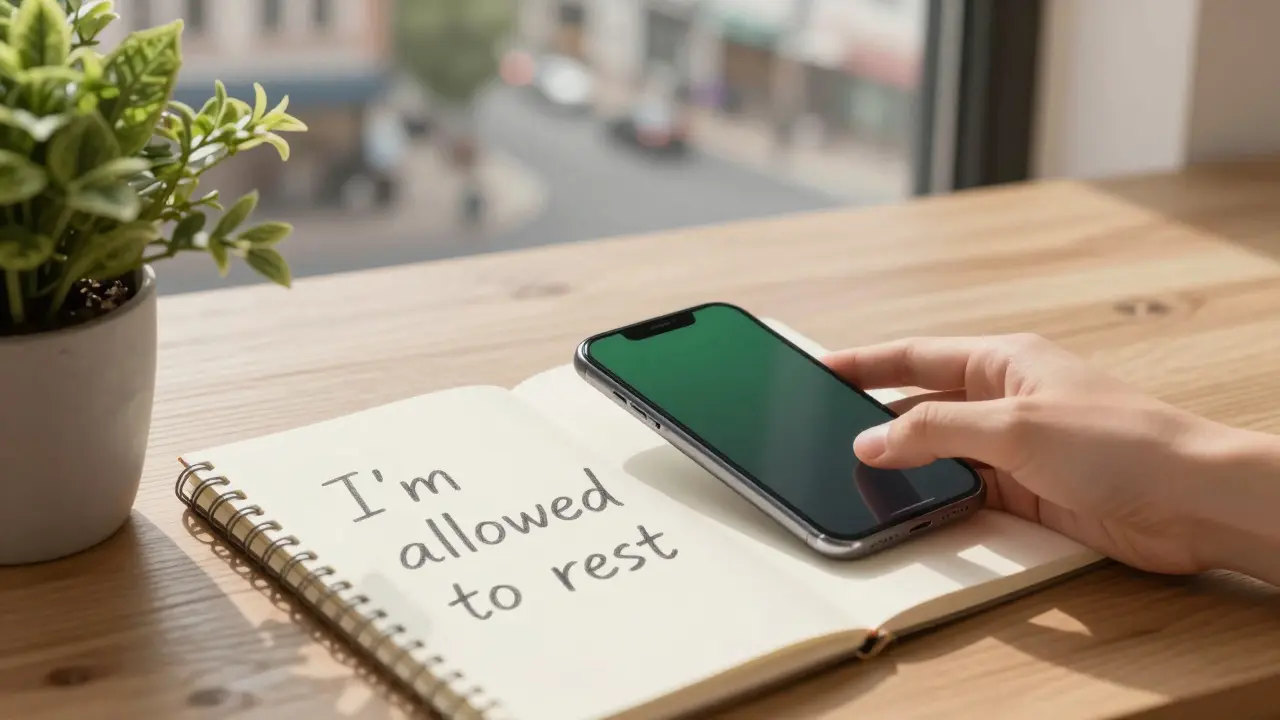
Let go of the need to fix everything
Most of us treat mental health like a problem to solve: “I’m anxious-so I need to meditate more.” “I’m overwhelmed-so I need to plan better.” But sometimes, you’re not broken. You’re just tired.
You don’t need to fix your emotions. You need to hold space for them. Let yourself feel tired. Let yourself feel sad. Let yourself feel nothing at all. That’s okay.
Try this: when you notice a heavy feeling, instead of pushing it away, say to yourself: “I’m feeling [emotion] right now. That’s allowed.” No judgment. No solution needed. Just acknowledgment.
This simple shift-from fixing to feeling-reduces internal conflict. And internal conflict is one of the biggest drains on mental energy.
Set one non-negotiable self-care rule
Here’s the thing: willpower runs out. Motivation fades. But habits? Habits stick.
Choose one thing that’s non-negotiable. Not “I’ll try to meditate.” Not “I’ll aim to sleep more.” Something simple. Something you can do even on your worst day.
Examples:
- Drink a glass of water as soon as you wake up.
- Write down one thing you’re grateful for before bed.
- Turn off notifications after 8 p.m.
- Take a 5-minute walk every afternoon.
- Call someone you trust once a week.
Make it so small it’s impossible to fail. Then do it every day for 21 days. Not because it’s magic. But because repetition rewires your brain. Slowly, you start to see yourself as someone who cares for their mind-and that changes everything.
You’re not behind. You’re human.
There’s no checklist for perfect mental health. No app that will fix everything. No guru who has all the answers. What you need is already inside you: the ability to pause, to breathe, to ask for help, to rest without guilt.
Start where you are. Use what you have. Do what you can. Not tomorrow. Not next week. Today.
One breath. One walk. One honest conversation. One no. That’s enough.