
Your brain is essentially a noisy room where a hundred different conversations are happening at once. We call it the 'monkey mind'-that restless, jumping energy that keeps you awake at 3 AM worrying about a meeting that happened three days ago. The truth is, most of us don't actually know how to be still. We confuse 'relaxing' with scrolling through a phone, but that's just another form of mental noise. Meditation is a mental training practice where an individual uses a technique-such as mindfulness or focusing the mind on a particular object-to achieve a state of mental clarity and emotional calm. It isn't about stopping your thoughts; it's about changing your relationship with them.
Что вы получите: Главные выводы
- Meditation is a skill you build, not a switch you flip.
- Consistency (5 minutes daily) beats intensity (2 hours once a month).
- The goal isn't a blank mind, but an observant one.
- Different styles work for different personalities (e.g., breath-work vs. mantras).
The Science of a Quiet Mind
When you sit in silence, you aren't just "chilling out." You're physically altering your brain. Research from Harvard University showed that just eight weeks of mindful practice can actually increase the grey-matter density in the hippocampus, the part of the brain responsible for learning and memory. At the same time, the amygdala-the brain's "alarm system" that triggers the fight-or-flight response-shrinks. This means you don't just feel calmer; your brain becomes less reactive to stress.
Think of it like training a muscle. When you notice your mind wandering to your grocery list and you gently bring it back to your breath, that's one "rep." The more reps you do, the stronger your ability to stay present becomes. This is why Mindfulness is often used in clinical settings to treat anxiety and depression; it teaches the brain to acknowledge a painful thought without getting swept away by it.
Choosing Your Style: Which Method Fits You?
Not all meditation is the same. If you've tried to sit still for ten minutes and felt like you were failing because your legs fell asleep or your mind raced, you might just be using the wrong technique. Some people thrive in silence, while others need a focal point to keep their brain engaged.
| Technique | Core Focus | Best For... | Effort Level |
|---|---|---|---|
| Zazen | Stillness and posture | Deep discipline and insight | High |
| Transcendental Meditation | Specific personal mantra | Deep relaxation and stress relief | Medium |
| Vipassana | Body sensations | Emotional purging and awareness | High |
| Loving-Kindness (Metta) | Compassionate phrases | Healing anger or loneliness | Low |
For instance, if you're someone who struggles with a loud inner critic, Loving-Kindness Meditation-where you repeat phrases like "May I be happy, may I be healthy"-can be a game-changer. It shifts the brain from a state of judgment to a state of empathy. On the other hand, if you want a structured, almost clinical approach to stillness, Zazen, the seated meditation of Zen Buddhism, focuses heavily on the physical alignment of the body to stabilize the mind.
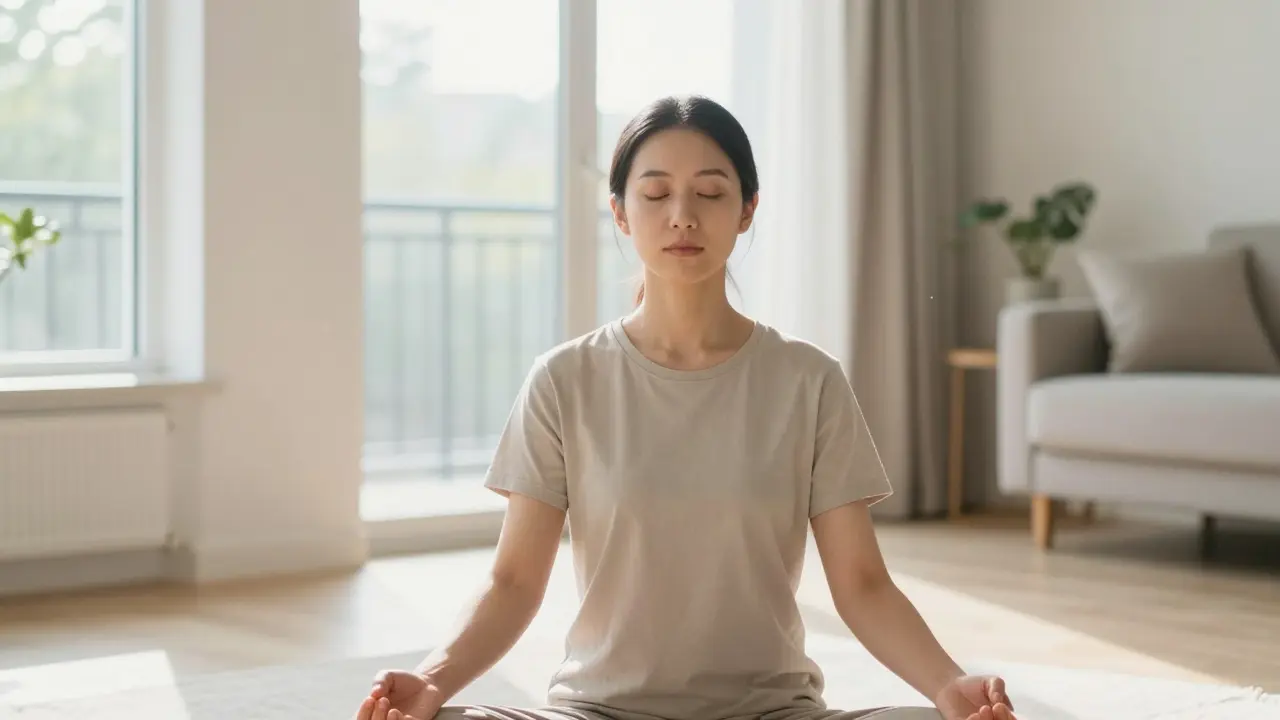
A Step-by-Step Guide to Your First Session
You don't need a special cushion, incense, or a remote mountain retreat to start. You just need a place where you won't be interrupted for a few minutes. Let's get you started with a simple mindfulness-based approach.
- Find your anchor: Sit in a chair with your feet flat on the floor or cross your legs on a rug. Keep your back straight but not stiff-imagine a string pulling the top of your head toward the ceiling.
- Set a timer: Start with just 5 minutes. It's better to end the session wanting more than to quit halfway through because you're bored.
- Close your eyes: Or simply soften your gaze, looking at a spot on the floor about three feet in front of you.
- Locate the breath: Don't try to control your breathing. Don't force deep breaths. Just notice where you feel it most-maybe the coolness in your nostrils, the rise of your chest, or the expansion of your belly.
- Acknowledge the drift: Your mind meditation for beginners will inevitably wander. You'll think about an email or a weird noise in the hallway. This is the most important part: when you realize you've drifted, don't judge yourself. Just label the thought as "thinking" and gently return to your breath.
Common Pitfalls and How to Dodge Them
Most people quit meditation because they have a misconception of what "success" looks like. They think success is a state of total void where no thoughts exist. That is a myth. The goal is not to stop the thoughts, but to stop the thoughts from controlling you.
One common mistake is the "effort trap." People try so hard to clear their minds that they create more tension in their shoulders and forehead. If you find yourself straining, just exhale a long, heavy sigh. Remind yourself that you are observing your mind, not fighting it. Another hurdle is the environment. While some love a quiet room, others find a Walking Meditation-focusing on the feeling of the sole of the foot hitting the ground-much more sustainable than sitting still.

Integrating Stillness Into a Chaotic Life
If you can't find 20 minutes of peace, find 20 seconds. The real power of meditation isn't what happens on the cushion; it's what happens when you're stuck in traffic or dealing with a difficult boss. This is called "informal practice."
Try the "Three-Breath Reset." Whenever you transition from one activity to another-like closing your laptop and walking to the kitchen-take three conscious breaths. Feel the air enter and leave your body. This breaks the cycle of autopilot and brings you back into the present moment. You can also practice mindful listening. Next time someone talks to you, instead of planning your response while they are still speaking, focus entirely on the sound of their voice and the cadence of their speech. It's a form of meditation that actually improves your relationships.
Advanced Pathways: Moving Beyond the Basics
Once you've built a basic habit, you might feel a plateau. This is where you can explore more complex entities of mental training. Some move toward Vipassana, an ancient technique that involves scanning the body for physical sensations to understand the nature of impermanence. Others might integrate Pranayama, the yogic practice of breath control, to shift their energy levels before entering a deep state of stillness.
The journey toward inner peace is rarely a straight line. Some days you'll feel a profound sense of tranquility; other days, your mind will feel like a storm. The secret is that both experiences are valid. The peace doesn't come from the absence of the storm, but from knowing how to be the center of it.
Do I have to be religious to meditate?
Not at all. While meditation has roots in spiritual traditions like Buddhism and Hinduism, modern mindfulness is largely secular. It's a cognitive tool for mental health and focus, similar to how exercise is a tool for physical health. You can practice it regardless of your beliefs or lack thereof.
How long does it take to see results?
Some people feel a sense of calm immediately after their first session. However, the structural changes in the brain (like the shrinking of the amygdala) typically take about 8 weeks of consistent daily practice. Think of it as a long-term investment in your mental architecture.
What should I do if I can't stop my thoughts?
Stop trying to stop them. The paradox of meditation is that the more you fight your thoughts, the louder they get. Instead, imagine your thoughts are like cars passing on a highway. You are standing on the side of the road watching them go by. You don't need to jump into the car and go for a ride; just acknowledge that a "car" (a thought) has passed and return to your breath.
Is it okay to fall asleep during meditation?
It happens, especially if you're chronically sleep-deprived. However, if it happens every time, try meditating with your eyes slightly open or switch to a seated position with a straight back instead of lying down. The goal is a state of "relaxed alertness," not sleep.
Can meditation help with physical pain?
Yes, through a process called "detachment." By observing the sensation of pain without adding an emotional layer of suffering (like anger or fear), many people find the intensity of the pain becomes more manageable. It doesn't necessarily remove the sensation, but it changes how the brain processes it.
Next Steps for Your Practice
If you're feeling stuck or ready to move forward, try these different scenarios:
- For the Busy Professional: Try "micro-meditations." Spend 60 seconds focusing on your breath between every single meeting or phone call.
- For the Anxious Mind: Start with guided meditations via an app. Having a voice to follow prevents the mind from spiraling into distraction.
- For the Physical Learner: Try a walking meditation. Walk slowly in a park and focus entirely on the contact between your feet and the earth.
- For the Deep Diver: Look into a 10-day silent retreat. Removing all external stimuli is the fastest way to see how your mind actually operates.