Ever sat down to work and felt like your brain was stuck in quicksand? You’ve got a to-do list a mile long, but your mind keeps jumping from one thought to another-what to eat for lunch, that awkward email you sent, the noise outside. You’re not lazy. You’re not broken. You’re just running on overload. And the real problem isn’t time. It’s calmness-or the lack of it.
Productivity doesn’t come from working harder. It comes from working clearer. And clarity? That’s born in calm. Not the kind of calm you get from a five-minute breathing exercise before a meeting. Real calm. The kind that settles into your bones and lets your brain do what it was built to do: focus, create, solve.
Why Calmness Isn’t Just a Relaxation Tool
Most people think calmness is about feeling relaxed. But that’s not the full picture. Calmness is a cognitive state. It’s when your nervous system stops shouting and starts whispering. When your prefrontal cortex-the part of your brain responsible for decision-making, planning, and focus-isn’t being drowned out by stress hormones like cortisol and adrenaline.
Studies from the University of California, San Francisco show that people who regularly practice calm-focused techniques have up to 40% better working memory retention during high-pressure tasks. That means you remember details, follow complex instructions, and make fewer errors-not because you’re smarter, but because your brain isn’t fighting itself.
Think about it: when you’re anxious, your brain treats every small task like a threat. Your phone pings? Danger. Your inbox fills up? Emergency. Your coworker asks a question? Crisis. Calmness flips that switch. It tells your brain, ‘We’re safe. We can think.’ And that’s when productivity actually begins.
Stop Trying to Do More. Start Creating Space.
The biggest myth about productivity is that you need to squeeze more into your day. You don’t. You need to remove the noise.
Here’s what most people do: they wake up, check their phone, open five apps, reply to three emails, scroll through news, then sit down to work at 10 a.m. feeling frazzled. Their day is already half over-and they haven’t even started.
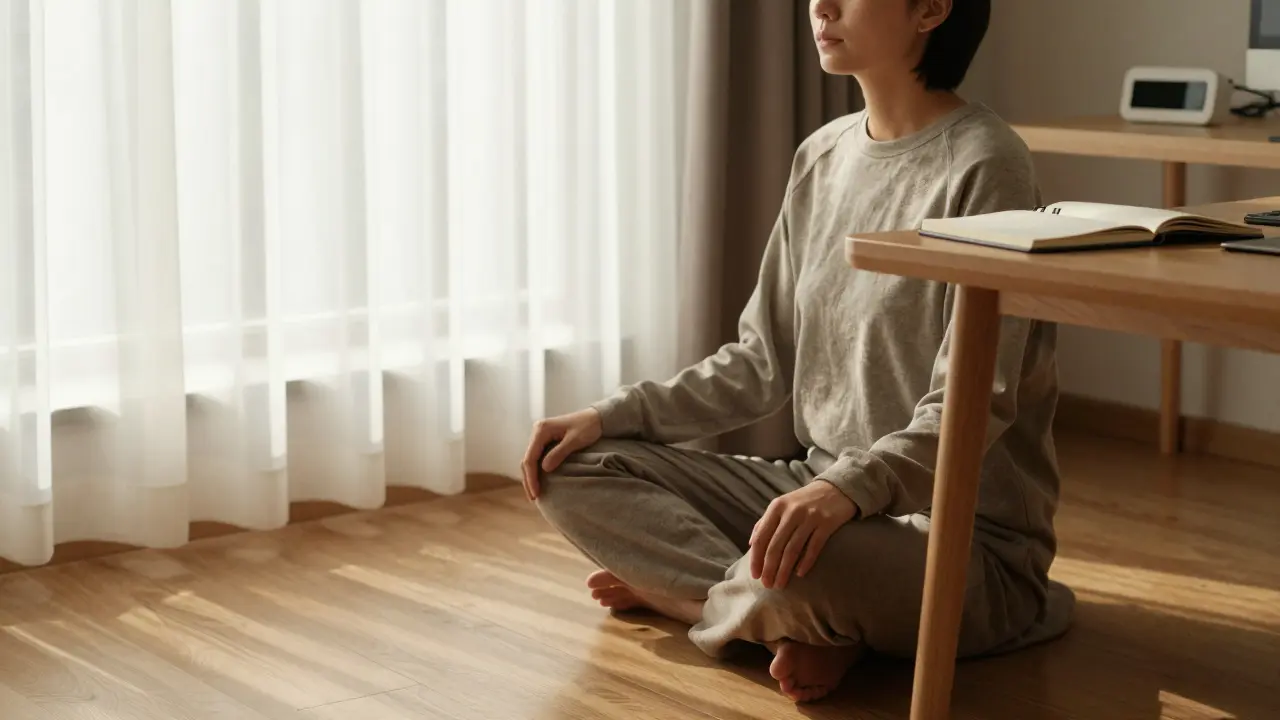
Instead, try this: the first 15 minutes of your day are sacred. No phone. No email. No talking. Just sit. Breathe. Notice the air coming in and out. Feel your feet on the floor. If your mind races, that’s normal. Don’t fight it. Just gently bring it back. That’s not meditation. That’s calibration.
This isn’t fluff. It’s neuroscience. A 2023 study from the Max Planck Institute found that people who spent just 10 minutes in quiet stillness before starting work showed a 27% increase in task accuracy and a 33% reduction in mental fatigue by midday. You’re not wasting time. You’re upgrading your brain’s operating system.
How to Build Calmness Into Your Work Routine
Calmness isn’t something you do once a day. It’s something you weave into your work like a thread. Here’s how to do it without adding more to your plate.
- Work in 90-minute blocks. Your brain naturally cycles through high-focus and low-focus phases. Pushing through for hours straight drains you. Work for 90 minutes, then take 20 minutes to walk, stretch, or stare out the window. No screens.
- Use silence as a tool. Put on noise-canceling headphones not to play music, but to block out chatter. Silence is a productivity multiplier. If you’re in an open office, try the ‘two-minute rule’: if someone interrupts you, say, ‘I’ll get back to you in two minutes,’ then take 60 seconds to breathe before responding.
- End your day with a shutdown ritual. Five minutes before you log off, write down three things you accomplished and one thing you’ll start tomorrow. Then close your laptop. Don’t check emails. Don’t plan. Just close it. This signals to your brain that work is done. No lingering anxiety. No mental residue.
These aren’t hacks. They’re habits that rebuild your nervous system over time. The more you do them, the easier it becomes to stay calm under pressure.

The Calmness-Productivity Feedback Loop
Here’s the secret most people miss: calmness doesn’t just help you be productive. Productivity makes you calmer.
When you finish a task, your brain releases dopamine. That feels good. But if you’re constantly overwhelmed, you never get that reward. You just feel like you’re running in place. That’s why people burn out-they’re never finishing anything meaningful.
But when you’re calm, you start completing tasks. And when you complete tasks, you feel more in control. And when you feel in control, you get calmer. That’s the loop.
Start small. Pick one task you’ve been avoiding. Break it into steps so small they feel ridiculous. Write an email? Just open your inbox. Then write the subject line. Then write one sentence. That’s it. Done. Now you’ve triggered the loop. Your brain remembers: ‘I can finish things. I’m not helpless.’ That’s the foundation of real calm.
What Calmness Doesn’t Look Like
Let’s clear up some myths.
Calmness isn’t being quiet all the time. You can be calm while speaking up in a meeting. Calmness isn’t avoiding conflict. It’s handling it without panic.
Calmness isn’t always peaceful. Sometimes it’s loud. It’s saying ‘no’ to a request that doesn’t align with your priorities. It’s walking away from a toxic conversation. It’s turning off notifications because you’re not a customer service desk.
And calmness isn’t about being perfect. You’ll have days when you snap. When you scroll for an hour. When you feel like you’ve lost control. That’s normal. Calmness isn’t about never losing it. It’s about coming back faster. Every time you return to stillness after chaos, you strengthen your ability to stay grounded.

Tools That Actually Help (Not Just Fancy Apps)
You don’t need another app. You need simple, low-tech anchors.
- A physical timer. Not your phone. A kitchen timer. Set it for 25 minutes. Work. When it rings, stop. Walk. Breathe. This removes the pressure of ‘I have to finish now.’
- A notebook for mental clutter. Keep a small notebook by your desk. When a thought pops up-‘I need to call the dentist,’ ‘I should buy gift cards’-write it down. Then let it go. Your brain stops nagging you because it knows it’s recorded.
- A ‘calm corner.’ It doesn’t need to be fancy. Just a chair by a window. A plant. A blanket. A spot where you go when you need to reset. No screens allowed. Just presence.
These tools work because they’re tactile. They engage your body, not just your mind. And calmness lives in the body as much as the brain.
When Calmness Feels Impossible
There will be times-deadlines, emergencies, personal crises-when calm feels like a luxury you can’t afford. That’s when you need it most.
Here’s what to do in those moments:
- Stop. Just stop. For five seconds. Breathe in through your nose for four counts. Hold for two. Exhale through your mouth for six. Repeat three times.
- Ask yourself: ‘What’s the one thing I can do right now to move this forward?’ Not ten things. One.
- Do that one thing. Then pause again. Don’t rush to the next task.
That’s it. You’re not fixing everything. You’re just not letting chaos take over your nervous system. That’s enough.
Calmness isn’t about having everything under control. It’s about knowing you can handle whatever comes next-even if you don’t know how yet.
Final Thought: Productivity Is a Byproduct
You don’t become productive by chasing efficiency. You become productive by becoming present.
The most productive people I know aren’t the ones with the tightest schedules. They’re the ones who pause before answering emails. Who take walks without headphones. Who leave their phones in another room during dinner. Who don’t mistake busyness for purpose.
Calmness isn’t a side hustle. It’s the foundation. When you build your work life on stillness, you don’t just get more done. You feel more alive. And that’s the only kind of productivity that lasts.
Can calmness really improve my work output?
Yes. Research shows that calmness reduces mental clutter and stress hormones, which improves focus, memory, and decision-making. People who practice daily calmness techniques complete tasks faster and with fewer errors because their brains aren’t overwhelmed.
Do I need to meditate to be calm?
No. Meditation is one way, but not the only way. Calmness comes from any practice that gives your nervous system a break-walking without headphones, writing down worries, sitting in silence, or even just pausing before answering a text. It’s about creating space, not following a technique.
What if I don’t have time for calmness?
You don’t need hours. Five minutes of quiet before starting work, or two minutes of breathing between meetings, is enough to reset your brain. Calmness isn’t about adding time-it’s about reclaiming the mental space you’re already losing to stress.
Can calmness help with procrastination?
Absolutely. Procrastination is often fear in disguise-fear of failure, of not being good enough. Calmness reduces that fear by quieting the inner critic. When you’re calm, tasks feel less threatening, and starting becomes easier.
Is calmness the same as being lazy?
No. Calmness is about intentional stillness, not avoidance. Lazy people avoid action. Calm people choose when to act-and when to pause. That pause makes their action more powerful.
Start tomorrow. Not with a big change. Just with one breath before you open your laptop. That’s all it takes to begin.