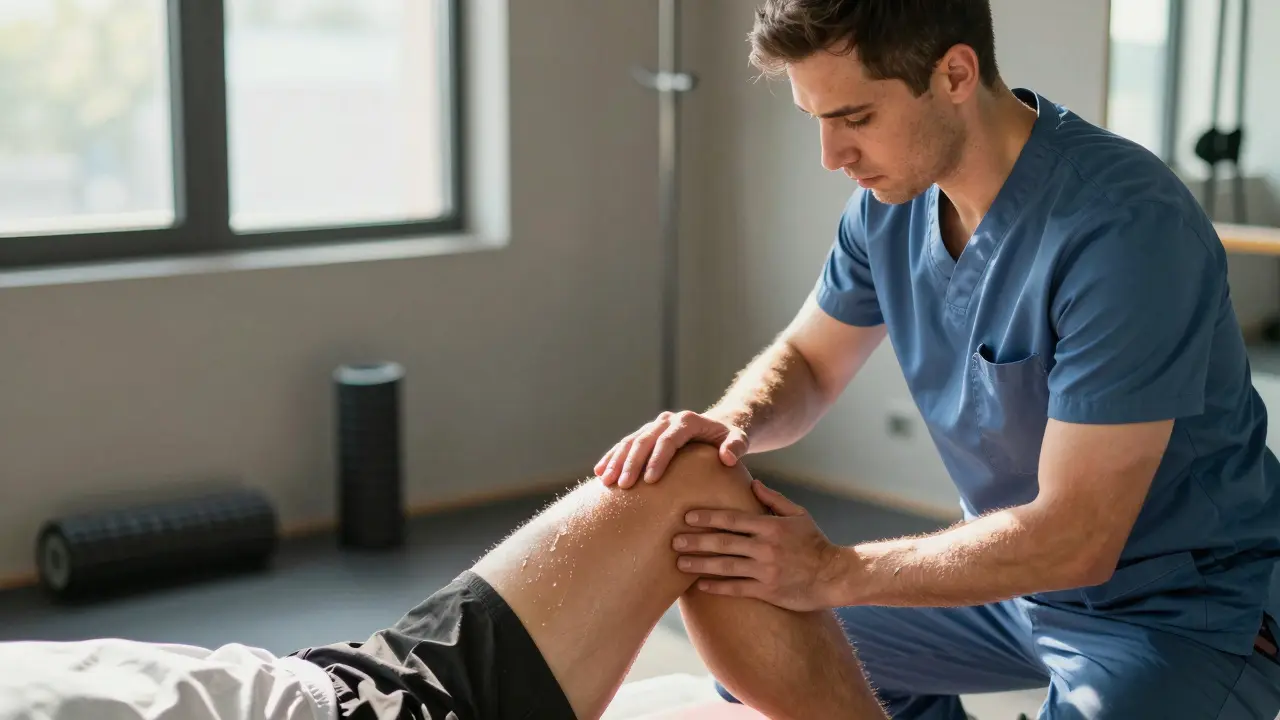
When an athlete pushes their body to the limit, it doesn’t just tire out-it breaks down. Muscles tear, connective tissues tighten, and inflammation builds up. Without proper recovery, that wear and tear turns into injury. That’s where sports massage comes in. It’s not just a luxury or a post-race treat. It’s a critical tool that helps athletes stay strong, move better, and bounce back faster.
What Sports Massage Actually Does
Sports massage isn’t a generic relaxation massage. It’s targeted, intense, and designed for movement. While a Swedish massage might help you unwind after a long week, sports massage works on the tissues that matter most for athletic performance: deep muscles, tendons, and fascia. Therapists use techniques like effleurage, petrissage, friction, and trigger point therapy to break up scar tissue, release knots, and restore muscle elasticity.
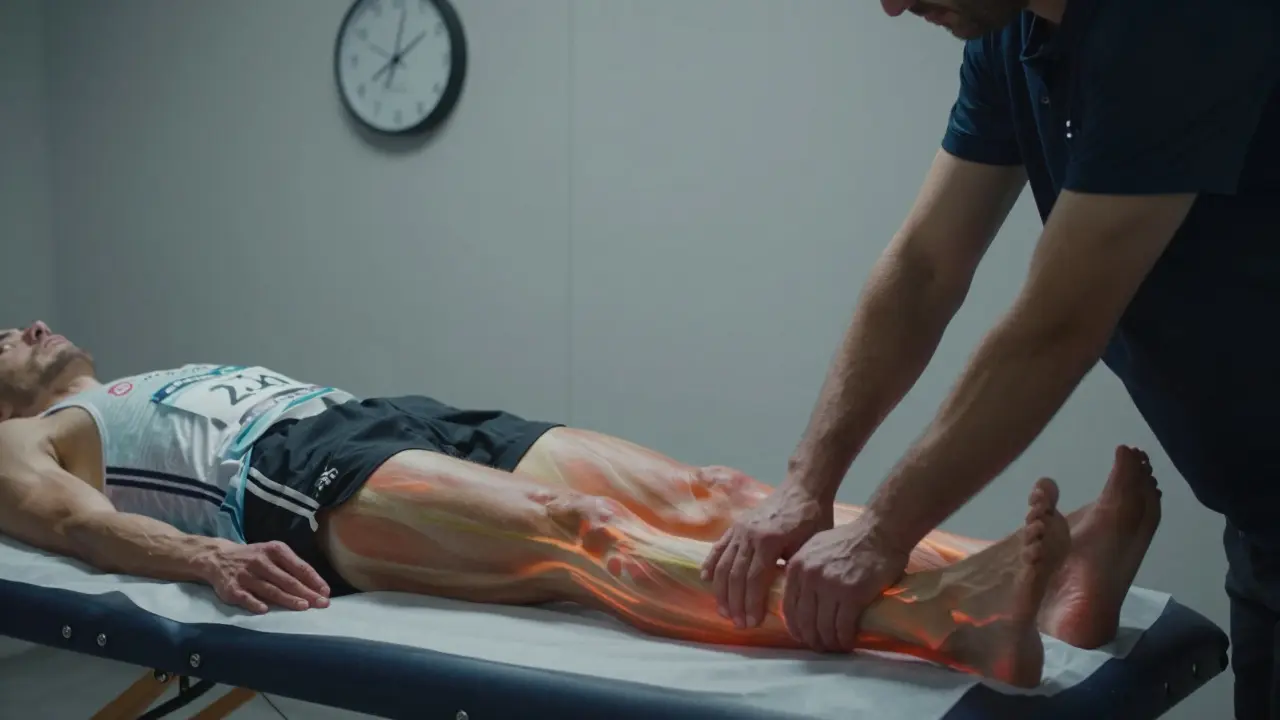
Think of it like tuning a high-performance engine. If the pistons stick or the oil thickens, the engine loses power. Same with your muscles. When lactic acid and metabolic waste pile up after hard training, blood flow slows. Sports massage increases circulation, flushing out those toxins and delivering fresh oxygen and nutrients. Studies show it can reduce delayed onset muscle soreness (DOMS) by up to 30% within 24 hours after intense exercise.
How It Speeds Up Recovery
Recovery isn’t just about resting. It’s about actively repairing. After a marathon, a weightlifting session, or a high-intensity game, your muscles are in repair mode. But without proper blood flow, healing takes longer.
Sports massage helps by:
- Increasing blood flow to fatigued muscles
- Reducing swelling and inflammation
- Breaking down adhesions between muscle fibers
- Improving lymphatic drainage to remove waste
A 2024 study published in the Journal of Athletic Training tracked 120 elite runners over a 12-week training cycle. Those who received biweekly sports massages recovered 22% faster between workouts. Their resting heart rates dropped, and their VO2 max scores improved by an average of 4.7%. That’s not a small gain-it’s the difference between finishing in the top 10 and missing the podium.
Prevention Over Painkillers
Most athletes wait until they’re injured before seeking help. That’s like waiting for a tire to blow out before checking the pressure. Sports massage is preventive medicine for the body.
Chronic tightness in the hamstrings? A massage therapist can spot it before it leads to a strain. Restricted shoulder mobility from repetitive throwing? A few sessions can restore range of motion and prevent rotator cuff damage. In professional teams, massage therapists work alongside physical therapists and strength coaches-not as an afterthought, but as part of the core recovery team.
Take NFL linemen. Their bodies take constant impact. Teams like the Kansas City Chiefs and the San Francisco 49ers employ full-time sports massage specialists. Why? Because players who get regular massage miss 40% fewer games due to soft tissue injuries, according to internal team data shared with the American College of Sports Medicine.
Flexibility and Range of Motion
Speed and power mean nothing if your body can’t move through its full range. Tight hip flexors limit sprinting. Stiff shoulders reduce swimming efficiency. Sports massage directly addresses these restrictions.
One 2023 trial with collegiate swimmers found that those who received weekly sports massage improved shoulder flexion by 18% over eight weeks. That’s not just about technique-it’s about power. More range means more force generation with each stroke. The same applies to runners, cyclists, and even golfers. Movement quality improves when muscles aren’t fighting against themselves.
Reducing Mental Fatigue Too
Athletes talk about mental toughness. But mental fatigue is real. The stress of competition, training pressure, sleep deprivation-it all builds up. Sports massage doesn’t just work on the body; it calms the nervous system.
During a session, the parasympathetic nervous system kicks in. Heart rate slows. Cortisol levels drop. Many athletes report feeling mentally clearer after a massage, even if they didn’t realize how tense they were. It’s not magic-it’s neurophysiology. The pressure and rhythm of massage stimulate sensory nerves that signal the brain to relax. That’s why elite athletes like Simone Biles and LeBron James schedule massages even on rest days.
Who Benefits the Most?
Sports massage isn’t just for pros. Anyone who trains hard can use it. Here’s who sees the biggest gains:
- Endurance athletes (runners, cyclists, triathletes)
- Strength athletes (weightlifters, CrossFit competitors)
- Team sport players (soccer, basketball, football)
- Recreational athletes pushing their limits
- Those recovering from minor injuries
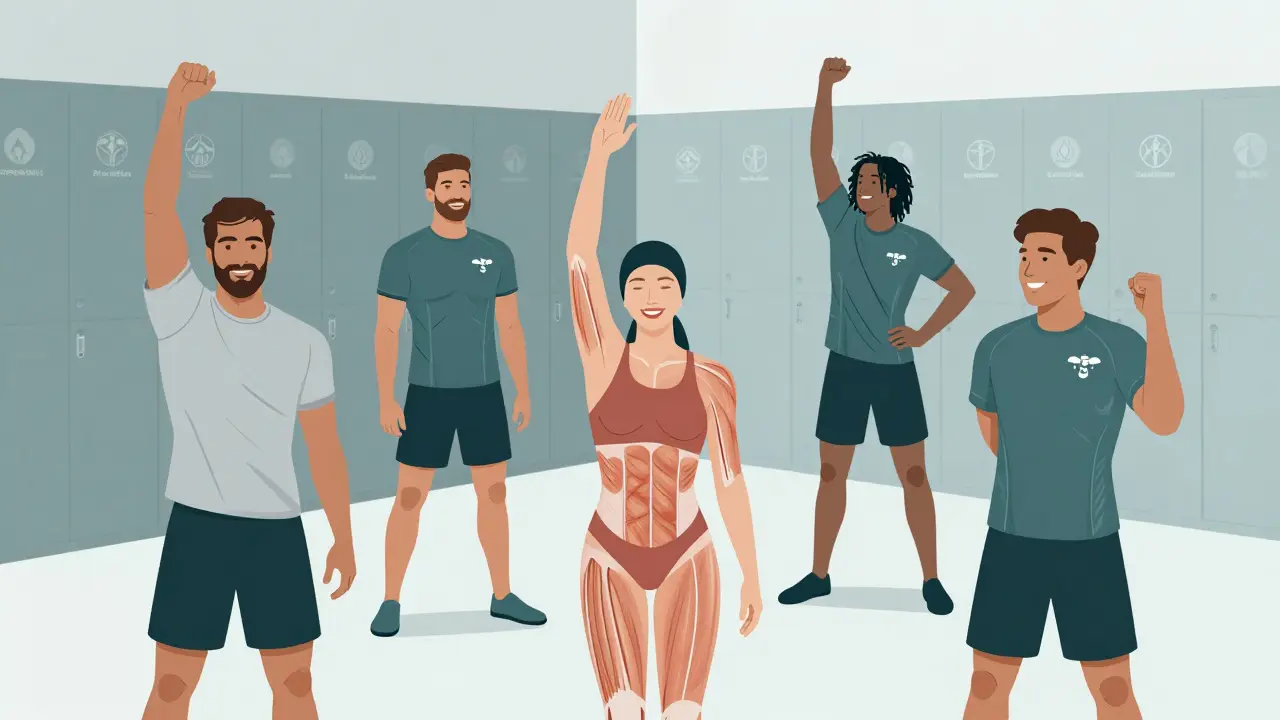
If you’re training four or more days a week, your body is under constant stress. Even if you’re not an Olympian, you’re still asking your muscles to do more than they’re designed to handle. Massage helps you keep going without burning out.
How Often Should You Get It?
There’s no one-size-fits-all answer. But here’s a practical guide:
- During heavy training: Once or twice a week
- During competition season: 48 hours before and 24 hours after events
- Recovery phase: Every 10-14 days
- Maintenance: Once a month
Timing matters. Getting a massage right before a race can be counterproductive if it’s too deep. Pre-event sessions should be light and stimulating-focused on loosening, not breaking down. Post-event is when deeper work helps. The goal isn’t to leave you sore. It’s to leave you ready to move again.
What to Look for in a Therapist
Not all massage therapists are trained for athletes. Look for:
- Certification in sports massage (CIM, CSCS, or similar)
- Experience working with athletes in your sport
- Understanding of anatomy and movement patterns
- Willingness to adjust pressure and technique based on your feedback
A good therapist will ask about your training schedule, recent injuries, and areas of tightness. They won’t just start massaging without context. If they treat you like a spa client, walk out. You’re not here for relaxation-you’re here for performance.
It’s Not a Replacement-It’s a Partner
Sports massage won’t fix bad form, poor nutrition, or lack of sleep. But when combined with proper hydration, rest, and strength work, it becomes a force multiplier. It’s the missing piece for athletes who are doing everything right but still feel stuck.
Think of it this way: if training is the engine, recovery is the fuel. And sports massage? It’s the oil that keeps everything running smoothly.