
You know that feeling. It’s 3:00 PM on a Tuesday. Your energy has crashed, your focus is scattered, and the vending machine looks like it’s calling your name. You grab a bag of chips or a sugary candy bar because you need fuel, fast. But an hour later? You’re not energized. You’re sluggish, bloated, and regretting that impulse buy.
This cycle isn’t just annoying; it’s a biological trap. We often think of healthy snacks as small meals consumed between main meals to maintain energy levels and prevent overeating as something optional-a treat for people who have time to chop vegetables or blend smoothies. In reality, what you eat between breakfast, lunch, and dinner dictates your mood, your productivity, and even your long-term health more than you might realize.
Snacking isn’t the enemy. Mindless grazing on processed junk is. When we swap those empty calories for nutrient-dense options, we stop riding the rollercoaster of blood sugar spikes and crashes. Instead, we build a steady foundation of energy that keeps us sharp, happy, and healthy throughout the day.
The Science Behind Smart Snacking
To understand why certain snacks make you feel great while others leave you groggy, we have to look at how your body processes food. It all comes down to two major players: glucose and insulin.
When you eat a snack high in refined sugars-like a cookie or a soda-your blood sugar skyrockets. Your pancreas responds by dumping insulin into your bloodstream to help cells absorb that sugar. This rapid drop in blood sugar afterward is what causes the "crash." You feel tired, irritable, and hungry again within minutes. This is known as reactive hypoglycemia, and it’s the primary driver of cravings.
Complex carbohydrates are carbohydrates made of longer chains of sugar molecules that take longer to digest, providing sustained energy, paired with protein and healthy fats, change this equation entirely. They break down slowly, releasing glucose into your bloodstream at a steady pace. This means stable energy, better concentration, and no mid-afternoon slump.
Think of your body like a car. A sugary snack is like pouring gasoline directly into the engine-it burns hot and fast, but then you’re stranded. A balanced snack is like using high-quality premium fuel; it runs smoothly and gets you much further without breaking down.
Building the Perfect Snack Formula
You don’t need a degree in nutrition to create a good snack. You just need to follow a simple formula. Every effective healthy snack should include at least two of these three components:
- Protein: Keeps you full and supports muscle repair. Examples include Greek yogurt, nuts, seeds, eggs, and lean meats.
- Fiber: Slows digestion and feeds your gut bacteria. Found in fruits, vegetables, whole grains, and legumes.
- Healthy Fats: Provides satiety and helps absorb vitamins. Sources include avocado, olive oil, nut butters, and fatty fish.
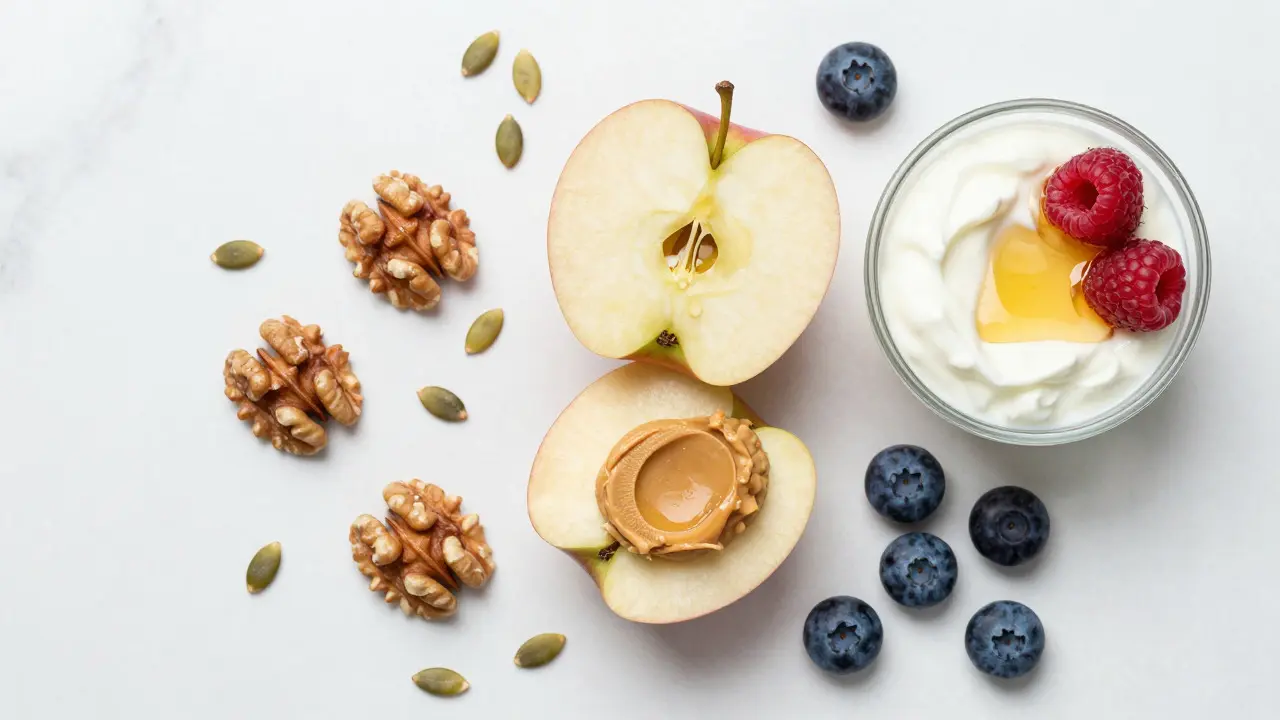
If you eat an apple alone, the natural fructose will spike your blood sugar quickly. But if you pair that apple with almond butter, the fat and protein slow down the absorption. The result? You stay satisfied for hours instead of minutes.
Let’s look at some real-world examples of this formula in action:
| Snack Option | Primary Nutrient | Energy Duration | Satiety Level |
|---|---|---|---|
| Bagel with Jam | Simple Carbs | 1-2 Hours | Low |
| Greek Yogurt with Berries | Protein + Fiber | 3-4 Hours | High |
| Cheese Stick with Crackers | Fat + Carb | 2-3 Hours | Medium |
| Apple Slices with Peanut Butter | Fiber + Fat + Protein | 4+ Hours | Very High |
Notice the difference? The combination of nutrients matters far more than the calorie count. A slightly higher-calorie snack with better macros will serve you better than a low-calorie option that leaves you starving an hour later.
Top Nutrient-Dense Snacks for Daily Energy
Knowing the theory is one thing; having practical options is another. Here are some of the most effective, easy-to-prepare snacks that deliver maximum nutritional value.
Nuts and Seeds: Almonds, walnuts, pumpkin seeds, and chia seeds are powerhouses. They contain magnesium, zinc, and omega-3 fatty acids. Just a small handful (about one ounce) provides enough fat and protein to curb hunger without weighing you down. Walnuts, specifically, have been linked to improved brain health due to their high alpha-linolenic acid content.
Dairy and Alternatives: Greek yogurt is thicker and contains nearly double the protein of regular yogurt. Choose plain versions to avoid added sugars, and sweeten them yourself with fresh fruit or a drizzle of honey. Cottage cheese is another underrated option, packed with casein protein, which digests slowly and keeps you full overnight.
Vegetables with Dip: Carrots, celery, bell peppers, and cucumber slices offer crunch and hydration. Pairing them with hummus adds fiber and plant-based protein. Hummus is made from chickpeas, which are excellent for stabilizing blood sugar levels.
Eggs: Hard-boiled eggs are portable, cheap, and incredibly nutritious. They provide high-quality protein and choline, a nutrient essential for brain function. If you’re short on time, boil a batch at the start of the week and keep them in the fridge.
Fruits: While fruits contain sugar, they also come packaged with fiber, vitamins, and antioxidants. Bananas are great for potassium and quick energy before a workout. Berries like blueberries and strawberries have a lower glycemic index and are loaded with antioxidants that fight inflammation.
Mindful Eating: Changing How You Snack
Even the healthiest snack can become problematic if you eat it mindlessly. Have you ever eaten a bowl of popcorn while watching TV and realized halfway through that you didn’t taste any of it? That’s mindless eating, and it disconnects your brain from your body’s fullness signals.
Mindful eating is a practice that involves paying full attention to the experience of eating and drinking, both inside and outside the body requires slowing down. It means chewing thoroughly, noticing textures and flavors, and stopping when you’re comfortably full, not stuffed.
Try this next time you snack: Put your phone away. Sit at a table. Take three deep breaths before you start. Ask yourself, "Am I actually hungry, or am I bored/stressed/thirsty?" Often, we confuse thirst for hunger. Drinking a glass of water first can sometimes solve the craving entirely.
This shift in mindset transforms snacking from a guilty habit into a nourishing ritual. You start to appreciate the quality of the food rather than just consuming calories to pass the time.
Preparation Strategies for Busy Lifestyles
The biggest barrier to healthy snacking isn’t knowledge; it’s convenience. If you’re rushing out the door, you’ll grab whatever is easiest, even if it’s unhealthy. The solution is preparation.
Batch Cooking: Dedicate one hour on Sunday to prep snacks for the week. Wash and cut vegetables, portion out nuts into small bags, hard-boil eggs, and make a big batch of hummus or trail mix. Having ready-to-eat options eliminates the decision fatigue during busy weekdays.
Keep Emergency Supplies: Keep a stash of non-perishable healthy snacks in your car, office desk, or gym bag. Options like individual packets of almonds, dried fruit (without added sugar), or protein bars with clean ingredients can save you from vending machine traps when you’re stuck in traffic or working late.
Read Labels Carefully: Many products marketed as "healthy" are loaded with hidden sugars and artificial additives. Look for short ingredient lists. If you can’t pronounce an ingredient, it’s probably best to skip it. Focus on whole, single-ingredient foods whenever possible.

Addressing Common Snacking Myths
There’s a lot of misinformation floating around about snacking. Let’s clear up a few common misconceptions.
Myth: Skipping snacks helps you lose weight.
Reality: For many people, skipping meals leads to extreme hunger later, resulting in overeating at dinner. Regular, balanced snacking can actually help regulate appetite and prevent binge eating.
Myth: All carbs are bad for you.
Reality: Your brain runs on glucose. Complex carbs from whole grains, fruits, and vegetables are essential. The problem lies in refined carbs like white bread and pastries, which lack fiber and nutrients.
Myth: You must snack every three hours.
Reality: Hunger cues vary from person to person. Some people do well with three square meals and no snacks. Others need smaller, frequent meals. Listen to your body. If you’re not hungry, don’t force it. If you are, fuel up wisely.
Troubleshooting Your Snack Routine
If you’re trying to switch to healthier snacks but struggling, here are some targeted solutions based on common scenarios.
I crave sweets constantly: This usually indicates a blood sugar imbalance or a lack of protein/fat in your previous meal. Try adding a source of healthy fat, like a few squares of dark chocolate (70% cocoa or higher) or berries with cream, to satisfy the sweet tooth without the sugar crash.
I get hungry right after eating: You likely aren’t getting enough volume or fiber. Add more vegetables to your snacks. Raw veggies add bulk and crunch with very few calories, helping you feel physically full.
I forget to snack until I’m hangry: Set a recurring alarm on your phone for mid-morning and mid-afternoon. Use it as a prompt to check in with your hunger levels and grab your pre-prepped snack before the hunger becomes urgent.
What is the healthiest snack to eat before bed?
A small serving of tart cherry juice, a banana with a thin layer of almond butter, or a small bowl of cottage cheese can promote sleep. These foods contain tryptophan or melatonin, which help regulate sleep cycles, without being so heavy that they disrupt digestion.
How many calories should a healthy snack contain?
Generally, a snack should range between 150 to 300 calories. This amount is sufficient to curb hunger and bridge the gap between meals without consuming so many calories that it interferes with your main meals or daily caloric goals.
Are protein bars considered healthy snacks?
It depends on the brand. Many commercial protein bars are high in added sugars and artificial sweeteners. Look for bars with less than 5 grams of added sugar, at least 10 grams of protein, and recognizable ingredients like nuts, seeds, and oats. Whole food options are always preferable when available.
Can snacking cause weight gain?
Snacking itself does not cause weight gain; excess calorie intake does. However, mindless snacking on high-calorie, low-nutrient foods can easily lead to a caloric surplus. Strategic snacking with nutrient-dense foods can actually support weight management by preventing overeating at main meals.
What are good healthy snacks for kids?
Kids need energy for growth and activity. Good options include apple slices with peanut butter, cheese sticks with whole-grain crackers, carrot sticks with hummus, and yogurt tubes. Making food fun and colorful can encourage children to choose healthier options over processed treats.