Ever feel like your body’s running on fumes by 3 p.m., even after a full night’s sleep? You’re not lazy. You’re not broken. You’re just eating the wrong kind of fuel. A healthy diet isn’t just about losing weight or avoiding disease-it’s the single most powerful tool you have to keep your energy steady, sharp, and sustainable all day long. Forget coffee chugs and sugary snacks. Real energy comes from what you put on your plate, not what’s in your cup.
Why Your Energy Crashes (And How Food Fixes It)
When you eat a bowl of sugary cereal or a white bread sandwich, your blood sugar spikes fast. Your body pumps out insulin to handle the rush, then crashes hard. That mid-afternoon slump? That’s your body begging for better fuel. It’s not laziness-it’s biochemistry.
People who eat balanced meals with protein, healthy fats, and complex carbs don’t get these spikes. They stay steady. Why? Because their bodies release energy slowly, like a wood stove instead of a firecracker. Studies from the Harvard T.H. Chan School of Public Health show that diets rich in whole grains, legumes, vegetables, and lean proteins lead to 30% fewer energy crashes compared to high-sugar, high-refined-carb diets.
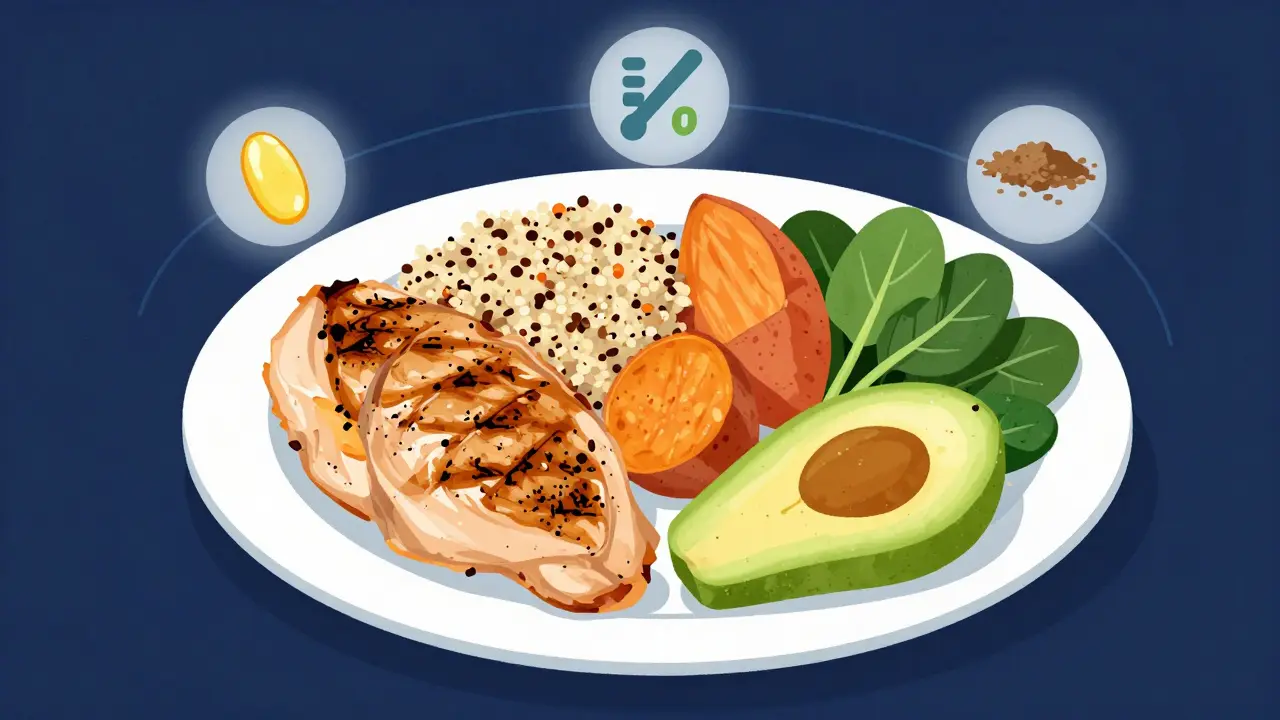
Think about it: when was the last time you felt energized after eating a donut? Now think about how you felt after a salad with grilled chicken, avocado, and quinoa. One gives you a quick buzz and then a crash. The other gives you steady, quiet power.
The Three Pillars of a Natural Energy Diet
A healthy diet that boosts energy isn’t about cutting out entire food groups. It’s about balance. Three things matter most:
- Complex carbohydrates - These digest slowly, giving you steady glucose. Think oats, sweet potatoes, brown rice, lentils, and whole grain bread. Avoid anything labeled "enriched"-that usually means refined and stripped of fiber.
- Healthy fats - Fats slow digestion and help your body absorb nutrients. Avocados, nuts, seeds, olive oil, and fatty fish like salmon keep your brain and muscles running smoothly. Omega-3s from fish also reduce inflammation, which is a silent energy killer.
- Lean protein - Protein helps stabilize blood sugar and keeps you full longer. Eggs, chicken, tofu, Greek yogurt, and beans are great choices. A study in the Journal of Nutrition found that people who ate 25-30 grams of protein at breakfast had 20% more sustained energy throughout the day than those who skipped it.
Combine these three at every meal, and your body learns to burn fuel efficiently. No spikes. No crashes. Just steady, quiet energy.
What to Eat for Morning Energy
Morning is your reset button. What you eat in the first hour sets the tone for the rest of the day. Skip the toast and jam. Try this instead:
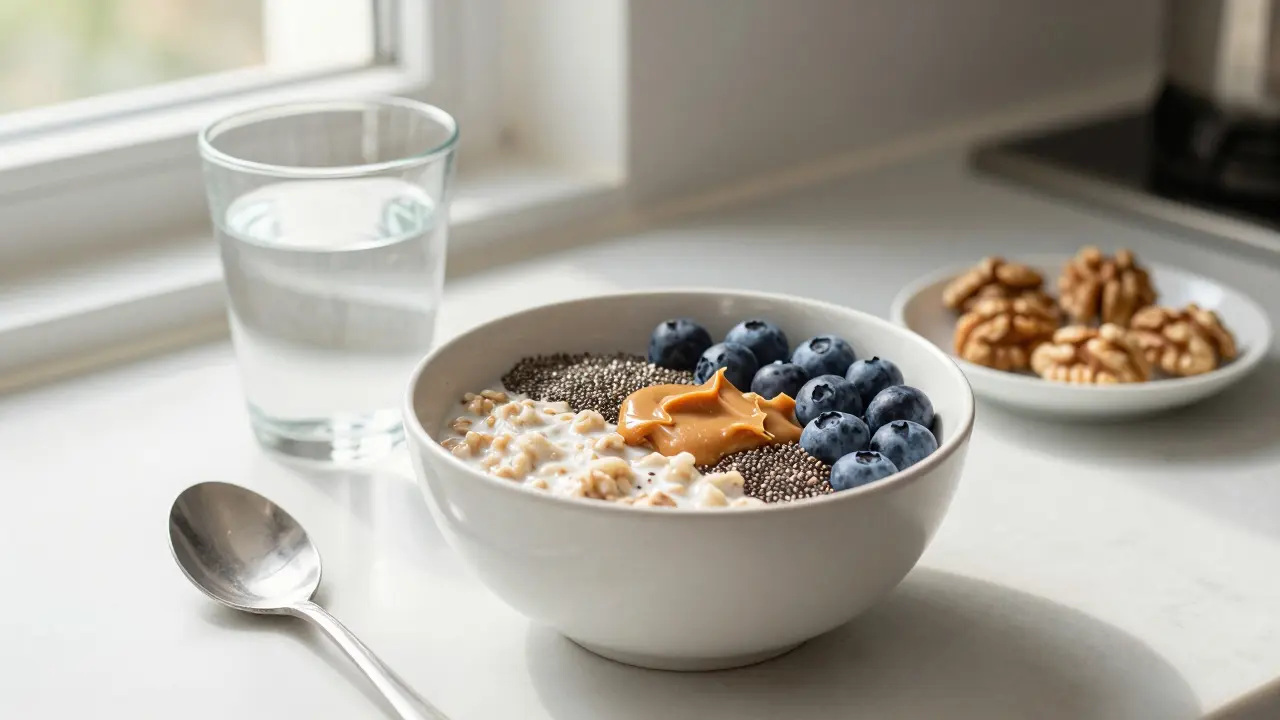
- Overnight oats made with chia seeds, almond butter, and blueberries
- Scrambled eggs with spinach and whole grain toast
- Plain Greek yogurt topped with walnuts and a drizzle of honey
- A smoothie with spinach, banana, flaxseed, and protein powder
These meals give you fiber, protein, and healthy fats-all working together to keep your blood sugar stable. That means no 10 a.m. hunger pangs or 11 a.m. brain fog. You’ll feel alert, calm, and focused.
Snacks That Actually Boost Energy (Not Kill It)
Snacking isn’t the problem. Bad snacks are. Most people grab candy, chips, or energy bars loaded with sugar and artificial ingredients. Those might give you a quick buzz, but they leave you drained 30 minutes later.
Try these instead:
- Apple slices with peanut butter
- A handful of raw almonds or cashews
- Hard-boiled eggs
- Carrot sticks with hummus
- A small piece of dark chocolate (70% cacao or higher)
These snacks are packed with fiber, protein, or healthy fats. They don’t spike your blood sugar. They nourish it. And they keep you going without the crash.
Hydration: The Hidden Energy Source
Dehydration is one of the most common causes of fatigue-and most people don’t even realize they’re dehydrated. You don’t need to chug eight glasses of water a day. Just listen to your body.
When you’re low on fluids, your blood volume drops. That makes your heart work harder to deliver oxygen and nutrients. Result? You feel tired, sluggish, and foggy.
Start your day with a glass of water. Keep a bottle nearby. Add lemon or cucumber if you find plain water boring. Herbal teas count too. And skip the sugary drinks. Even "vitamin water" is just sugar with a fancy label.

What to Avoid Like a Energy Vampire
Some foods don’t just fail to boost energy-they drain it. Here’s what to cut back on:
- Refined sugar - Found in sodas, pastries, flavored yogurts, and even "healthy" granola bars. Sugar spikes then crashes. It’s a trap.
- Processed carbs - White bread, pasta, rice, and crackers. They’re digested like sugar, even if they don’t taste sweet.
- Artificial sweeteners - Aspartame, sucralose, and saccharin can confuse your brain’s hunger signals and trigger cravings.
- Heavy fried foods - Your body uses so much energy to digest them that you feel drained afterward.
- Excess caffeine - More than two cups of coffee a day? You’re probably building tolerance, not energy. Try switching to green tea-it has L-theanine, which calms your nervous system while keeping you alert.
Real People, Real Results
Take Sarah, a 34-year-old graphic designer from Melbourne. She used to rely on three espressos and two candy bars just to get through her workday. After switching to a balanced diet-whole grains, lean protein, healthy fats, and water-her energy levels changed in under a week. "I stopped needing naps. I started finishing projects without feeling wiped out. I didn’t even realize how tired I’d been until I wasn’t anymore."
Or James, a 41-year-old teacher. He’d always blamed his fatigue on stress. But when he replaced his breakfast of toast and jam with eggs and avocado, his afternoon brain fog disappeared. "I used to zone out during class. Now I’m present. It’s not magic. It’s food."
Start Small. Stay Consistent.
You don’t need to overhaul your whole diet overnight. Pick one thing to change this week:
- Swap your morning sugary cereal for oats with nuts and fruit.
- Drink one extra glass of water before lunch.
- Replace your afternoon candy bar with a handful of almonds.
Small changes compound. One week of better choices leads to better energy. Two weeks? You’ll notice your focus improving. Three weeks? You might forget what a crash feels like.
Your body isn’t designed to run on sugar and caffeine. It’s built to thrive on real food. When you feed it right, you don’t just get energy-you get clarity, resilience, and control over your day. No pills. No tricks. Just food. Simple. Powerful. Effective.
Can a healthy diet really boost energy without caffeine?
Yes. While caffeine gives a short-term stimulant effect, a healthy diet provides lasting energy by stabilizing blood sugar, improving oxygen delivery, and reducing inflammation. People who switch from coffee-heavy routines to whole-food diets often report more consistent energy without the jitters or crashes. A 2023 study in the American Journal of Clinical Nutrition found that participants who reduced sugar and increased protein and fiber saw a 40% improvement in daytime alertness within 14 days-without any caffeine.
Is it possible to get too much energy from food?
Not in the way most people think. You can’t "overload" on energy from whole foods. Your body naturally regulates how much energy it uses. What feels like "too much energy" is often just better alignment with your natural rhythm. If you’re suddenly sleeping less or feeling restless after changing your diet, it’s likely due to cutting out sugar or caffeine, not eating too much. Give your body a few days to adjust.
How long does it take to feel the energy boost from a healthy diet?
Most people notice a difference within 3-5 days. Sugar crashes and caffeine dependence fade quickly. By day 7, blood sugar stability improves, and by day 14, inflammation decreases and nutrient absorption improves. That’s when you start feeling truly energized-not just alert, but calm, focused, and ready to go.
Do I need to count calories or macros to get energy from food?
No. Counting calories or macros isn’t necessary for energy improvement. Focus instead on food quality: choose whole, minimally processed foods. Eat protein and fat with every meal. Fill half your plate with vegetables. Drink water. That’s it. Your body knows how to use real food. You don’t need to micromanage it.
Can a healthy diet help with afternoon fatigue?
Absolutely. Afternoon fatigue is usually caused by blood sugar spikes from lunch. A meal high in refined carbs (like pasta, white rice, or sandwiches) leads to a crash by 3 p.m. Switching to a lunch with lean protein, healthy fats, and fiber-rich veggies prevents this. People who make this change report feeling more alert in the afternoon, even without napping.