Mindfulness Impact Calculator
How Mindfulness Changes Your Body
Based on research from Harvard, University of Wisconsin, and other studies, your daily practice can create measurable benefits:
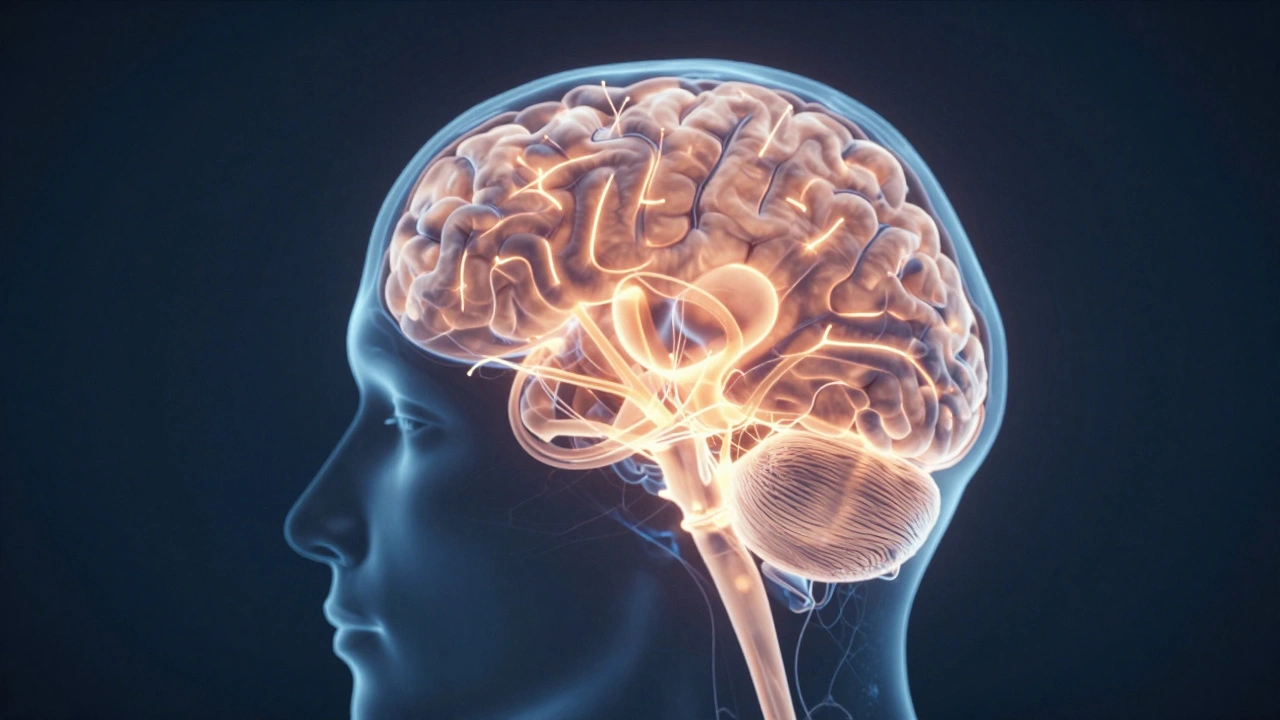
Hippocampus growth + amygdala shrinkage in 8 weeks
40% fewer cold symptoms with 10-min daily practice
30% less distress after 8 weeks
Calculate Your Benefits
Your Potential Benefits
Stress Reduction
Immune System
Pain Relief
Most people think mindfulness is just about calming down when life gets loud. You sit quietly, breathe deep, and hope the anxiety fades. That’s part of it-but only the beginning. Mindfulness does way more than ease stress. It rewires your brain, strengthens your body’s defenses, and helps you handle emotions you didn’t even know were dragging you down. If you’ve tried it and felt like it didn’t do much, you might not have given it time-or you might not have known what else it could do.
Changes in Your Brain That Last
Back in 2011, researchers at Harvard scanned the brains of people who practiced mindfulness for just eight weeks. The results? The gray matter in the hippocampus-the part tied to learning and memory-got thicker. At the same time, the amygdala, your brain’s fear center, shrank. This wasn’t a fluke. Studies since then, including one from the University of Wisconsin in 2018, have shown similar patterns. People who meditate regularly don’t just feel calmer. Their brains physically change to handle stress better, remember more clearly, and make decisions with less emotional noise.
These aren’t abstract lab findings. Think about how you react when you’re stuck in traffic or your kid forgets their homework again. Most people snap, blame, or spiral. Someone practicing mindfulness? They pause. Not because they’re trying to be zen. Their brain literally takes longer to trigger a panic response. That gap? That’s where choice lives.
Stronger Immune System, Fewer Sick Days
Here’s something you might not expect: mindfulness helps you get sick less often. A 2012 study at the University of Wisconsin followed 149 adults who either took an eight-week mindfulness course or didn’t. When everyone was exposed to the common cold virus, those who practiced mindfulness were less likely to catch it-and if they did, their symptoms were milder. Another study in 2016, published in the Annals of Family Medicine, found that regular meditators had fewer respiratory infections over a year compared to non-meditators.
How? Mindfulness lowers cortisol, the stress hormone that suppresses immune function when it’s too high. Chronic stress doesn’t just make you feel awful-it leaves your body open to viruses and slows healing. By reducing that constant pressure, mindfulness gives your immune system room to do its job. You don’t need hours of meditation. Even 10 minutes a day, five days a week, made a measurable difference in those studies.
Emotional Regulation: Stopping the Rollercoaster
Have you ever said something in anger you instantly regretted? Or cried over a small thing because you were already emotionally drained? That’s not weakness. It’s burnout. Mindfulness doesn’t make you emotionless. It helps you notice emotions before they take over.
One study from the University of California, Los Angeles, tracked people who practiced mindfulness for six months. They showed improved activity in the prefrontal cortex-the area responsible for self-control-and reduced reactivity in the limbic system, where emotions spike. In plain terms: they felt anger, sadness, or frustration, but they didn’t get swept away by it.
Real-life example: Sarah, a nurse in Melbourne, used to come home from double shifts and yell at her partner over spilled coffee. After six weeks of daily 12-minute mindfulness sessions, she noticed something different. When the coffee spilled again, she felt the same surge of irritation-but instead of yelling, she took a breath and said, “I’m tired. Can we clean it up together?” That shift didn’t come from willpower. It came from training her brain to pause before reacting.
Reducing Chronic Pain Without Pills
Chronic pain isn’t just a physical problem. It’s a mental trap. The brain learns to expect pain, so it amplifies even small signals. Mindfulness breaks that cycle. A 2017 study in the Journal of the American Medical Association compared mindfulness training to cognitive behavioral therapy (CBT) for people with chronic lower back pain. Both helped-but mindfulness worked just as well as CBT, without drugs or surgery.
How? Mindfulness doesn’t eliminate pain. It changes your relationship to it. Instead of fighting the sensation, you learn to observe it without judgment. You notice where it sits, how it shifts, how your breath responds. That shift in attention reduces the emotional suffering that makes pain feel unbearable. In one trial, participants reported a 30% drop in pain-related distress after eight weeks-not because the pain disappeared, but because it stopped controlling them.
Better Sleep, Even When Your Mind Won’t Shut Off
If you lie awake at night replaying conversations or worrying about tomorrow, you’re not broken. You’re stuck in a loop of rumination. Mindfulness teaches you to step out of that loop. A 2015 study from JAMA Internal Medicine found that mindfulness meditation improved sleep quality in older adults with moderate sleep problems better than a structured sleep education program.
It’s not about forcing yourself to sleep. It’s about letting go of the need to sleep. When you stop fighting the thoughts, they lose their grip. People who practice mindfulness before bed report falling asleep faster and waking up less often. They don’t need melatonin or sleeping pills. They just stop chasing silence and start accepting stillness.
Improved Focus and Mental Clarity
Ever read a page and realized you didn’t remember a word? That’s attention fatigue. Mindfulness trains your brain to hold focus without drifting. A 2020 study from the University of California, Santa Barbara, gave students a mindfulness course during finals week. After just two weeks, their GRE reading scores improved by 16%, and their ability to stay on task doubled. They weren’t smarter-they were less distracted.
It’s the same with work. When you’re constantly switching between emails, messages, and meetings, your brain burns out. Mindfulness doesn’t add more hours to your day. It gives you back the ones you’ve lost to mental clutter. You start noticing when your mind wanders-and gently bring it back. That tiny act, repeated, builds mental stamina.
Lower Blood Pressure and Heart Health
High blood pressure doesn’t just come from salt or inactivity. Chronic stress plays a huge role. Mindfulness helps by calming the nervous system. A 2019 meta-analysis of 12 clinical trials found that mindfulness-based programs reduced systolic blood pressure by an average of 5 mm Hg-similar to the effect of some medications. For people with pre-hypertension, that drop can mean the difference between needing drugs and staying off them.
It’s not magic. It’s physiology. When you’re stressed, your body releases adrenaline. Your heart pounds. Your arteries tighten. Mindfulness activates the parasympathetic nervous system-the “rest and digest” mode. Your heart rate slows. Your blood vessels relax. Over time, that reduces strain on your cardiovascular system.

How to Start Without Overwhelming Yourself
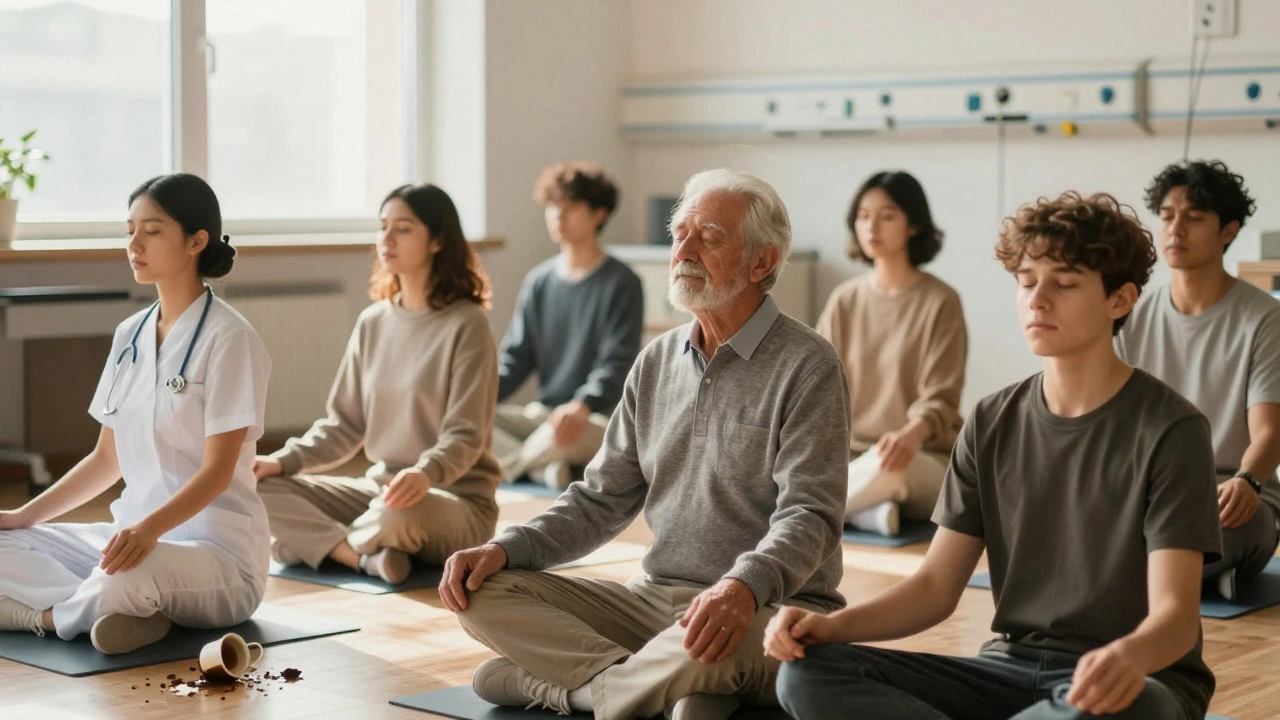
You don’t need to sit cross-legged for an hour. Start small. Try this:
- Set a timer for 5 minutes. Sit quietly, eyes closed or softly focused.
- Notice your breath. Don’t change it. Just feel it moving in and out.
- When your mind wanders (it will), gently bring it back. No scolding.
- Do this every morning before checking your phone.
After a week, add two more minutes. Keep going. Consistency beats duration. You’re not trying to become a monk. You’re training your brain to be less reactive, more present, and more resilient.
What Mindfulness Isn’t
It’s not about emptying your mind. That’s impossible. It’s about noticing what’s there without getting tangled in it.
It’s not a replacement for therapy or medication. If you’re dealing with depression, anxiety, or trauma, mindfulness can help-but it’s not a cure. Pair it with professional care.
It’s not a quick fix. You won’t feel transformed after one session. But after 30 days? You’ll notice things you didn’t before: less reactivity, better sleep, clearer thinking. Those are the real wins.
Can mindfulness help with anxiety?
Yes. Mindfulness doesn’t eliminate anxiety, but it changes how you respond to it. Instead of fearing anxious thoughts, you learn to observe them like clouds passing. Studies show that mindfulness-based stress reduction (MBSR) reduces anxiety symptoms as effectively as cognitive behavioral therapy for many people.
Do I need an app or instructor to practice mindfulness?
No. Apps like Headspace or Calm can help guide you, especially at first, but they’re not required. All you need is time and attention. Even just sitting quietly for five minutes and noticing your breath counts. Many people find that after a few weeks, they no longer need guided sessions.
How long until I see results from mindfulness?
Some people notice small shifts-like better sleep or less reactivity-in as little as two weeks. For lasting brain and body changes, most studies show benefits after eight weeks of consistent practice, even if it’s just 10 minutes a day. It’s not about intensity. It’s about showing up.
Can children or older adults practice mindfulness?
Absolutely. Mindfulness works for all ages. Schools in Australia and the U.S. now teach simple breathing exercises to kids as young as five. For older adults, it helps with memory, loneliness, and chronic pain. The key is adapting the practice: shorter sessions, gentle movement, or focusing on sounds instead of breath if sitting still is hard.
Is mindfulness religious?
It has roots in Buddhist traditions, but modern mindfulness is secular. You don’t need to believe in anything to practice it. It’s a mental training tool, like exercise for your brain. Hospitals, schools, and corporations use it because it works-not because it’s spiritual.
What to Do Next
Don’t wait for the perfect moment. Start today-with five minutes. Sit. Breathe. Notice when your mind drifts. Bring it back. Do it again tomorrow. And the next day. That’s the whole practice. You’re not trying to fix yourself. You’re learning to be with yourself, exactly as you are. And that’s where real healing begins.