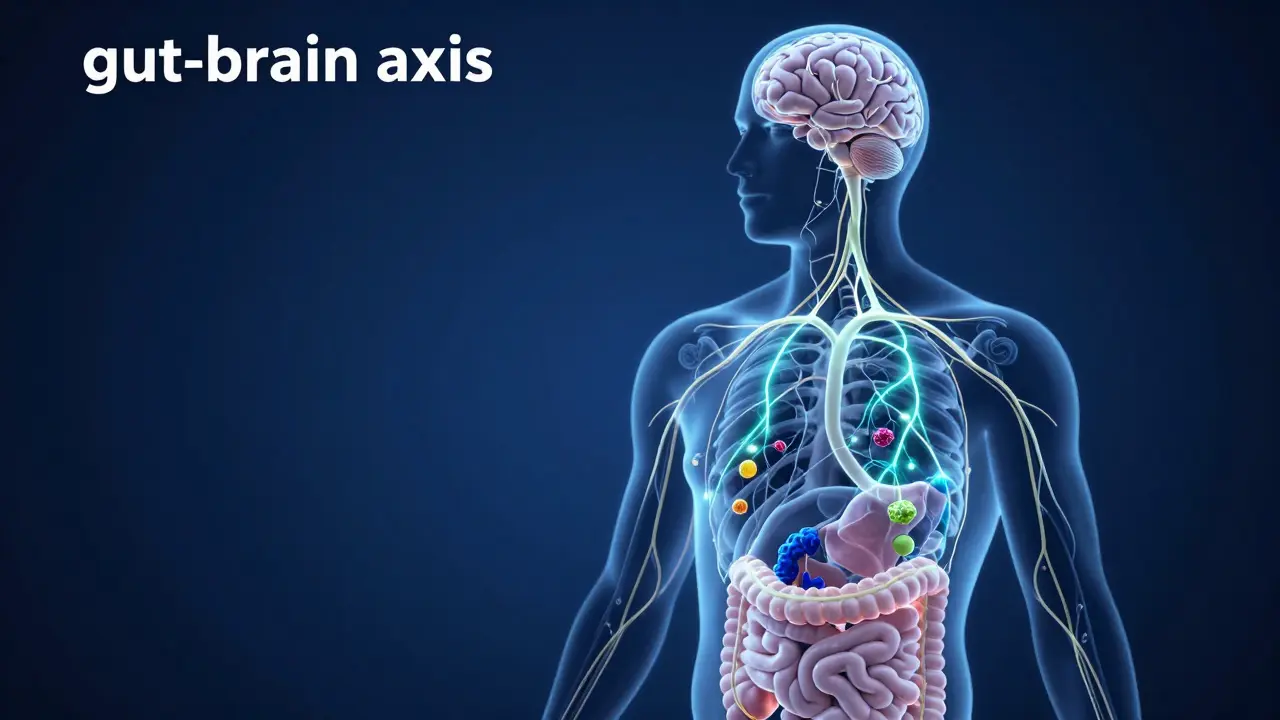
Ever noticed how your stomach churns when you’re nervous? Or maybe you feel sluggish and foggy after a heavy meal? That’s not just in your head. It’s actually happening in your gut. For decades, we treated the brain and the digestive system as two separate entities. But modern science has flipped that script. Your gut is essentially a second brain, communicating constantly with the one between your ears.
This connection isn’t a metaphor. It’s a biological highway known as the gut-brain axis, which is the bidirectional communication network linking the enteric nervous system of the gut with the central nervous system of the brain. When this line of communication breaks down, it can manifest as anxiety, depression, or chronic stress. Conversely, fixing your gut health might be the missing piece in your mental wellness puzzle.
The Biology Behind the Connection
To understand why your diet affects your mood, you have to look at the plumbing. The primary nerve connecting your gut to your brain is the vagus nerve. This cranial nerve that transmits signals between the gut and the brain, regulating heart rate, digestion, and emotional responses. Think of it as a fiber-optic cable. If the signal is strong, your body stays balanced. If it’s noisy or weak, things get chaotic.
Your gut is also home to trillions of bacteria, fungi, and viruses collectively called the microbiome. These communities of microorganisms living in the human digestive tract that influence immunity, metabolism, and neurotransmitter production. These tiny organisms don’t just digest food; they produce chemicals. In fact, about 95% of your body’s serotonin, the neurotransmitter often referred to as the 'feel-good' chemical, primarily produced in the gastrointestinal tract. is made in your gut, not your brain. Serotonin regulates sleep, appetite, and mood. If your gut bacteria are out of balance-a state called dysbiosis-your serotonin production drops, leading to feelings of sadness or irritability.
Furthermore, your gut produces gamma-aminobutyric acid (GABA), a neurotransmitter that helps control feelings of fear and anxiety. Certain strains of probiotics, like Lactobacillus and Bifidobacterium, have been shown to increase GABA receptor expression in the brain. This means the bacteria you eat literally help calm your nerves.
Signs Your Gut Is Affecting Your Mood
You might not realize your mental struggles are rooted in digestion until you see the pattern. Here are common signs that your gut health is impacting your mental well-being:
- Brain Fog: Difficulty concentrating or remembering simple tasks, often accompanied by fatigue.
- Unexplained Anxiety: Feeling jittery or worried without a clear trigger, especially after eating certain foods.
- Mood Swings: Rapid shifts from happy to irritable or depressed, linked to blood sugar spikes and crashes.
- Digestive Issues: Bloating, gas, constipation, or diarrhea that worsens during stressful periods.
- Sleep Disruption: Trouble falling asleep or staying asleep due to poor melatonin regulation (which relies on serotonin).
If you check off several of these, your issue might not be purely psychological. It could be physiological. The inflammation caused by an unhealthy gut leaks into the bloodstream, triggering a systemic immune response. This chronic low-grade inflammation is strongly linked to depression. Studies show that people with major depressive disorder often have higher levels of inflammatory markers in their blood compared to those without depression.

Foods That Heal Your Mind Through Your Gut
You can’t buy happiness in a pill bottle, but you can cultivate it on your plate. Improving gut health starts with feeding the good bacteria and starving the bad ones. Focus on these three categories of foods:
- Prebiotics: These are non-digestible fibers that act as food for your beneficial bacteria. Sources include garlic, onions, leeks, asparagus, bananas, and oats. Without prebiotics, your probiotics have nothing to eat and die off.
- Probiotics: Live bacteria found in fermented foods. Yogurt with live cultures, kefir, sauerkraut, kimchi, miso, and kombucha are excellent sources. Aim to include one fermented food daily to introduce diverse bacterial strains.
- Polyphenols: Plant compounds that feed good bacteria and reduce inflammation. Found in berries, dark chocolate, green tea, red wine (in moderation), and nuts.
Conversely, avoid ultra-processed foods high in sugar and artificial sweeteners. Sugar feeds harmful bacteria like Candida, which can overgrow and cause inflammation. Artificial sweeteners like aspartame and sucralose have been shown to alter the composition of the gut microbiome negatively, potentially worsening metabolic health and mood disorders.
Lifestyle Factors Beyond Diet
Eating right is only half the battle. Your lifestyle choices directly impact the diversity of your microbiome. Stress is a major killer of good gut bacteria. When you’re stressed, your body releases cortisol. High cortisol levels can damage the lining of your gut, leading to "leaky gut" syndrome. This allows toxins and undigested food particles to enter the bloodstream, triggering inflammation that reaches the brain.
Sleep is equally critical. Your gut bacteria have their own circadian rhythm. When you stay up late or have irregular sleep patterns, you disrupt this rhythm, reducing microbial diversity. Aim for 7-9 hours of quality sleep per night. Try to go to bed and wake up at the same time every day to keep your internal clock-and your gut clock-in sync.
Exercise also plays a surprising role. Moderate aerobic exercise increases the diversity of beneficial bacteria in the gut. It doesn’t need to be intense marathon training; a brisk 30-minute walk daily can significantly improve gut health and reduce anxiety levels. However, excessive high-intensity training without adequate recovery can increase gut permeability, so balance is key.

Comparison: Gut-Friendly vs. Gut-Unfriendly Choices
| Category | Gut-Friendly Choice | Gut-Unfriendly Choice | Effect on Mental Health |
|---|---|---|---|
| Breakfast | Oatmeal with berries and chia seeds | Sugary cereal or pastries | Stable energy vs. crash and anxiety |
| Snack | Kefir or yogurt with live cultures | Chips or processed bars | Increased GABA vs. inflammation |
| Stress Management | Meditation or deep breathing | Ignoring stress or overworking | Lower cortisol vs. leaky gut |
| Sleep | Consistent 8-hour schedule | Irregular sleep or screen time before bed | Balanced microbiome vs. dysbiosis |
Practical Steps to Reset Your Gut
If you’re ready to improve your mental health through your gut, start small. Don’t overhaul your entire life overnight. Here is a simple checklist to begin your journey:
- Add One Fermented Food: Start with a spoonful of sauerkraut or a cup of kefir daily.
- Increase Fiber Gradually: Add vegetables and whole grains slowly to avoid bloating. Aim for 25-30 grams of fiber per day.
- Hydrate: Drink enough water to help fiber move through your digestive system. Dehydration slows digestion and worsens brain fog.
- Manage Stress: Practice 10 minutes of mindfulness or deep breathing daily to lower cortisol.
- Limit Antibiotics: Only take antibiotics when absolutely necessary, as they wipe out both good and bad bacteria. If you must take them, follow up with probiotics.
Remember, consistency is more important than perfection. You won’t feel different after one day, but within 4-6 weeks of consistent changes, many people report improved mood, better sleep, and clearer thinking.
How long does it take for gut health improvements to affect mental health?
Most people notice initial changes in digestion within a few days, but significant improvements in mood and mental clarity typically take 4 to 8 weeks. This is because rebuilding a diverse microbiome takes time, and the brain needs sustained exposure to healthy neurotransmitters to adjust its chemistry.
Can probiotic supplements replace fermented foods?
While probiotic supplements can be helpful, they are not a complete replacement for fermented foods. Whole foods provide a complex matrix of nutrients, fibers, and diverse bacterial strains that work synergistically. Supplements often contain only a few specific strains. It’s best to use supplements as an addition to a diet rich in fermented foods, not a substitute.
Does coffee affect gut health and mental health?
Coffee has a dual effect. In moderation, it acts as a prebiotic, feeding good bacteria. However, excessive caffeine can increase anxiety and disrupt sleep, which harms gut health. If you experience jitters or acid reflux, consider switching to decaf or limiting intake to one cup in the morning.
Is there a specific diet best for gut-brain health?
The Mediterranean diet is widely considered the gold standard for gut-brain health. It emphasizes fruits, vegetables, whole grains, legumes, nuts, olive oil, and fish, while limiting processed meats and sugars. This pattern provides ample fiber, polyphenols, and omega-3 fatty acids, all of which support a healthy microbiome and reduce inflammation.
Can gut health issues cause depression?
Yes, emerging research suggests a strong link between gut dysbiosis and depression. An imbalanced gut can lead to increased inflammation and reduced production of serotonin and other mood-regulating neurotransmitters. While gut health is not the sole cause of depression, addressing it can be a powerful complementary strategy alongside traditional therapies.