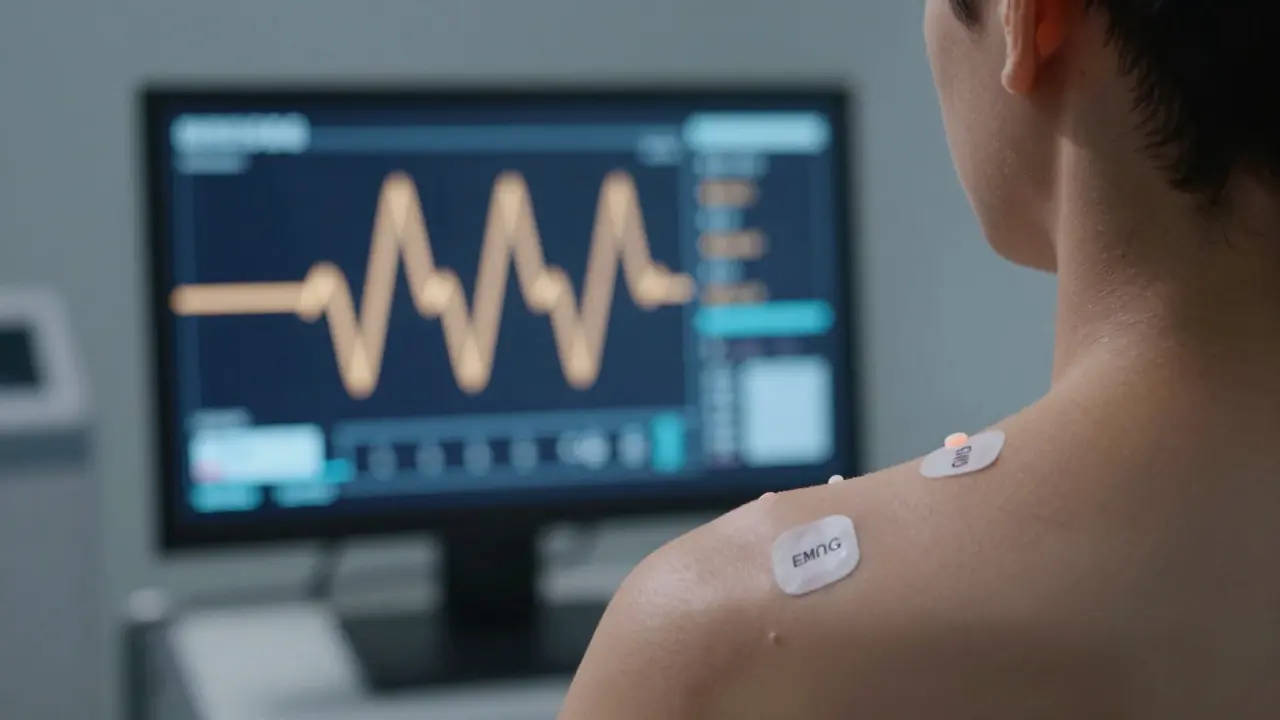
For years, people living with chronic pain have been told to take more pills, get more scans, or just learn to live with it. But what if the key to reducing pain wasn’t in a bottle or a surgical room-but in your own body’s signals? Biofeedback is turning that idea into reality. It’s not magic. It’s science. And it’s working for people who’ve tried everything else.
What Biofeedback Actually Does
Biofeedback is a technique that uses sensors to measure things your body does automatically-like heart rate, muscle tension, skin temperature, and brainwaves-and shows you those signals in real time. You don’t control your heartbeat when you’re stressed. You don’t notice how tight your shoulders get from sitting at a desk all day. Biofeedback makes the invisible visible. Once you can see it, you can learn to change it.
Think of it like a mirror for your nervous system. If your muscles are clenched at 80% tension when you think you’re relaxed, the machine shows you that number. Over time, with practice, you learn to lower it without the machine. It’s not about forcing relaxation-it’s about retraining your body’s default settings.
How It Helps With Chronic Pain
Chronic pain isn’t just about damaged tissue. Often, it’s about a nervous system stuck in overdrive. When pain lasts longer than three months, your brain and nerves start interpreting normal sensations as threats. Your muscles tighten. Your heart races. Your breathing gets shallow. It’s a loop-and biofeedback breaks it.
A 2023 study from the University of Melbourne tracked 120 people with fibromyalgia who used biofeedback for 12 weeks. Those who practiced regularly saw a 40% average drop in pain intensity. Not because their joints changed. But because their bodies stopped screaming "danger" all the time.
People with lower back pain, migraines, and tension headaches report similar results. Biofeedback doesn’t erase the source of pain. It reduces the body’s reaction to it. That’s the difference between treating symptoms and rewiring the response.
The Science Behind the Sensors
There are different types of biofeedback, each targeting a different part of your body’s communication system.
- Electromyography (EMG) measures muscle tension. Used for headaches, jaw pain, and back spasms.
- Thermal biofeedback tracks skin temperature. Cold hands often mean stress. Warming them up helps calm the nervous system.
- Heart rate variability (HRV) biofeedback shows how well your heart adapts to stress. Low HRV = stuck in fight-or-flight mode.
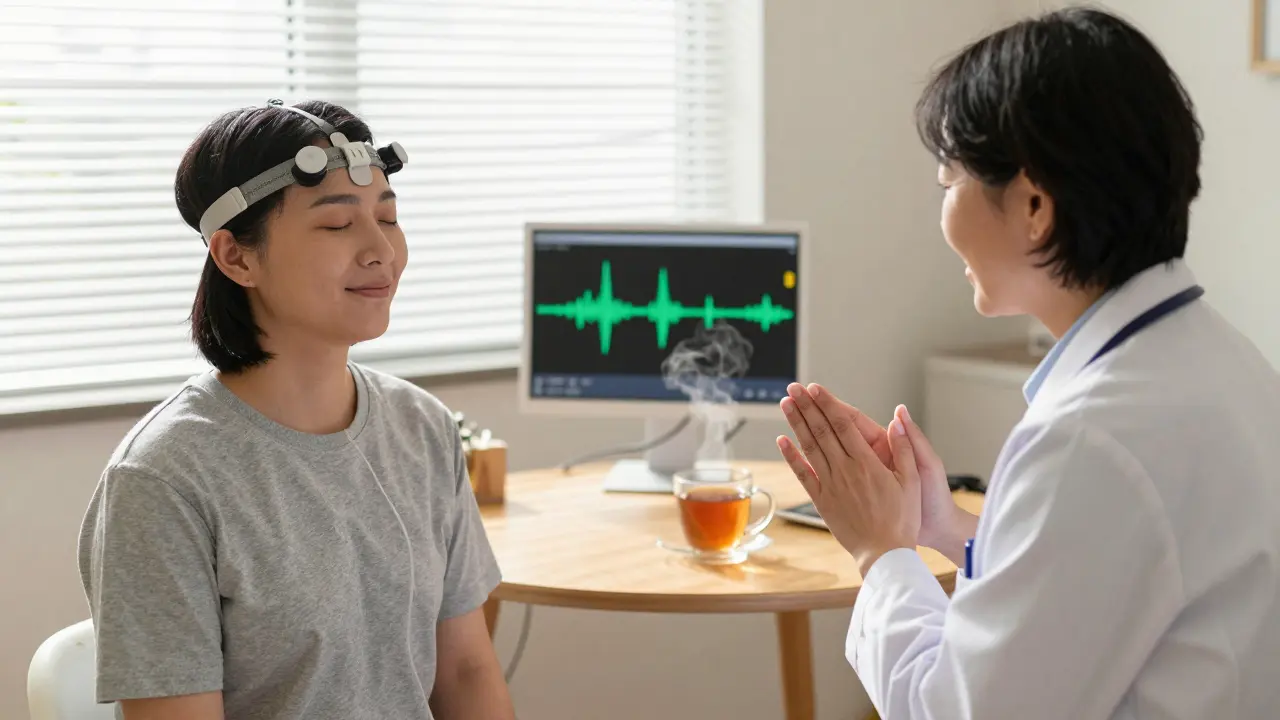
- Neurofeedback (EEG) reads brainwave patterns. Useful for pain linked to anxiety or trauma.
Most clinics use EMG and HRV together. Why? Because muscle tension and heart rhythm are two of the clearest signs your body is stuck in pain mode. When you see your heart rate drop from 92 to 72 beats per minute while breathing slowly, you feel it. And that feeling sticks.

Real People, Real Results
Sarah, 42, had migraines for 14 years. She tried 11 different medications. Three surgeries. Nothing gave her more than a few days of relief. Then she tried biofeedback at a pain clinic in Carlton. After six sessions, she noticed her headaches started less often. After 10, they were 70% milder. "I didn’t know my shoulders were clenched until the machine told me. Now I catch it before it turns into a headache. It’s like I got a new sense," she says.
James, 58, suffered from chronic lower back pain after a workplace injury. Painkillers made him dizzy. He stopped driving. He avoided walking. His biofeedback therapist connected sensors to his lower back muscles. The screen showed him how his muscles fired in spikes when he stood up. With guided breathing and visual cues, he learned to activate his core without tensing his back. Six months later, he’s gardening again.
These aren’t outliers. A 2025 meta-analysis of 37 clinical trials found biofeedback was as effective as opioids for chronic pain-but without the addiction risk, brain fog, or constipation. And the benefits kept growing after treatment ended.
What You Need to Get Started
You don’t need fancy gear to begin. Many people start with smartphone apps that use the phone’s camera to measure heart rate variability. But for serious pain, professional equipment is better.
Here’s what most clinics use:
| Tool Type | What It Measures | Typical Session Length | Cost per Session (AUD) |
|---|---|---|---|
| EMG Biofeedback | Muscle tension | 45-60 minutes | $95-$140 |
| HRV Biofeedback | Heart rhythm variability | 45-60 minutes | $90-$130 |
| Thermal Biofeedback | Hand temperature | 30-45 minutes | $85-$120 |
| Neurofeedback (EEG) | Brainwave patterns | 60 minutes | $120-$180 |
Most private health insurers in Australia cover biofeedback under "physiotherapy" or "psychological therapies" if referred by a GP. Medicare doesn’t pay for it directly, but you can claim a portion under a Chronic Disease Management plan.
Home devices like the Muse headband or HeartMath’s Inner Balance are good for maintenance, but not for starting out. If your pain is severe, begin with a trained therapist. They’ll help you interpret the data and avoid frustration.
Who Should Try Biofeedback-and Who Shouldn’t
Biofeedback works best for people with:
- Chronic pain lasting more than 3 months
- Pain tied to stress, anxiety, or tension
- Side effects from pain meds
- Willingness to practice daily, even for 10 minutes
It’s less helpful if:
- Your pain is from a recent injury (first 4-6 weeks)
- You have severe mental health conditions like psychosis
- You’re unwilling to engage with your body’s signals
It’s not a cure-all. But it’s one of the few tools that gives you direct control. No prescription. No side effects. Just you learning to speak your body’s language.
Why It’s the Future of Pain Care
The opioid crisis forced medicine to look for alternatives. Biofeedback isn’t new-it’s been around since the 1960s-but it’s finally getting the attention it deserves. Hospitals in Sydney, Brisbane, and Melbourne now include it in pain management programs alongside physiotherapy and counseling.
Why? Because it’s sustainable. Unlike pills, you don’t build tolerance. The more you use it, the better you get. And it doesn’t just reduce pain-it reduces fear of pain. That’s huge. Fear makes pain worse. Biofeedback teaches your body it’s safe to relax.
It’s also cheap in the long run. One course of 10 sessions costs less than a year’s supply of prescription painkillers. And you’re not just managing pain-you’re building a skill that helps with sleep, anxiety, and focus too.
Getting Started: Your First Steps
If you’re curious, here’s how to begin:
- Ask your GP for a referral to a pain clinic or clinical psychologist trained in biofeedback.
- Look for practitioners certified by the Biofeedback Certification International Alliance (BCIA).
- Start with EMG or HRV biofeedback-they’re the most effective for pain.
- Commit to 8-10 sessions. Don’t expect miracles after one.
- Practice 5-10 minutes daily with a simple breathing exercise. Breathe in for 4 seconds, hold for 2, out for 6.
The goal isn’t to eliminate pain entirely. It’s to stop letting pain run your life. Biofeedback doesn’t promise freedom from discomfort. It gives you back your power.
Is biofeedback painful?
No. Biofeedback is completely non-invasive. Sensors are placed on your skin like stickers. They only read signals-they don’t send anything into your body. You might feel a slight coolness from the gel on the sensors, but there’s no shock, needle, or pressure.
How long until I see results?
Most people notice small changes after 3-4 sessions. Meaningful pain reduction usually takes 6-10 sessions. Like learning an instrument, progress is gradual. The key is consistency, not intensity. Ten minutes a day beats one hour once a week.
Can I do biofeedback at home?
Yes, but not as a first step. Home devices like the HeartMath Inner Balance or Muse headband are good for maintaining skills you’ve learned in therapy. But if you’re new to biofeedback, working with a trained therapist helps you understand what the data means. Otherwise, you might misread signals or get discouraged.
Does biofeedback work for nerve pain?
It can. Nerve pain (like sciatica or diabetic neuropathy) is often worsened by stress and muscle guarding. Biofeedback helps reduce the tension that amplifies nerve signals. It won’t fix the damaged nerve, but it can reduce the body’s overreaction to it. Studies show up to 50% reduction in perceived intensity for some patients.
Is biofeedback covered by insurance in Australia?
Many private health insurers cover biofeedback under physiotherapy or psychological services if you have a GP referral. Medicare doesn’t pay directly, but you can claim a portion under a Chronic Disease Management plan. Always check with your provider before starting.
What Comes Next?
If biofeedback works for you, you’ll likely start noticing other changes. You sleep better. You breathe deeper. You feel less anxious. Pain becomes less of a constant companion and more of a signal you can manage. It’s not about becoming pain-free. It’s about becoming free from the fear of pain. And that’s a kind of freedom no pill can give you.