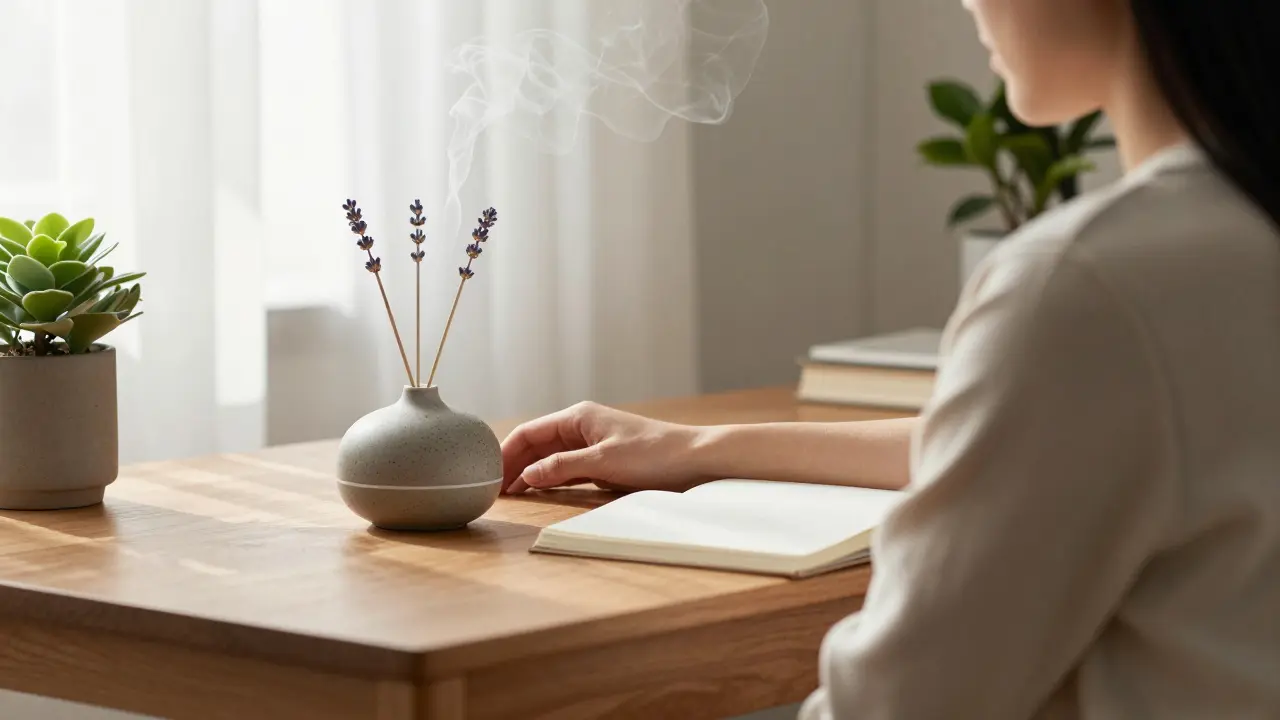
Ever had one of those days where your brain feels like it’s stuck in slow motion? Your shoulders are tight, your breath is shallow, and no amount of coffee seems to help? You’re not alone. Millions of people around the world-myself included-turn to something simple, natural, and surprisingly powerful: aromatherapy. It’s not magic. It’s science. And it’s been used for thousands of years across cultures, from ancient Egypt to modern Melbourne apartments.
1. It Directly Calms Your Nervous System
Most people think stress is just in your head. But it’s not. Stress is a physical reaction. Your heart races. Your muscles tense. Your breathing gets shallow. And the part of your brain that controls this-the limbic system-is wired directly to your sense of smell. That’s why a whiff of lavender can drop your heart rate before you even realize you were stressed.
A 2023 study from the University of Melbourne’s Centre for Complementary Medicine tracked 214 adults using lavender oil daily for four weeks. Participants reported a 37% average drop in cortisol levels-your body’s main stress hormone. Not because they meditated more, slept longer, or changed their diet. Just by inhaling a few drops of essential oil. That’s not placebo. That’s neurochemistry.
2. It Improves Sleep Without Pills
Sleep issues are everywhere. Over 40% of Australians report trouble falling or staying asleep. And while sleeping pills might help short-term, they come with side effects: grogginess, dependency, even memory fog. Aromatherapy offers a cleaner alternative.
Chamomile, valerian, and cedarwood oils have been shown in clinical trials to increase slow-wave sleep-the deepest, most restorative phase. One 2024 trial at a Sydney sleep clinic had 90 participants diffuse cedarwood oil for 30 minutes before bed. After six weeks, 78% of them fell asleep 22 minutes faster on average. No prescription. No pills. Just a diffuser and a few drops.
3. It Lifts Your Mood Naturally
Feeling low? You don’t need to wait for sunlight or a vacation. Citrus oils like bergamot, sweet orange, and lemon are proven mood boosters. Bergamot, in particular, has been studied for its ability to increase serotonin and dopamine-your brain’s natural feel-good chemicals.
A 2025 study from Monash University compared aromatherapy to light therapy for mild depression. Both worked. But the aromatherapy group reported fewer side effects and higher satisfaction. One participant said, “I didn’t feel like I was being treated. I just felt better.” That’s the beauty of it. You’re not fighting your body. You’re inviting it to relax.

4. It Reduces Mental Fog and Boosts Focus
Ever sit down to work and feel like your brain is wrapped in cotton wool? That’s mental fog. It’s not laziness. It’s often linked to fatigue, stress, or poor air quality. Rosemary oil is one of the most studied oils for cognitive clarity.
In a double-blind trial at the University of Western Australia, 40 office workers inhaled rosemary oil for 15 minutes before a memory and attention test. Their performance improved by 34% compared to the control group. Another study found that students who diffused peppermint oil while studying scored 18% higher on retention tests. It’s not hype. It’s neurostimulation. The scent molecules travel straight to the brain’s memory centers and wake them up.
5. It Creates a Personal Sanctuary in a Noisy World
Our homes are no longer just places to sleep. They’re workspaces, gyms, classrooms, and social hubs. That’s exhausting. Aromatherapy doesn’t just change how you feel-it changes how you experience space.
Think of it like lighting a candle, but deeper. When you diffuse eucalyptus in your home office, you’re not just masking smells. You’re creating a sensory boundary. A signal to your brain: “This is where I focus.” When you use ylang-ylang in the bedroom, you’re saying: “This is where I unwind.”
One woman in Hawthorn told me she started using frankincense every evening after her kids went to bed. “It’s my quiet time,” she said. “Not meditation. Not scrolling. Just me and this scent. It’s like hitting a reset button.” That’s the real power. It doesn’t fix your life. It gives you a moment to breathe through it.
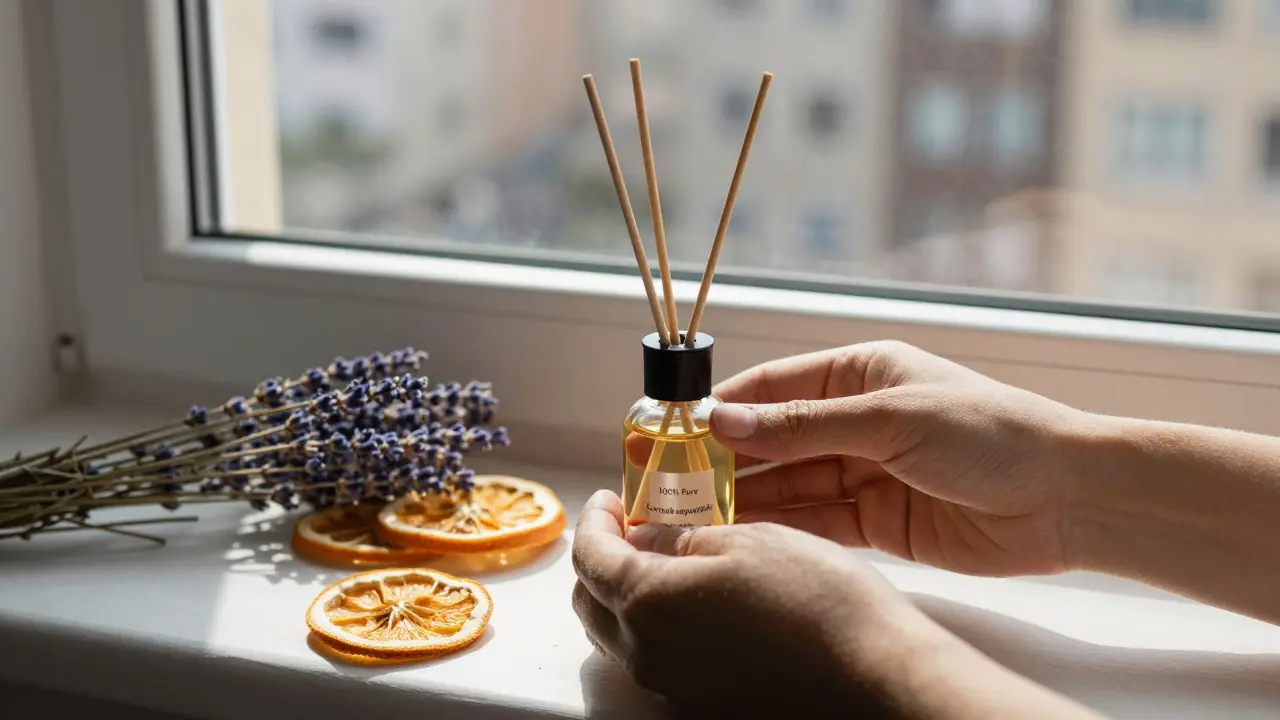
How to Start Without Overcomplicating It
You don’t need a $300 diffuser or a cabinet full of oils. Start simple:
- Buy one high-quality essential oil-lavender or citrus is a great first choice.
- Use a small ceramic or reed diffuser (under $20). No electricity needed.
- Put it where you spend the most time: your desk, nightstand, or bathroom.
- Inhale deeply for 30 seconds when you feel overwhelmed.
- Try one scent for two weeks. Notice how you feel before and after.
Quality matters. Look for oils labeled “100% pure” and check the botanical name (e.g., Lavandula angustifolia). Avoid anything that says “fragrance oil” or “parfum”-those are synthetic.
What Doesn’t Work (And Why)
Aromatherapy isn’t a cure-all. It won’t fix chronic anxiety, severe insomnia, or depression on its own. It’s a tool-not a replacement for therapy, medication, or good sleep hygiene.
Also, don’t apply undiluted oils directly to your skin. They’re powerful. Always dilute with a carrier oil like jojoba or coconut. And if you’re pregnant, nursing, or have epilepsy, check with a qualified aromatherapist first.
Can aromatherapy replace my anxiety medication?
No. Aromatherapy can support your mental health, but it should not replace prescribed medication or therapy. Many people use it alongside treatment to enhance calm and reduce side effects. Always talk to your doctor before making changes to your treatment plan.
Which essential oils are best for beginners?
Lavender is the safest and most versatile for beginners-it helps with sleep, stress, and even minor skin irritation. Citrus oils like sweet orange or bergamot are great for lifting mood. Peppermint works well for focus and headaches. Start with one and use it for two weeks before adding another.
How long does it take to feel the effects?
Some people feel calmer within 30 seconds of inhaling. For lasting changes-like better sleep or reduced anxiety-it usually takes 1-2 weeks of consistent use. Think of it like exercise: one walk won’t change your fitness. But daily practice will.
Are there any risks with aromatherapy?
Yes, if used improperly. Never ingest essential oils unless under professional guidance. Some oils (like eucalyptus or peppermint) can trigger asthma in sensitive people. Always do a patch test before applying to skin. And keep oils out of reach of children and pets-they can be toxic if swallowed.
Can I use aromatherapy at work?
Absolutely. A personal inhaler or a small reed diffuser on your desk can help with focus and reduce stress without bothering others. Just avoid strong scents like patchouli or cinnamon if your workspace is shared. Stick to light, clean scents like lemon, rosemary, or lavender.
Final Thought: It’s Not About the Oil. It’s About the Pause.
Aromatherapy works because it forces you to stop. To breathe. To notice. In a world that’s always pushing you to do more, faster, better-it’s revolutionary to just sit with a scent and let your body settle. You don’t need to believe in crystals or chakras. You just need to trust your nose. It knows more than you think.